With the MLB trade deadline approaching, the Seattle Mariners are expected to explore multiple ways to strengthen one of the weakest offensive lineups in baseball. The club has remained competitive thanks to its elite pitching staff, but its inability to consistently score runs has become one of the biggest obstacles standing between Seattle and a serious postseason run.
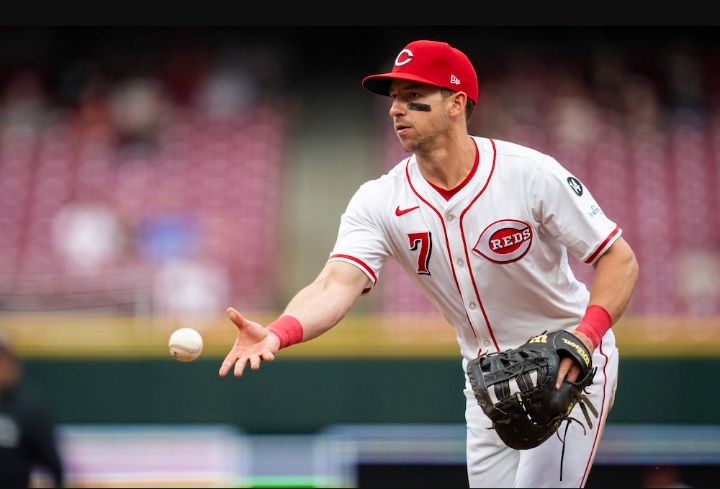
One player reportedly drawing interest from the Mariners is Cincinnati Reds utility standout Spencer Steer. On the surface, Steer appears to check many of the boxes Seattle is looking for. He offers defensive versatility, right-handed power, and several years of team control. However, a closer examination of his offensive profile reveals one significant concern that could make the Mariners think twice before paying a premium to acquire him.
Seattle’s Offensive Problems Demand Real Solutions
The Mariners have spent much of the 2026 season searching for offensive consistency. While their pitching rotation continues to rank among baseball’s strongest, the lineup has struggled to produce enough runs on a nightly basis.
Seattle ranks near the bottom of Major League Baseball in important offensive categories such as runs scored and OPS. Those struggles have created increasing pressure on the front office to make meaningful additions before the trade deadline.
The organization can no longer afford to hope internal improvements will suddenly transform the offense. If the Mariners want to capitalize on another strong season from their pitching staff, they need legitimate hitters capable of making an immediate impact.
Still, urgency doesn’t mean every available bat is worth sacrificing valuable prospects or controllable pitching.
Why Spencer Steer Is an Attractive Trade Candidate
It’s easy to understand why Seattle has shown interest in Steer.
The Reds infielder has become one of Cincinnati’s most versatile players, appearing at multiple defensive positions throughout the season. That flexibility would give Mariners manager Dan Wilson numerous lineup options while allowing the club to move players around depending on injuries or matchups.
Steer has also displayed solid power, reaching 16 home runs this season while producing respectable overall offensive numbers. His right-handed bat naturally fits a Mariners lineup that has struggled against left-handed pitching.
Perhaps most importantly, Steer remains under team control through the 2028 season, making him more than just a short-term rental. For an organization that values long-term roster flexibility, that additional control certainly adds to his appeal.
However, one statistical split raises serious questions about whether he is truly the type of everyday offensive upgrade Seattle needs.
A Massive Difference Against Lefties and Righties
Steer’s overall production paints the picture of a dependable major league hitter. He owns a respectable slash line that reflects balanced offensive contributions over the course of the season.
The problem becomes much more obvious once his performance is separated by opposing pitcher handedness.
Against left-handed pitching, Steer has been outstanding. His OPS exceeds 1.000, making him one of baseball’s more dangerous hitters in those situations. He drives the ball consistently, gets on base frequently, and punishes mistakes from southpaws.
Against right-handed pitchers, though, the production falls dramatically.
His OPS against righties sits well below league average, representing a significant drop from his elite production versus left-handers. Since right-handed pitchers account for the majority of innings thrown across Major League Baseball, that split creates understandable concerns about his ability to serve as a true everyday middle-of-the-order contributor.
For Seattle, which needs reliable offense every night rather than only in favorable matchups, that distinction is important.
He Could Fill a Role But Not Solve the Problem
There is no doubt Steer could improve certain aspects of Seattle’s lineup.
The Mariners have struggled mightily against left-handed pitching this season, posting some of the league’s weakest numbers in those situations. Adding a hitter with Steer’s success against southpaws would immediately give the lineup another dangerous option whenever an opposing team starts a left-handed pitcher.
He could rotate between first base, designated hitter, and other positions while spelling players who have struggled offensively in those matchups.
That type of flexibility has value.
However, Seattle’s biggest objective should be acquiring hitters who remain productive regardless of who is on the mound.
Managers frequently turn to right-handed relievers late in games. Even if Steer starts against a left-handed pitcher, he could eventually find himself facing multiple right-handed arms once the bullpen takes over. If his offensive production declines significantly in those situations, his overall impact becomes much smaller.
The Mariners need players who force opposing managers into difficult decisions throughout the game—not hitters whose advantages disappear after one pitching change.
The Cost of Acquisition Matters
One of the biggest questions surrounding any potential Steer trade involves what Seattle would have to surrender.
Reports have indicated the Mariners are open to discussing pitcher Emerson Hancock in trade conversations. Hancock remains under club control for several more seasons and represents one of Seattle’s valuable young starting pitchers.
While no direct connection has been made between Hancock and a possible Steer deal, the possibility naturally exists whenever teams begin discussing trade packages.
That is where caution becomes essential.
Seattle’s greatest organizational strength has long been its pitching depth. Trading multiple years of a controllable starting pitcher for a hitter with significant platoon concerns could prove to be a poor allocation of resources.
Pitching remains one of baseball’s most valuable commodities, especially when it comes from young, affordable starters who still have years of team control remaining.
Unless the offensive return clearly represents an impact upgrade, the Mariners risk weakening one of their greatest advantages without fully solving their biggest weakness.
Protecting the Farm System
Seattle must also think carefully before including top prospects in any negotiations.
The Mariners have built one of baseball’s stronger farm systems through years of patient development. Those prospects represent valuable long-term assets, whether they eventually contribute in Seattle or become centerpiece trade pieces for elite talent.
Using premium prospects to acquire a player whose offensive production depends heavily on favorable pitching matchups may not provide sufficient value.
While Steer is unquestionably a useful major league player, there is a meaningful difference between a complementary piece and a transformational addition.
If Seattle is going to part with elite prospects or controllable pitching, the return should ideally be a hitter capable of anchoring the lineup every single day against all types of pitching.
Seattle Should Stay Interested but Remain Disciplined
None of this suggests the Mariners should completely abandon interest in Spencer Steer.
His defensive versatility, power, and ability to punish left-handed pitching would unquestionably improve certain areas of Seattle’s roster. He would give the coaching staff additional lineup flexibility and strengthen the team’s depth heading into the stretch run.
The issue lies in the acquisition cost.
If the Reds’ asking price remains reasonable, Steer could become a worthwhile addition who fills an important supporting role. But if Cincinnati demands premium prospects or young controllable pitching, Seattle would be wise to look elsewhere.
The Mariners’ front office has an opportunity to capitalize on one of baseball’s strongest pitching staffs, but success at the trade deadline depends on making the right investment—not simply making the biggest move.
Ultimately, Seattle needs an offensive difference-maker capable of producing consistently against both left-handed and right-handed pitching. Spencer Steer can certainly help, but based on his current performance splits, he may not be the complete solution the Mariners are searching for. Patience and discipline could ultimately serve Seattle better than overpaying for a player whose strengths come with a significant limitation.