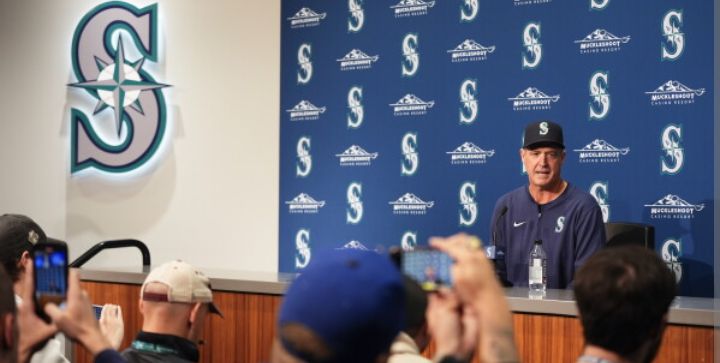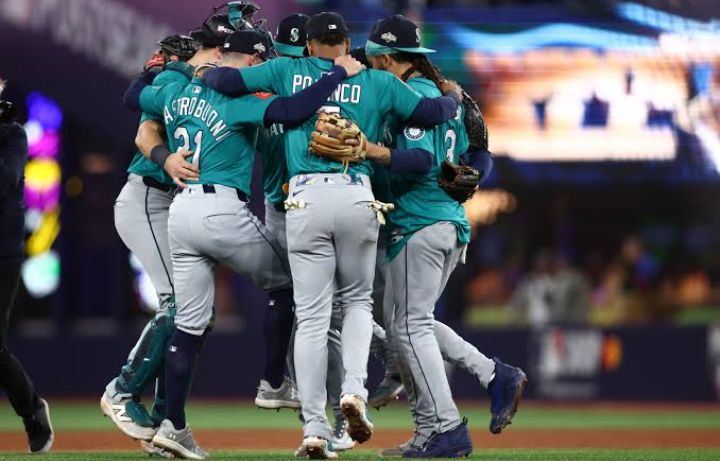
The Seattle Mariners are working to resolve internal communication issues surrounding their current pitching strategy involving Bryce Miller and Luis Castillo. While the team believes the piggyback system has been effective on the field, recent frustrations from both pitchers highlighted a growing concern about how the plan was communicated behind the scenes.
Following Monday’s game, several members of the Mariners organization spent Tuesday addressing the situation directly with both pitchers. Manager Dan Wilson, pitching coach Pete Woodworth, and president of baseball operations Jerry Dipoto all held discussions with Miller and Castillo in an effort to clarify the team’s plans moving forward and ease any frustrations that had surfaced publicly.
Despite the tension, the Mariners are expected to continue using the piggyback approach in the near future. Seattle plans to use the same strategy again during Sunday’s matchup against the Arizona Diamondbacks at T-Mobile Park. Miller will start the game, while Castillo is expected to follow out of the bullpen.
The arrangement has actually produced strong results for the Mariners so far. In the two games where the pair has shared pitching duties, they have combined for a remarkable 2.12 ERA while striking out 21 batters and walking only five. Opposing hitters have struggled to generate offense against them, posting a low OPS while the duo has covered nearly every inning in those contests.
Even with the success on the mound, communication problems became the main source of frustration. Both pitchers appeared unhappy with aspects of the arrangement during Monday’s game. Miller admitted afterward that he received very little advance notice regarding which role he would have during the piggyback setup. Castillo also showed visible frustration after being removed from the game earlier than expected, despite understanding beforehand that his workload would be limited.
Seattle’s leadership acknowledged that the communication process could have been handled more effectively. Dan Wilson stressed that making sure everyone fully understands the plan is extremely important, especially when players are being asked to adjust to unfamiliar roles for the benefit of the team.
Jerry Dipoto later explained that while the situation may not be ideal for everyone involved, the organization believes Tuesday’s conversations helped establish a clearer understanding of the current strategy and future plans. According to the Mariners, both Miller and Castillo responded positively to those discussions.
Part of the challenge stems from the fact that the Mariners are still experimenting with how to manage six healthy starting pitchers at once. Earlier in the season, injuries limited the rotation options, but now Seattle suddenly finds itself with more capable starters than available rotation spots. Initially, the club used a traditional six-man rotation after Miller returned from the injured list. However, scheduling flexibility and off-days later opened the door for the piggyback system.
The Mariners have made it clear they do not intend to permanently move either Miller or Castillo into a bullpen-only role. They also do not want to send any starter down to the minor leagues. Instead, the organization is trying to find a balance that allows all six pitchers to contribute while preserving their health and effectiveness throughout the season.
Bryce Miller has been especially impressive since returning from injury. The Mariners believe he has looked dominant in recent outings and want to continue building his confidence. Because of his injury history and workload management concerns over the past year, some around the organization viewed him as the most logical candidate for bullpen work. However, Seattle does not want to risk disrupting the momentum he has built on the mound.
Luis Castillo presents a different challenge. While he has been less consistent this season compared to previous years, the Mariners still value him as a proven starting pitcher. Moving him into a bullpen role for an extended period could create complications if the team later needs him back in the rotation due to another injury. Once a pitcher fully transitions into bullpen work, it can take several weeks to rebuild the stamina necessary for starting again.
The Mariners are also receiving strong performances from Emerson Hancock, who stepped into the rotation earlier in the season while Miller recovered from injury. Hancock has quietly become one of Seattle’s most reliable starters, consistently giving the team competitive outings. During Tuesday’s game, he began by retiring the first 12 batters he faced, further strengthening his case to remain firmly in the rotation.
At the same time, Seattle has no interest in reducing the workloads of George Kirby, Bryan Woo, or Logan Gilbert. All three remain key pieces of the rotation and are viewed as essential to the team’s long-term success. Using a permanent six-man rotation could reduce the number of starts those pitchers receive, something the organization would prefer to avoid.
In many ways, having six healthy and productive starting pitchers is considered a luxury in modern baseball. Most teams spend much of the season struggling to find enough reliable arms. However, the Mariners’ situation has also created difficult decisions regarding roles, communication, and expectations.
The organization now understands that managing those relationships is just as important as the statistical success of the strategy itself. Seattle believes the direct conversations held Tuesday were an important step toward improving trust and clarity between players and management.
Meanwhile, elsewhere around Major League Baseball, the Chicago Cubs continue to battle through a brutal losing streak after suffering another heavy defeat against the Pittsburgh Pirates.
Left-handed pitcher Jordan Wicks endured a difficult season debut as the Pirates rolled to a dominant 12-1 victory. Wicks allowed five runs in the opening inning and ultimately surrendered eight runs over 4 1/3 innings. The Cubs have now lost 10 straight games, marking their longest losing streak since 2022.
The rough outing was especially disappointing for Wicks because his previous appearance at PNC Park had been far more memorable. Back in his Major League debut in 2023, he recovered after early trouble and retired 15 consecutive batters to earn a victory against Pittsburgh. This time, however, he struggled to settle in after issuing a four-pitch walk to begin the game.
Afterward, Wicks took responsibility for the loss, admitting that adrenaline affected his command early. He acknowledged that putting the team in an immediate deficit created a difficult situation from the very start.
The Cubs’ current losing streak has become one of the more surprising developments of the season because the team had already recorded two separate 10-game winning streaks earlier this year. According to historical records, only one other team in MLB history has experienced multiple 10-game winning streaks and a separate 10-game losing streak within the same season.
Chicago’s offensive struggles have played a major role in the collapse. Although players like Alex Bregman and Carson Kelly contributed multiple hits during Tuesday’s game, the Cubs once again failed to capitalize with runners in scoring position. The team stranded 11 runners and finished with just one hit in 13 opportunities in key scoring situations.
Manager Craig Counsell expressed frustration after the game, emphasizing the need for players to deliver in important moments. He stressed that the team must produce quality at-bats in pressure situations if they hope to end the losing streak and regain momentum.
Veteran infielder Nico Hoerner also admitted that every player shares responsibility for the skid. He explained that too many opportunities have been missed throughout the streak and that the team simply needs to execute better in critical moments.
As both the Mariners and Cubs continue navigating very different challenges, one theme remains clear across baseball: success depends not only on talent, but also on communication, consistency, and the ability to respond under pressure.