The Texas Rangers continue to navigate a difficult stretch with injuries affecting key members of their lineup, but there is both encouraging and concerning news surrounding two of the club’s biggest stars. While shortstop Corey Seager is making steady progress toward returning to the active roster, third baseman Josh Jung appears increasingly likely to land on the injured list after failing to recover from a calf issue.
As the Rangers prepare for the Aug. 3 MLB trade deadline, the health of both players could significantly influence the club’s roster decisions. Seager’s recovery offers hope that one of baseball’s premier hitters could soon rejoin the lineup, but the potential loss of Jung threatens to create another major hole in the team’s offense.
Corey Seager Takes Major Step Forward
Seager reached an important milestone in his rehabilitation by participating in an extensive live batting practice session that closely resembled an actual game environment.
Instead of simply taking swings, the veteran shortstop completed a comprehensive workout that included defensive drills, running the bases, changing positions between plays, and other game-like activities. The Rangers designed the workout to simulate the demands of a minor league rehabilitation assignment without requiring Seager to leave the club.
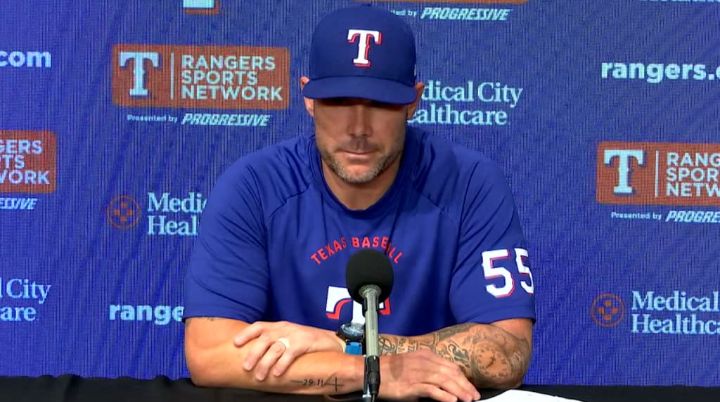
Manager Skip Schumaker explained that the organization attempted to recreate the experience of a rehab game as closely as possible.
Although the workout provided valuable feedback, Schumaker acknowledged that certain elements of competitive baseball are difficult to duplicate during practice sessions. Facing live pitching and moving through realistic defensive situations helps, but nothing perfectly replaces actual game action.
Recovery Remains the Biggest Test
Despite the positive signs, the Rangers are taking a cautious approach with Seager’s recovery. The club plans to closely monitor how his body responds after the demanding workout before deciding on the next phase of his rehabilitation.
If everything goes as expected, Seager is expected to participate in another live batting practice session over the weekend. The exact timing will depend on how he feels physically after completing Friday’s workload.
Another factor is finding an appropriate pitcher to face him. The Rangers hope to bring in a pitcher from either their Double-A or Triple-A affiliate to provide quality competition during the next session.
At the moment, Sunday appears to be the most likely date for that workout.
Rehab Assignment Still Possible
Although Seager has remained with the major league club throughout much of his recovery, the Rangers have not ruled out sending him to the minors for a brief rehabilitation assignment before activating him.
Schumaker indicated that the organization is flexible regarding that decision.
Rather than requiring an extended stay in the minor leagues, the Rangers believe Seager may only need one or two rehab games if he continues progressing at his current pace. That would allow him to regain his timing while minimizing unnecessary delays before returning to the major league lineup.
The club’s confidence stems from Seager’s experience and track record. As one of baseball’s most accomplished hitters and a two-time World Series MVP, he may not require a lengthy period to prepare for major league competition.
Josh Jung’s Recovery Moving in the Opposite Direction
While optimism surrounds Seager, the situation involving Josh Jung has become increasingly concerning.
The Rangers had hoped that a couple of days of rest would allow Jung to recover from the calf injury that forced him out of Tuesday’s game. After sitting out Wednesday and benefiting from Thursday’s scheduled off day, the expectation was that he might be available when the Rangers opened their weekend series against the Seattle Mariners.
Unfortunately, those hopes faded after Jung attempted baseball activities before Friday’s game.
According to Schumaker, Jung was unable to run anywhere near full speed. The manager estimated that the third baseman was operating at roughly half of his normal sprinting ability.
For a position player, especially an infielder expected to cover ground defensively and run the bases, that level of mobility simply isn’t enough to compete safely or effectively.
Sprinting Remains the Biggest Concern
Schumaker’s evaluation made it clear that Jung’s inability to sprint is the primary obstacle preventing his return.
After observing Jung during pregame workouts, the manager acknowledged that the third baseman simply could not move well enough to justify placing him in the lineup.
Even though Jung may still be capable of swinging the bat, baseball requires much more than hitting. Players must be able to run out ground balls, react defensively, and move aggressively on the bases.
Without that ability, the Rangers are reluctant to risk further injury.
Schumaker noted that it becomes difficult to argue for keeping a player active when he cannot run at full speed.
Pinch-Hitting Remains an Option
The Rangers have not completely eliminated the possibility of using Jung in a limited role.
Schumaker suggested that pinch-hitting remains under consideration if the team believes Jung can contribute offensively without placing excessive strain on his calf.
However, his overall comments suggested little optimism that Jung would improve quickly enough to avoid an injured list stint.
The Rangers also must think beyond a single game. Carrying a player who cannot play defense or run the bases limits roster flexibility throughout an entire series.
Roster Decision Appears Imminent
Because the Rangers need a fully functional roster for their series against Seattle, Schumaker indicated that the organization will soon have to make a decision regarding Jung’s status.
Ezequiel Duran started at third base while Jung remained unavailable, providing temporary coverage at the position.
Still, if Jung’s condition does not improve rapidly, the Rangers may have little choice but to place him on the injured list to create room for a healthy replacement.
Schumaker acknowledged that the decision could come very soon, emphasizing that teams cannot afford to compete while effectively playing one man short.
Trade Deadline Could Be Affected
The contrasting health updates for Seager and Jung arrive at an important point in the Rangers’ season.
With the MLB trade deadline approaching on Aug. 3, front office executives are evaluating the club’s biggest needs. Seager’s expected return could lessen concerns about the infield and provide an immediate offensive boost.
However, if Jung is sidelined for an extended period, the Rangers may need additional infield depth or another right-handed bat to help stabilize the lineup.
Health often plays a significant role in shaping trade deadline strategy, and the Rangers now face the possibility of welcoming one star back while simultaneously losing another.
Looking Ahead
Overall, Friday brought mixed emotions for the Rangers.
Seager appears to be moving closer to returning after successfully completing one of the most demanding workouts of his rehabilitation. If he continues progressing without setbacks, another live batting practice and possibly a brief rehab assignment could put him on track to rejoin the major league roster in the near future.
Jung’s outlook is considerably less encouraging. His inability to run at full speed raises serious concerns about his availability, making an injured list move increasingly likely unless his calf responds quickly over the next day or two.
As the Rangers attempt to strengthen their postseason hopes and finalize their trade deadline plans, the health of both infield stars will remain one of the organization’s biggest storylines in the days ahead.