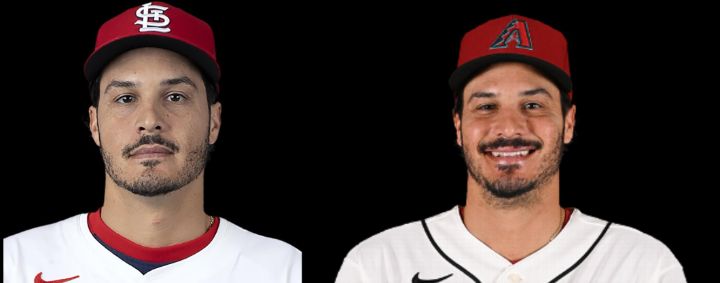
When the Arizona Diamondbacks acquired Nolan Arenado from the St. Louis Cardinals in January, the move was designed to give the club an experienced and dependable presence at third base. Arizona hoped the veteran infielder would help stabilize the lineup and defense while the team competed for a postseason spot.
Although the Diamondbacks ultimately fell short of their Wild Card ambitions, Arenado was hardly responsible for that disappointment. Instead, the 35-year-old veteran produced one of the more encouraging offensive seasons of his recent career, showing signs of life after several difficult years at the plate.
Arenado entered 2026 coming off a prolonged offensive decline. His production had fallen considerably from the standards he established earlier in his career, particularly during the 2023-25 period with St. Louis. His first season in Arizona, however, offered plenty of evidence that there was still something left in the tank.
Arenado Starts the Season Strong
Arenado immediately gave the Diamondbacks reason to believe their gamble could pay off.
Through the end of May, he accumulated exactly 200 plate appearances while hitting .269/.350/.451. His plate discipline was also encouraging. Arenado struck out in only 19% of his plate appearances and walked 9% of the time, both of which represented better-than-average figures.
His 121 wRC+ during that stretch was particularly noteworthy. Had he maintained that level over a full season, it would have represented his best offensive mark since 2022.
That 2022 campaign was the last time Arenado looked like a genuine MVP-caliber hitter. He finished third in National League MVP voting that year, behind his former Cardinals teammate Paul Goldschmidt and San Diego Padres star Manny Machado.
For a player who had spent the previous few seasons trending in the opposite direction, Arenado’s opening two months in Arizona were an encouraging development.
June Brings a Major Setback
Unfortunately for Arenado and the Diamondbacks, the strong start did not continue uninterrupted.
June became his most difficult month of the season. Arenado received 106 plate appearances but managed only a .196/.255/.299 slash line. His 53 wRC+ indicated that his offensive production was 47% below league average during the month.
The slump significantly damaged his overall numbers. His season-long wRC+ dropped below league average to 97, raising questions about whether his early-season success had simply been a temporary resurgence.
At that point, it appeared possible that Arenado’s career decline was continuing. After several seasons of declining production, one hot opening month or two wasn’t necessarily enough to prove that the veteran had rediscovered his previous form.
Still, Arenado refused to completely disappear.
A Steady Summer Sets the Stage
Arenado showed some improvement during July and August, although his batting average remained relatively modest. Rather than consistently producing the well-rounded offensive numbers associated with his prime, he increasingly relied on his power to make an impact.
By the end of August, Arenado was hitting .238/.312/.429 for the season. His wRC+ had climbed back to 103, putting him slightly above league average.
That represented a clear improvement over the 84 wRC+ he posted with the Cardinals in 2025. However, it still wasn’t enough to suggest that the old Arenado had completely returned.
There was also a concern surrounding his health. In August, Arenado underwent an MRI because of a torso issue. Fortunately for Arizona, the injury did not result in a lengthy absence. He ultimately missed only two days.
Then September arrived, and Arenado suddenly looked like a completely different hitter.
Arenado Explodes in September
The final month of the regular season was easily the most impressive portion of Arenado’s campaign.
With Arizona fighting to remain in the Wild Card race, the veteran third baseman produced at an extraordinary level. Over his final 95 plate appearances, Arenado hit .349/.432/.723.
He also launched nine home runs during that stretch, accounting for nearly one-third of his 30 homers for the entire season.
That late surge dramatically changed the perception of his 2026 campaign. What had looked like a modest bounce-back season suddenly became a much more impressive comeback story.
Unfortunately for the Diamondbacks, Arenado’s late-season surge wasn’t enough to carry the club into October. Arizona’s season officially ended when Philadelphia defeated Tampa Bay on the final day of the regular season.
Even so, Arenado finished with a respectable overall statistical line: a .255/.331/.475 slash line, 30 home runs, 86 RBIs, a 20% strikeout rate, an 8.7% walk rate and a 120 wRC+.
FanGraphs also credited him with 3.5 WAR.
For a player coming off several disappointing seasons, those numbers represented a significant step forward.
Arizona Has an Interesting 2027 Decision
The Diamondbacks now have Arenado under contract for the 2027 season at a $15 million salary. However, Arizona is responsible for only $6 million of that amount because the Cardinals are covering the remaining $9 million.
That makes Arenado potentially one of the more valuable pieces on Arizona’s roster heading into next season.
The Diamondbacks are expected to reduce payroll while addressing several areas of need. The club is reportedly looking to improve at first base and designated hitter while potentially adding another starting pitcher.
If Arenado can remain healthy and productive, third base won’t need to become another major item on Arizona’s offseason shopping list.
At 36 years old, however, there are legitimate reasons to be cautious.
The Underlying Numbers Raise Questions
Arenado’s traditional statistics look encouraging, but some of his underlying Statcast numbers tell a different story.
His average exit velocity fell to a career-low 85.2 mph, while his hard-hit rate dropped to 31.2%. Those numbers ranked in only the third and 14th percentiles, respectively.
His expected batting average was also considerably lower than his actual mark. Arenado hit .255, but his expected batting average was only .231.
The gap was even more significant when looking at his slugging percentage. His actual .475 slugging percentage was substantially higher than his .366 expected slugging percentage.
That figure was much closer to what Arenado produced in 2025.
In other words, there is evidence that some of his 2026 offensive success may have been fueled by results that his underlying quality of contact does not completely support.
Arenado Changed His Approach
Another noticeable development was Arenado’s increased tendency to pull the baseball.
He pulled 52.2% of his balls in play in 2026, compared with 44.7% the previous season.
That change could be related to his advancing age. As bat speed declines, hitters sometimes compensate by getting the bat out earlier and attempting to pull the ball rather than trying to consistently drive pitches to all areas of the field.
Despite those concerns, Arenado continued to punish certain pitch types.
He generated a +13 Run Value against fastballs, +7 against sliders and +4 against sinkers. Sweepers, however, presented a much bigger challenge, against which he recorded a -4 Run Value.
His overall Statcast profile contained several areas of concern. While his Batting Run Value was strong at +23, many of his other underlying measurements were less encouraging.
His 20% strikeout rate was actually the highest of his career, although his overall whiff rate remained around average.
Defense Remains a Positive
Arenado’s value isn’t limited to his offense.
While he is no longer the dominant defensive third baseman who routinely competed for Gold Gloves during his Colorado years, he remains a capable defender at the position.
Statcast credited him with +2 Outs Above Average at third base in 2026. Defensive Runs Saved was considerably less enthusiastic, assigning him a -4 mark.
Still, Statcast’s Fielding Run Value placed him in the 61st percentile, suggesting that he remains a competent defensive option at the hot corner.
That matters considerably for Arizona. If Arenado can maintain respectable defense while producing even moderately above-average offense, he can continue to provide useful value.
What Comes Next for Arenado?
The biggest question surrounding Arenado’s 2027 season is whether his 2026 resurgence was the beginning of a genuine revival or simply the product of a favorable season that may be difficult to repeat.
The Diamondbacks would obviously prefer the former.
His surface statistics suggest that Arenado still has enough offensive ability to contribute meaningfully. His late-season surge was particularly encouraging, and his defensive experience remains valuable.
At the same time, his declining exit velocity, low hard-hit rate and significant difference between his actual and expected power numbers provide legitimate reasons for skepticism.
Arizona shouldn’t necessarily expect another 120 wRC+ season from Arenado. But he doesn’t need to return to his MVP-caliber peak to justify his contract.
If he can find a middle ground between his disappointing 2023-25 stretch and his strong 2026 production, remain healthy and continue playing competent defense, Arenado could still be an important part of Arizona’s plans.
For a Diamondbacks team attempting to reshape its roster in 2027, getting that kind of production from a veteran third baseman at only $6 million could prove extremely valuable.