The St. Louis Cardinals have important decisions ahead as they look to build a team capable of competing for championships in the coming seasons. While developing young talent and strengthening the roster remain essential priorities, the organization must also address a problem that affected several key players during the 2026 MLB season: injury management.
Baseball is a demanding sport, and injuries are almost unavoidable over a 162-game regular season. Players deal with soreness, muscle problems, joint pain, and other physical setbacks while trying to help their teams win. However, there is a significant difference between managing minor discomfort and allowing an injury to interfere with a player’s performance for an extended period.
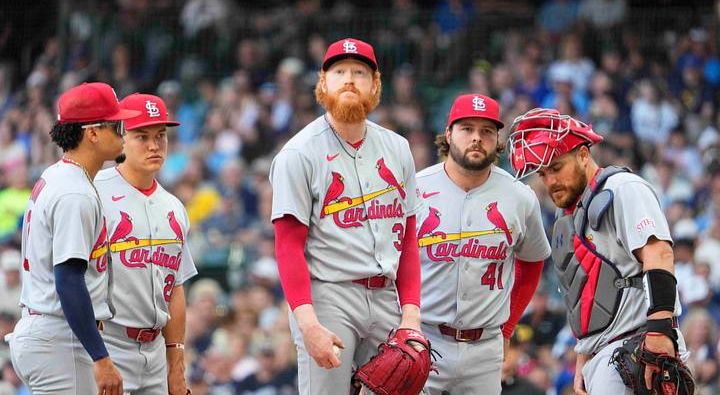
For the Cardinals, the experiences of Masyn Winn, JJ Wetherholt, and Jordan Walker raise questions about whether the organization has been sufficiently cautious with its young core. Their situations suggest that the club needs to improve communication between players, medical personnel, and decision-makers.
If St. Louis wants to establish itself as a serious contender again, protecting its most important players must become a greater priority.
MASYN WINN’S INJURY TROUBLES RAISE CONCERNS
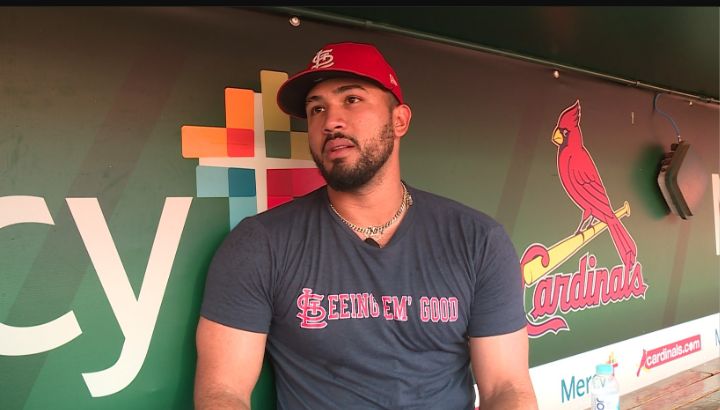
Masyn Winn has established himself as an important part of the Cardinals’ future, particularly because of his defensive ability at shortstop. His athleticism and range make him valuable in the field, while the organization continues to hope that his offensive production will develop into a consistent strength.
Unfortunately, injuries have complicated his progress over the past two seasons.
During the 2025 campaign, Winn played through a right knee problem that was eventually identified as a torn meniscus. Rather than immediately stepping away from the field, he continued playing before the Cardinals ultimately placed him on the injured list.
A similar situation developed in 2026, when Winn suffered a fractured left thumb after sliding into second base during an August 19 matchup against the Cincinnati Reds.
The injury appeared to affect his performance. During some subsequent at-bats, he struggled to maintain a normal grip on the bat, particularly when making contact that sent the ball toward the right side of the field.
Although he missed games, Winn remained involved in certain situations, including pinch-running and defensive duties. The Cardinals eventually placed him on the injured list on August 25, nearly a week after the original incident.
His return also proved complicated. Winn was activated on September 8 but was scratched from the following day’s lineup before eventually playing. Later in September, another removal from the lineup left him unavailable for the final two games against the Milwaukee Brewers.
These developments raise an important question: could the Cardinals have handled his recovery more effectively by taking a more cautious approach from the beginning?
Winn’s offensive numbers also demonstrate why his health matters. Before suffering the thumb fracture, he had recorded a .641 OPS, and his production declined further after his return, when he posted a .449 OPS across 42 plate appearances.
Those numbers do not establish that his injuries alone caused his offensive struggles. Nevertheless, playing while dealing with physical limitations can make it more difficult for a young hitter to develop consistency.
At just 24, Winn still has considerable potential. The Cardinals need to give him the best possible opportunity to reach it, and that means prioritizing complete recovery over the temptation to keep him on the field.
JJ WETHERHOLT’S WRIST PROBLEM AFFECTED HIS PRODUCTION
JJ Wetherholt represents another important example of why St. Louis needs to take a closer look at its injury-management decisions.
The young second baseman enjoyed a more productive first half of the 2026 season, recording a .755 OPS before the All-Star break. However, his performance declined significantly during the second half, when his OPS dropped to .608.
His power production also suffered. Wetherholt finished the second half with a .301 slugging percentage, a concerning figure for a hitter expected to contribute offensively.
He eventually landed on the injured list with right wrist tendinitis.
A wrist problem can be particularly challenging for a baseball player because hitting requires precise coordination, bat control, and the ability to generate power through repeated swings. Even when a player remains available, discomfort or restricted movement can affect the quality of his at-bats.
Wetherholt returned to action in September and appeared more comfortable during his first nine games back. He collected eight hits during that stretch, offering some encouragement that he could regain his rhythm.
However, the overall results remained mixed. His only extra-base hit during that period was a double, while he struck out nine times and drew just one walk.
The Cardinals have invested in Wetherholt as part of their future, making his long-term development especially important.
With the team having limited opportunities to change its position during the final two weeks of the regular season, the organization could have considered whether exposing him to additional playing time was worth the risk.
A more conservative workload might have provided additional time for his wrist to recover without placing unnecessary pressure on the injured tendon.
His situation reinforces the need for the Cardinals to identify physical problems early and adjust workloads before injuries begin affecting performance.
JORDAN WALKER’S LATE-SEASON STRUGGLES HAD AN IMPORTANT EXPLANATION
Jordan Walker entered the 2026 season with considerable expectations, and for much of the year, he delivered an encouraging performance.
The talented outfielder earned his first All-Star selection and won the Home Run Derby, giving Cardinals supporters plenty of reasons to believe he was finally taking an important step forward.
However, his production declined sharply during the second half of the season.
Walker ultimately finished one home run short of a 30-home-run, 30-stolen-base campaign, while his second-half OPS fell more than 200 points below his first-half mark.
The explanation for his late-season difficulties became clearer when Derrick Goold of the St. Louis Post-Dispatch reported that Cardinals president of baseball operations Chaim Bloom had confirmed Walker was playing through hip pain during the closing weeks of the regular season.
The timing was significant.
From September 13 through the end of the campaign, Walker recorded a .109 batting average, a .196 on-base percentage, and a .174 slugging percentage. His OPS during that stretch was just .370.
Across his final 20 games, he hit .116/.197/.174, with one home run, one double, and a strikeout rate of 35.5%.
Those numbers represented a disappointing conclusion to what had otherwise been a promising season.
It would be difficult to attribute every offensive problem to his hip discomfort alone. Nevertheless, the reported injury provides important context for his decline.
Walker had demonstrated that he could become a powerful middle-of-the-order hitter. Allowing him to continue playing through an injury that may have affected his performance raises questions about whether the Cardinals could have protected both his health and his long-term development more effectively.
For a young player still establishing himself in the major leagues, finishing the season healthy could be more valuable than pushing through unnecessary discomfort during games with limited competitive significance.
THE CARDINALS MUST CHANGE THEIR APPROACH
The situations involving Winn, Wetherholt, and Walker illustrate a common concern: the Cardinals need a clearer and more cautious process for determining when injured players should continue competing.
Players naturally want to remain on the field. They want to help their teammates, maintain their positions, and contribute to winning baseball. Some may even underestimate their symptoms because they fear missing important opportunities.
That is why the responsibility cannot rest entirely on the players themselves.
Coaches, medical personnel, and front-office decision-makers must work together to evaluate injuries honestly and establish appropriate recovery plans.
The Cardinals should also consider the wider consequences of keeping injured players on the active roster. When a player is unavailable for several consecutive games but has not been placed on the injured list, the team can effectively lose flexibility on its bench.
A more decisive approach could help the organization manage roster spots, provide adequate recovery time, and reduce the possibility of returning players to action before they are ready.
This does not mean every minor injury should result in an injured-list placement. Rather, the team needs to assess each situation carefully instead of assuming that a player can safely continue because the injury does not appear immediately severe.
THE FINAL WORD
The St. Louis Cardinals have promising young players who could become central figures in the organization’s next competitive window.
Masyn Winn offers defensive excellence and room for offensive growth. JJ Wetherholt has the potential to become a productive presence in the infield, while Jordan Walker has already demonstrated the power and athleticism needed to influence games.
However, talent alone will not guarantee success.
If the Cardinals want these players to reach their full potential, they must make player health a central part of their development strategy. Recognizing injuries early, communicating clearly, and allowing sufficient recovery time should take precedence over short-term decisions that could compromise long-term progress.
The 2026 season has provided several examples of why a change may be necessary.
St. Louis cannot eliminate injuries entirely, but it can improve how it responds to them. A more careful and proactive approach could help preserve its young core, maintain roster flexibility, and give the organization a stronger foundation for future championship contention.
Ultimately, the Cardinals must understand that keeping their best players healthy is not simply a medical responsibility. It is an essential part of building a winning baseball team.