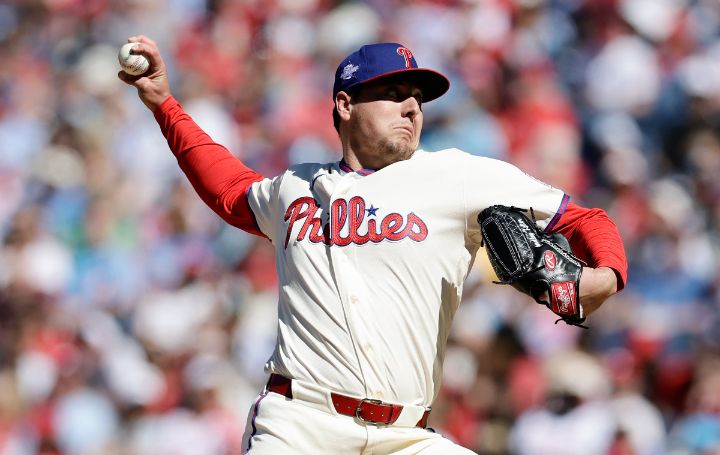
The Philadelphia Phillies entered the second half of the season with a clear objective: strengthen the bullpen before the MLB trade deadline. While the team has remained competitive, relief pitching has consistently been viewed as its biggest weakness, making it the front office’s top priority. However, a recent injury to reliever Brad Keller has complicated those plans and sparked a fresh debate about how Philadelphia should approach the trade market.
Before Keller’s setback, many believed the Phillies only needed to add one reliable late-inning reliever. The bullpen had shown flashes of quality, but it lacked enough dependable arms capable of handling high-pressure situations against playoff-caliber opponents. A single impact acquisition appeared sufficient to stabilize the relief corps for the stretch run.
Now, the situation looks very different.
Keller’s injury has removed another valuable option from the bullpen, creating a larger hole than the Phillies originally expected to fill. Instead of targeting one reliever, the club may now need to acquire multiple bullpen arms to ensure manager Rob Thomson has enough trustworthy pitchers when games matter most.
That development raises an important question: should the Phillies devote nearly all of their trade resources to improving the bullpen, or should they continue addressing other weaknesses on the roster?
The answer is far from simple.
Bullpen Still Remains the Biggest Concern
Throughout the season, Philadelphia’s bullpen has produced inconsistent results. While several relievers have delivered strong outings, others have struggled to protect leads or escape difficult situations. In October, where nearly every game comes down to a few critical innings, having a deep bullpen is often just as important as having elite starting pitching.
With Keller sidelined, the Phillies’ margin for error becomes even smaller.
Late-inning options are now thinner, increasing the workload on the remaining high-leverage relievers. Overusing those pitchers during the regular season could also affect their effectiveness once the postseason begins.
Because of that, many fans believe acquiring at least two experienced relievers should become the organization’s primary focus before the deadline.
Other Needs Haven’t Disappeared
Although the bullpen demands immediate attention, it isn’t the Phillies’ only concern.
Some observers still believe the team could benefit from adding another outfielder, particularly a right-handed hitter who performs well against left-handed pitching. Such an addition would provide more balance to the lineup and create additional flexibility for Rob Thomson when constructing his batting order.
Others remain focused on the starting rotation.
While Philadelphia possesses several talented starters, injuries and workload concerns can quickly become significant issues over the final months of a long season. Another dependable starter would offer insurance if someone misses time or struggles during the playoff push.
The challenge for the front office is balancing those needs without sacrificing too many top prospects.
Managing Prospect Capital
Every trade deadline forces contenders to evaluate how much of their future they’re willing to trade for a better chance at winning immediately.
Philadelphia has several promising prospects who could interest rebuilding clubs, but moving too many young players can weaken the organization’s long-term outlook.
If the Phillies now need multiple relievers instead of just one, the cost could rise considerably.
Acquiring two quality bullpen arms may require giving up additional prospects, leaving fewer resources available to pursue upgrades at other positions like the outfield or starting rotation.
President of Baseball Operations Dave Dombrowski will need to determine whether concentrating most of the club’s trade assets on relief pitching provides the greatest opportunity for postseason success.
Why Bullpen Depth Matters
Recent playoff history across Major League Baseball has demonstrated the importance of bullpen depth.
Games often become tightly contested during October, with managers relying heavily on relievers after starters leave the game. Teams capable of consistently shutting down opponents over the final innings usually enjoy a significant advantage.
Philadelphia experienced that firsthand during previous postseason runs, when dominant relief pitching played a major role in several playoff victories.
If the bullpen lacks enough reliable options, even strong starting performances can go to waste.
That’s one reason many fans believe strengthening the relief corps should outweigh every other deadline objective.
Arguments for Expanding the Focus
Not everyone agrees that the Phillies should exclusively pursue bullpen help.
Some believe the offense could become more dangerous with another productive bat, especially one capable of improving the lineup against difficult left-handed pitchers.
Others argue that another quality starting pitcher would provide valuable insurance for the final months of the season. If an injury occurs within the rotation, the Phillies could suddenly face another significant weakness entering the playoffs.
From that perspective, focusing solely on relief pitching could leave other areas vulnerable.
A Difficult Balancing Act
The Phillies’ front office now faces a more complicated trade deadline than it anticipated only a few days ago.
Before Keller’s injury, the team’s strategy seemed relatively straightforward: add one late-inning reliever while exploring opportunities to improve other areas if the right deal became available.
Now, priorities may have shifted dramatically.
The organization must determine whether replacing Keller internally is realistic or whether outside help has become essential. If internal options cannot provide enough consistency, external additions become almost unavoidable.
At the same time, Philadelphia cannot ignore the possibility that another weakness could emerge during the season’s final stretch.
What Fans Are Debating
Phillies supporters are now divided over the best course of action.
One group believes every available resource should be directed toward rebuilding the bullpen. They argue that playoff games are frequently decided by relief pitching, making it the roster’s most important weakness.
Another group supports a more balanced approach. While acknowledging the bullpen’s importance, they believe the Phillies should continue searching for improvements in the lineup or rotation if attractive trade opportunities become available.
Both viewpoints have merit, highlighting how much Keller’s injury has complicated the deadline discussion.
Final Thoughts
Brad Keller’s injury has unquestionably changed the conversation surrounding Philadelphia’s trade deadline strategy. What once looked like a relatively manageable bullpen upgrade has evolved into a more urgent challenge that could require multiple acquisitions.
The Phillies remain firmly in contention, but their path toward another deep postseason run may depend on how effectively they address their bullpen concerns over the coming weeks. Whether the front office chooses to focus almost entirely on relief pitching or spreads its resources across several positions, every decision will carry significant consequences.
With the trade deadline approaching, Philadelphia must carefully balance immediate needs against long-term organizational health. Keller’s absence has made that balancing act considerably more difficult, ensuring that the Phillies’ deadline strategy will remain one of the most closely watched storylines as the season continues.