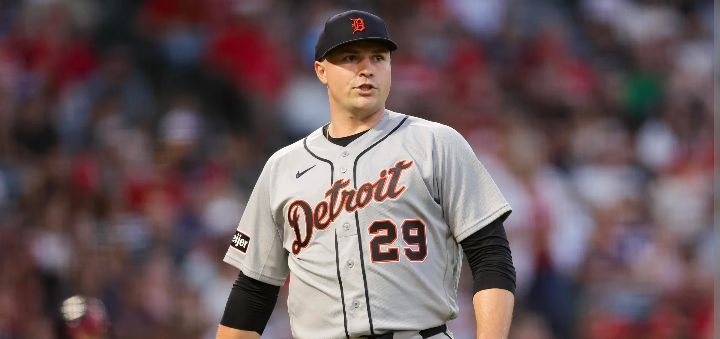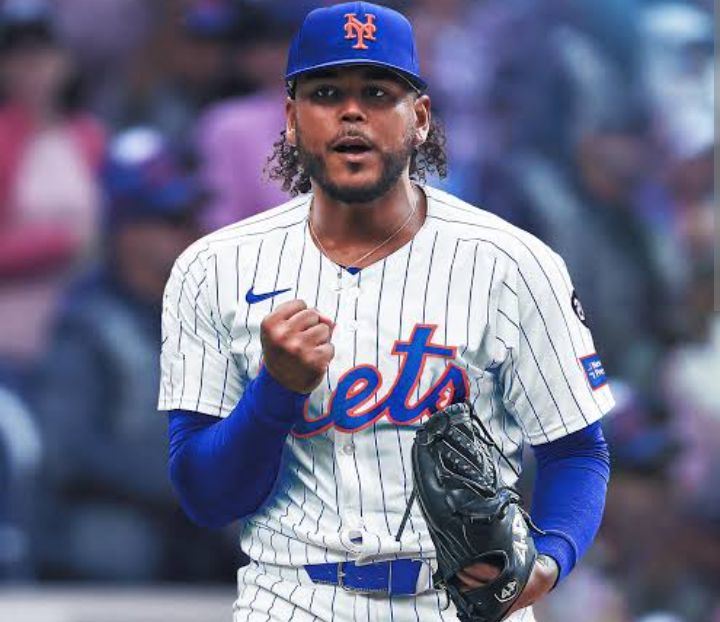
As the MLB trade deadline draws closer, speculation around the New York Mets continues to grow. With the club firmly in the postseason race, many believe the front office could look to strengthen its starting rotation before the stretch run. One name that has repeatedly surfaced in trade discussions is Milwaukee Brewers ace Freddy Peralta, but a new trade proposal has taken an unexpected turn by involving a National League East rival.
Instead of completing a deal directly with Milwaukee, a creative three-team trade scenario suggests the Mets could acquire Peralta through an arrangement that includes one of their division opponents. While trades between rivals are uncommon, they are not impossible when all organizations believe they are improving their long-term outlook.
Peralta has established himself as one of baseball’s most dependable starting pitchers. The right-hander combines an electric fastball with swing-and-miss secondary pitches, making him one of the league’s premier strikeout artists. His ability to dominate opposing lineups has made him an attractive target for teams seeking frontline pitching.
For the Mets, adding a pitcher of Peralta’s caliber would significantly improve a rotation that has experienced periods of inconsistency throughout the season. Although New York has received quality performances from several starters, the team has lacked another proven ace capable of matching up against the National League’s elite during a playoff series.
The proposed trade would reportedly require the Mets to part with several promising young players. While losing prospects is never easy, acquiring an established frontline starter often demands a substantial return. New York’s front office must carefully balance protecting its future while maximizing the opportunity to compete for a championship this season.
The surprising element of the proposal is the involvement of a division rival acting as the middle team in the transaction. Rather than directly exchanging players with Milwaukee, the rival club would receive assets from one side while sending talent elsewhere, allowing every organization to address specific roster needs.
Three-team trades have become increasingly common across Major League Baseball because they allow clubs to solve problems that cannot be addressed through a traditional two-team deal. Each franchise can target different assets, making complicated transactions more realistic than ever before.
For Milwaukee, moving Peralta would represent a difficult decision. He remains one of the organization’s most valuable players and has been instrumental in keeping the Brewers among the National League’s top contenders. However, if the Brewers determine they cannot retain him long term or receive an overwhelming package of young talent, listening to offers could become a realistic option.
Peralta’s contract also enhances his trade value. Compared to many frontline starters, his salary remains relatively affordable, making him attractive to teams attempting to improve without dramatically increasing payroll commitments. Financial flexibility is especially valuable for organizations managing competitive balance while planning for future seasons.
The Mets have shown a willingness in recent years to make aggressive moves whenever they believe a championship opportunity exists. Team owner Steve Cohen has consistently demonstrated that he is prepared to invest heavily in improving the roster, and president of baseball operations David Stearns understands Peralta well from his years running Milwaukee’s baseball operations.
That previous relationship could provide valuable insight during negotiations. Stearns knows exactly what kind of competitor Peralta is, how he prepares between starts, and what he brings inside the clubhouse. Familiarity with a player’s character often becomes an important factor when deciding whether to surrender premium prospects.
Peralta’s pitching style also fits well in New York. He generates strikeouts at an elite rate while limiting hard contact when he is commanding the strike zone. In October baseball, where every run matters, pitchers capable of missing bats become especially valuable because they reduce reliance on defensive plays.
If acquired, Peralta would immediately slot near the top of the Mets’ rotation. Pairing him with the club’s current starters would create a formidable playoff staff capable of competing with powerhouse teams throughout the National League.
Naturally, the cost of such an acquisition would be significant. Milwaukee would likely demand multiple top prospects, including players close to reaching the major leagues. The division rival participating in the trade would also expect valuable compensation for facilitating the transaction and addressing its own roster priorities.
Some analysts believe New York possesses enough organizational depth to complete such a trade without severely damaging its farm system. Others argue the Mets should avoid sacrificing too much young talent for one player, especially considering the unpredictable nature of pitching injuries.
The debate reflects the difficult decisions facing contenders every summer. Teams must determine whether immediate championship aspirations outweigh the long-term value of developing homegrown talent. There is rarely a perfect answer, as even well-planned trades carry considerable risk.
Another factor supporting a move for Peralta is his postseason potential. Throughout his career, he has demonstrated the ability to pitch in high-pressure environments, relying on strikeout stuff that often translates well during October competition. That experience could prove invaluable if the Mets make a deep playoff run.
Meanwhile, the involvement of a division rival adds another fascinating layer to the proposal. Although front offices generally hesitate to strengthen teams they compete against regularly, creative three-team trades can sometimes provide enough benefits to convince everyone involved.
Whether such a blockbuster ultimately materializes remains uncertain. Trade discussions frequently evolve as the deadline approaches, with player values changing based on injuries, standings, and organizational priorities. What appears unlikely one week can suddenly become realistic after several conversations between executives.
For Mets fans, however, the possibility of adding a pitcher like Freddy Peralta is certainly exciting. His combination of durability, strikeout ability, playoff experience, and team-friendly contract makes him one of the most attractive starting pitchers potentially available before the deadline.
If New York believes this season presents a genuine opportunity to contend for a World Series title, pursuing an impact starter could become one of the organization’s highest priorities. Whether that pursuit ultimately results in a surprising three-team trade involving an unexpected division rival remains one of the more intriguing storylines to watch as the deadline draws near.
Until an agreement is finalized, the rumors will continue circulating. But one thing is clear: if the Mets successfully land Freddy Peralta, it would rank among the most significant moves of the trade deadline and could dramatically reshape the National League playoff picture.