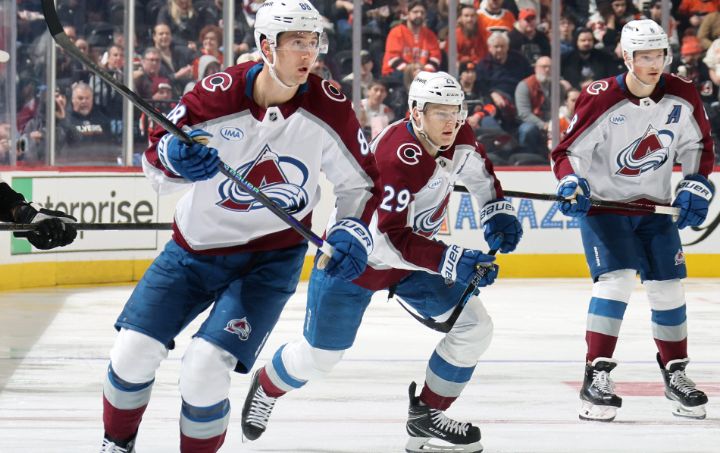
For the Colorado Avalanche, expectations are never small. This is a franchise built on speed, skill, and a championship pedigree that still echoes from their recent Stanley Cup triumph. Yet as the new season unfolds, all eyes are fixed on a single, defining decision—one that could determine whether the Avalanche rise back to dominance or quietly fall short of their own towering standards.
At the heart of this pivotal moment lies a question every contender must eventually face: Do you trust what you have, or do you make a bold move to fix what’s missing?
The Core Is Still Elite… But Is It Enough?
There’s no denying the Avalanche boast one of the most electrifying cores in the NHL. With elite talent driving the offense and a system built on relentless pace, Colorado remains a nightmare matchup for any opponent on a good night. Their transition game is still among the fastest in the league, and when they’re clicking, few teams can keep up.
But hockey seasons aren’t won on potential—they’re won on consistency.
That’s where the cracks begin to show. Depth scoring has been unpredictable. Defensive lapses, especially in high-pressure situations, have cost them key games. And perhaps most concerning of all, the margin for error seems thinner than it was during their championship run.
Which brings us back to the defining decision.
The Goaltending Gamble
If there’s one area under the microscope, it’s the crease.
Goaltending has always been the backbone of any championship team, and for the Avalanche, it’s no different. The front office now faces a high-stakes choice: stick with their current goaltending setup and hope for consistency, or make a bold move before it’s too late.
This isn’t just a tactical decision—it’s a philosophical one.
Staying the course signals confidence. It tells the locker room, “We believe in this group.” It preserves chemistry and avoids the disruption that often comes with mid-season changes.
But standing still can also be risky. In a league where contenders are constantly upgrading, hesitation can quickly turn into regret.
On the other hand, making a move—whether through a trade or a strategic shift—could inject new life into the team. A reliable, in-form goaltender can mask defensive issues, stabilize momentum, and give players the confidence to push forward offensively.
But bold moves come at a cost. Assets, chemistry, and long-term planning all hang in the balance.
The Locker Room Factor
What often gets overlooked in these discussions is the human element.
Hockey isn’t played on spreadsheets—it’s played in locker rooms filled with personalities, trust, and belief. A major decision, especially one involving key positions like goaltending or top-line roles, can ripple through the entire team.
If the Avalanche front office makes a move, it sends a clear message: the current setup isn’t enough.
That can motivate players—or it can create tension.
Veterans may feel pressure. Younger players might question their roles. And the delicate balance that fuels team chemistry could shift overnight.
Conversely, choosing not to act places the responsibility squarely on the players. It’s a vote of confidence—but also a challenge: prove you’re good enough.
The Western Conference Is Watching
The timing of this decision couldn’t be more critical.
The Western Conference is as competitive as ever, with multiple teams pushing hard for dominance. Every point matters. Every slump is magnified. And every missed opportunity can haunt a team come playoff time.
The Avalanche aren’t just competing against opponents—they’re competing against expectations.
Fans expect a deep playoff run. Analysts expect them to contend. And internally, anything less than another shot at the Stanley Cup feels like a missed opportunity.
That’s why this decision carries so much weight.
Risk vs. Reward
In many ways, this moment defines what kind of organization the Avalanche want to be this season.
Do they play it safe, trusting their system and hoping internal improvements will carry them forward?
Or do they take a calculated risk, making a move that could elevate them—but also backfire?
History in the NHL is filled with examples of both paths. Some teams have ridden loyalty and chemistry to unexpected success. Others have made bold, late-season moves that transformed them into champions.
But for every success story, there’s a cautionary tale.
The Fan Perspective
From the outside looking in, fans are divided.
Some believe the Avalanche already have everything they need. They point to the team’s proven stars and argue that patience—not panic—is the key.
Others see the warning signs. They worry that without a decisive move, the Avalanche could waste another year of their championship window.
And in a city that’s tasted recent glory, patience is in short supply.
The Clock Is Ticking
As the season progresses, the pressure will only intensify.
Every loss will spark debate. Every shaky performance will raise questions. And every standout rival move will amplify the urgency.
The Avalanche don’t have the luxury of waiting forever.
At some point, a decision must be made.
The Defining Moment
Ultimately, this isn’t just about goaltending, depth, or strategy. It’s about identity.
Who are the Colorado Avalanche this season?
Are they a team that believes its best hockey is still ahead, trusting the foundation that brought them success?
Or are they a team willing to evolve, adapt, and take risks in pursuit of greatness?
That one decision—whether to act or stand firm—will echo far beyond the regular season. It will shape the narrative of their year, define their playoff chances, and perhaps even alter the trajectory of the franchise in the seasons to come.
Final Thoughts
Championship windows in the NHL don’t stay open forever. Talent ages, contracts shift, and opportunities slip away faster than expected.
The Avalanche are still firmly in that window—but for how long?
That’s what makes this moment so critical.
Because sometimes, a season doesn’t hinge on a game-winning goal or a playoff series.
Sometimes, it comes down to a single decision.
And for the Colorado Avalanche, that decision is coming fast—and it might just decide everything.