The New York Yankees have decided to retain Aaron Boone as their manager, a move that has generated mixed reactions across baseball. While some fans believe the organization should have moved in a different direction following another disappointing postseason, the decision also highlights a significant challenge facing the Seattle Mariners as they search for their next manager.
With a potential MLB lockout approaching, timing has become an important factor in managerial decisions across the league. For the Yankees, keeping Boone provides continuity during an uncertain period. For Seattle, however, the situation presents a difficult question: Can the organization find the right manager before the approaching labor dispute complicates the transition?
The Mariners are still searching for a replacement for Dan Wilson, and the clock is ticking.
Why the Yankees Decided to Keep Aaron Boone
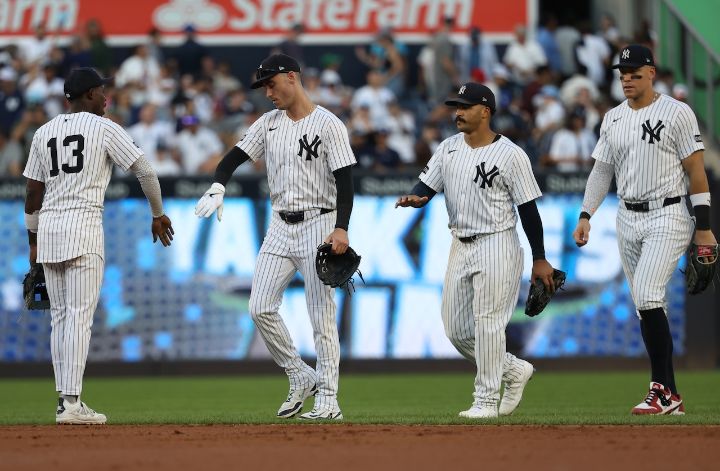
The Yankees entered the offseason facing considerable pressure after their postseason run ended in disappointing fashion. Their American League Division Series defeat against the Tampa Bay Rays intensified criticism of the team’s performance and raised questions about whether Boone remained the right person to lead the club.
Some observers openly called for his dismissal, arguing that the Yankees needed a fresh approach after failing to meet expectations.
Concerns also emerged about the team’s culture and whether the organization was maintaining the standards historically associated with the Yankees. As manager, Boone naturally became part of that wider discussion.
Despite the criticism, the Yankees ultimately chose to retain him.
Several factors may have influenced the decision. Boone has established an impressive regular-season record, recording a career winning percentage of .583. He has also guided the Yankees to eight postseason appearances in nine years, demonstrating a consistent ability to keep the team competitive.
Although postseason disappointment remains a concern, the organization can point to those achievements as evidence that Boone has delivered considerable success during his tenure.
Another important consideration is his relationship with the clubhouse. Key players, including Aaron Judge, have publicly expressed support for Boone. Maintaining that trust could have been a significant factor in the organization’s decision.
The Yankees also had one year remaining on Boone’s contract, making continuity a practical consideration as the franchise evaluates its future.
However, there may be another reason for keeping him that deserves closer attention: the approaching MLB labor dispute.
The Looming Lockout Changes Everything
The possibility of an MLB lockout has created uncertainty for teams making important offseason decisions.
Under the expected timeline discussed in the original report, a lockout could begin on December 1. If that happens, communication between club personnel and players would be restricted until a new collective bargaining agreement is reached and the lockout ends.
Such a situation would make it difficult for a newly appointed manager to establish relationships with players, understand their expectations, and communicate plans for the upcoming season.
For the Yankees, replacing Boone under those circumstances could have introduced unnecessary complications.
A new manager would have needed to establish credibility with established players, learn the organization’s internal structure, and build trust within a clubhouse accustomed to Boone’s leadership.
Keeping the existing manager avoids much of that disruption.
Although the Yankees have not necessarily presented the lockout as the primary reason for their decision, the timing makes continuity an understandable consideration.
This is where Seattle’s situation becomes particularly concerning.
The Mariners Are Running Out of Time
Unlike the Yankees, the Mariners have already decided to move on from their previous manager.
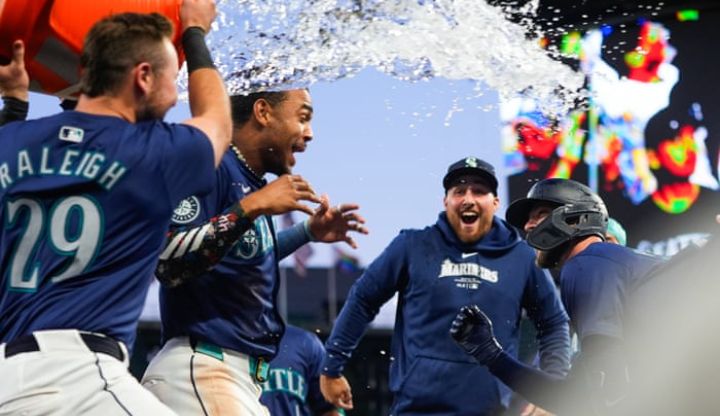
Seattle dismissed Dan Wilson after a disappointing 2026 campaign in which the team finished with a 76-86 record. Missing the playoffs gave the organization an opportunity to begin planning for the future without the immediate demands associated with postseason competition.
That opportunity could have been valuable.
The Mariners now have the responsibility of identifying a manager capable of improving the team’s performance, strengthening communication, and helping the organization return to playoff contention.
However, the search remains unresolved as the potential lockout approaches.
According to reporting cited in the original article, Seattle hopes to appoint its next manager by the end of October.
If that timeline holds, the new manager would have approximately four weeks before the anticipated December 1 deadline to become familiar with the organization and establish relationships with players.
That is a relatively short period for such an important transition.
A managerial appointment involves considerably more than selecting someone with an impressive résumé. The successful candidate must understand the team’s strengths and weaknesses, communicate expectations clearly, and develop a working relationship with players and other members of the coaching staff.
Those responsibilities become even more challenging when the available preparation time is limited.
Communication Could Become Seattle’s Biggest Challenge
One of the most important qualities Seattle’s players have emphasized in discussing their ideal next manager is communication.
That requirement makes the approaching lockout especially concerning.
A new manager needs opportunities to speak with players, understand their perspectives, and explain how the team intends to operate moving forward.
Building that relationship takes time, and it cannot always be accomplished through formal meetings or written messages.
Players need to understand their manager’s expectations, while the manager must learn how individual personalities and playing styles influence the clubhouse.
A prolonged communication blackout could interrupt that process before it has properly begun.
Even if Seattle identifies an excellent candidate, the circumstances surrounding the appointment could limit how effectively that person prepares for the next season.
The Mariners may have more flexibility than the Yankees would have had in introducing a new leader, but that does not eliminate the challenges associated with a rushed transition.
Finding the right manager is important. Giving that manager enough time to prepare is equally valuable.
Could Seattle Have Made the Change Earlier?
The Mariners’ current predicament raises another question: Should the organization have moved on from Wilson sooner?
It is impossible to determine whether an earlier dismissal would have produced a better outcome. Nevertheless, Seattle’s disappointing final record provides a basis for questioning whether the organization could have started its search earlier.
An earlier managerial change might have allowed the Mariners to evaluate potential candidates before the offseason became crowded with competing priorities.
It could also have created an opportunity to assess an interim manager while the organization worked toward a permanent appointment.
Other teams have found success with managerial transitions, demonstrating that an interim appointment does not automatically prevent a club from remaining competitive or establishing a clear direction.
However, Seattle cannot revisit those decisions now.
The organization must focus on the options currently available and avoid allowing the approaching deadline to force it into an unsuitable appointment.
Rushing the process simply to meet a preferred date could create bigger problems later.
The Mariners need someone who fits their long-term objectives, understands the roster, and can provide the leadership required to improve results.
Seattle Must Get This Decision Right
The Mariners are approaching an important moment in their offseason planning.
Their next manager will be expected to help the team recover from a disappointing season, improve its performance, and compete more effectively in the American League.
That makes the appointment one of the organization’s most consequential decisions heading into 2027.
Seattle must balance two competing priorities: completing its search before the lockout creates additional complications and refusing to compromise its standards simply to meet a deadline.
A candidate with the right experience, leadership qualities, and communication skills could provide the foundation for a successful turnaround.
However, even a strong appointment will require organizational support and sufficient preparation time.
The Yankees’ decision to retain Boone illustrates the value of stability when uncertainty is approaching. Seattle, meanwhile, must navigate the consequences of changing managers at a particularly difficult time.
There is still an opportunity for the Mariners to make the right choice, but their margin for error is becoming smaller.
Ultimately, Seattle’s hopes depend on two important developments: finding a manager capable of leading the team forward and avoiding major disruption from the anticipated labor dispute.
If both happen, the Mariners could enter the next season with renewed direction.
If not, the consequences of a delayed managerial transition could become another obstacle for a team already looking to recover from a difficult campaign.
The bottom line: Aaron Boone’s return to the Yankees highlights a challenge the Mariners cannot ignore. With the lockout approaching and their managerial search still underway, Seattle must act decisively without sacrificing the quality of its next appointment.