The Philadelphia Phillies endured another difficult night at the plate on Saturday, suffering a 12-1 loss to the Tampa Bay Rays and dropping their fourth straight game. With the postseason picture becoming increasingly tense, the result looked like another major setback for a team fighting to keep its playoff hopes alive.
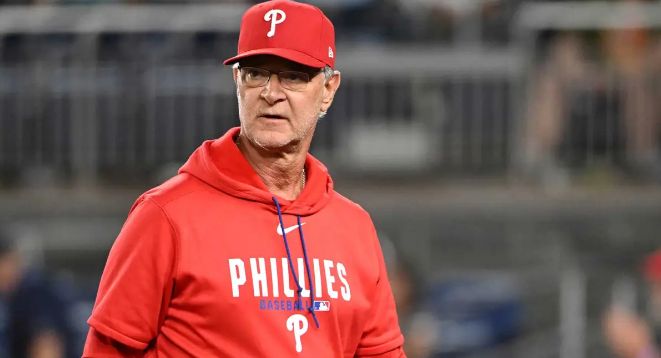
Yet interim manager Don Mattingly walked away from the defeat with a surprisingly positive takeaway.
While the final score offered little reason for optimism, Mattingly was encouraged by the way his players continued competing late into the game. For the Phillies skipper, the response from his hitters during the final three innings showed the type of fight he wants to see as Philadelphia approaches a crucial Game 162.
Phillies’ offense struggles early
Philadelphia’s offensive struggles were obvious throughout much of Saturday’s contest.
The Phillies collected only seven hits in the game and failed to score during the first six innings. Their prolonged offensive drought eventually reached 21 consecutive scoreless innings, surpassing their previous season high of 20 straight scoreless innings set back in April.
For a club attempting to secure a place in the postseason, the lack of production was particularly concerning.
Philadelphia’s most important hitters also struggled to provide the spark the team needed. Trea Turner, Kyle Schwarber and Bryce Harper combined for only three hits, while veteran catcher J.T. Realmuto continued his difficult stretch at the plate.
Realmuto’s latest hitless performance extended his slump to 0-for-34, adding another frustrating development to an already challenging night for Philadelphia.
Still, the Phillies eventually showed signs of life.
Four of their seven hits came during the final three innings, and that late offensive push was enough for Mattingly to identify something positive despite the enormous deficit.
Mattingly focuses on the fight
With Philadelphia trailing by double digits, many teams could easily lose their energy and simply play out the remainder of the game.
Mattingly saw something different from his players.
The Phillies continued taking competitive at-bats even when the game was essentially out of reach. That effort impressed their interim manager, who viewed the late-game approach as evidence that the clubhouse had not given up.
For Mattingly, the attitude was more important than the scoreboard.
He acknowledged that there was very little positive to take from a 12-1 defeat, but he believed the team’s willingness to continue competing could prove meaningful moving forward.
The Phillies finally got on the board in the seventh inning when a groundball from Justin Crawford resulted in a fielding error by Richie Palacios, allowing Philadelphia to score.
Although the run did little to change the outcome, it ended the team’s lengthy scoreless streak.
Philadelphia continued putting together better at-bats as the game progressed, with four of its seven hits arriving during the final three innings.
That late response was precisely what Mattingly wanted to see.
Pitching circumstances made the night even more difficult
Philadelphia’s problems weren’t limited to its offense.
The Phillies entered the game dealing with an unusual pitching situation following an injury to Jesus Luzardo. With their rotation under pressure, veteran right-hander Aaron Nola was asked to make an extremely unusual start.
Nola took the mound on only two days’ rest, something he had never done during his 11-season MLB career.
The expectation was that Nola could provide approximately 40 to 50 pitches before the Phillies turned to their bullpen.
Instead, his outing lasted only 21 pitches.
Nola surrendered three runs in the first inning and never returned for the second.
Tampa Bay immediately capitalized on the opportunity. Junior Caminero launched a two-run home run, while Victor Mesa Jr. and Richie Palacios followed with consecutive doubles.
By the time Philadelphia came to the plate, the Rays already held a 3-0 advantage.
That early deficit quickly became much larger.
Rays pull away
Tampa Bay continued adding to its lead throughout the contest, eventually pushing the score to 12-0 before Philadelphia finally found the scoreboard in the seventh inning.
The Rays’ offensive pressure left the Phillies with virtually no path back into the game.
Ryan Vilade added further damage with a two-run single in the ninth inning, putting the finishing touches on Tampa Bay’s dominant victory.
From Philadelphia’s perspective, it was another game in which nearly everything went wrong.
The pitching staff was forced to navigate an unconventional situation, the offense struggled for most of the night and the team entered the final innings facing a massive deficit.
Yet Mattingly remained focused on the team’s response rather than simply the final score.
Philadelphia still controls its playoff fate
Despite the ugly loss, the Phillies were not eliminated from postseason contention.
The result involving the Arizona Diamondbacks provided Philadelphia with some breathing room.
The San Diego Padres defeated Arizona, reducing the Phillies’ magic number to one.
That means Philadelphia can still secure the final National League playoff spot with a victory on Sunday. Another Diamondbacks loss would also send the Phillies into the postseason.
So despite losing four consecutive games, Philadelphia’s season remains alive.
That makes the response in Game 162 especially important.
The Phillies are scheduled to send Zack Wheeler to the mound for the season finale, giving them one of their most experienced pitchers for the game that could determine whether their season continues.
Luzardo is also expected to return from the injured list and be available out of the bullpen, potentially giving Philadelphia another important pitching option.
Sunday’s game carries enormous significance
The Phillies now have little room for error.
Saturday’s 12-1 defeat highlighted many of the team’s current problems, particularly its offensive inconsistency and pitching challenges. However, Mattingly’s emphasis on the team’s late-game effort provides a different perspective.
The manager wasn’t celebrating the loss. Instead, he was looking at how his players handled adversity.
A team facing a 10-run or 12-run deficit could easily stop competing. Philadelphia did not.
That determination may not appear in the box score, but Mattingly believes it matters.
The Phillies will now have an opportunity to turn that fight into results when they return for the final game of the regular season.
Wheeler’s presence on the mound should give Philadelphia confidence, while the potential availability of Luzardo could provide additional depth in the bullpen.
More importantly, the offense needs to rediscover its rhythm.
Turner, Schwarber, Harper and the rest of Philadelphia’s lineup cannot afford another extended scoring drought with the postseason hanging in the balance.
For now, the Phillies remain alive.
Saturday’s loss was painful, but it did not end their season. Instead, Philadelphia enters Sunday knowing exactly what is at stake.
One win could change the entire mood surrounding the club and send the Phillies into October.
And if Mattingly’s assessment is correct, the fight his team showed during the final innings could be something worth carrying into that decisive game.