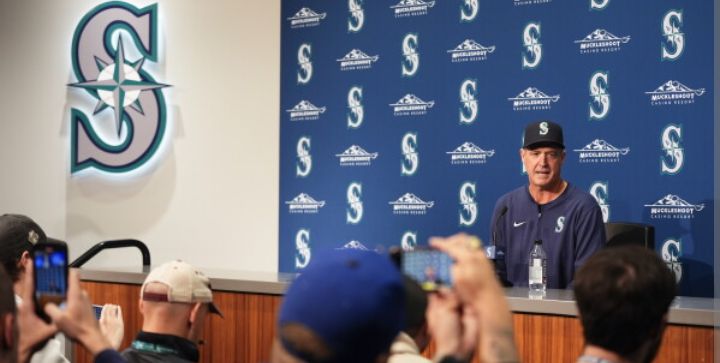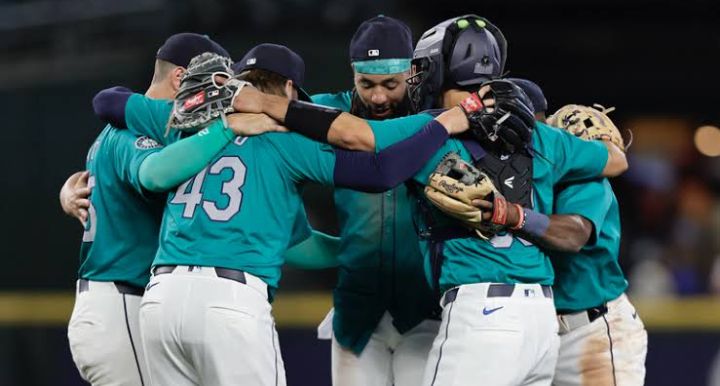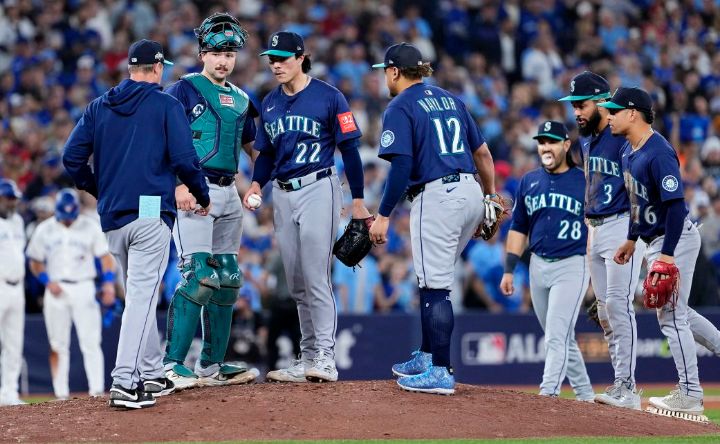
The Seattle Mariners have been forced to make another roster adjustment after receiving disappointing news concerning one of their relief pitchers.
Seattle entered Friday’s matchup against the Tampa Bay Rays looking to turn around what has been a frustrating 2026 campaign. After coming agonizingly close to reaching the World Series a year ago, the Mariners have struggled to build the same momentum this season and have spent much of the year hovering around the .500 mark.
Heading into Friday’s contest, Seattle owned a 56-60 record. While that mark is far from what the organization would have expected following its impressive 2025 run, the Mariners are not completely out of the postseason picture. The American League West has been relatively open, leaving Seattle within reach of the division race despite its inconsistent results.
However, the club suffered another setback just before taking the field Friday.
The Mariners announced that right-handed reliever Cole Wilcox would be placed on the 15-day injured list after suffering a left oblique strain. To fill his spot on the active roster, Seattle recalled right-hander Nick Davila from Triple-A.
The move represents another challenge for a Mariners bullpen that has been an important part of the team throughout the season.
Wilcox Lands on Injured List
Wilcox’s injury came during his most recent appearance, which took place Thursday against the Detroit Tigers. Unfortunately for both the pitcher and the Mariners, it was not a particularly strong outing.
The right-hander managed to record only two outs while allowing four runs to score. The difficult appearance pushed his earned run average to 4.00 for the season.
Despite that rough performance, Wilcox had generally provided Seattle with dependable innings out of the bullpen before the injury. His ability to take on important relief assignments had made him a useful piece for manager Dan Wilson, especially during a season in which the Mariners have needed consistency from their pitching staff.
Losing him now could be particularly damaging because Seattle is entering an important stretch of the schedule. With the Mariners still trying to remain relevant in the AL West race, every dependable arm could prove valuable.
The timing of the injury is therefore frustrating. Although Wilcox was coming off a difficult outing, the Mariners still had reason to rely on him as the season progressed.
An oblique injury can also be troublesome for pitchers because the area plays an important role in generating power and rotation during the throwing motion. For now, Seattle will have to move forward without Wilcox while hoping he can return once he is eligible to come off the injured list.
Davila Gets Another Opportunity
With Wilcox unavailable, the Mariners turned to Davila for reinforcement.
Davila has already spent time with Seattle’s major-league club during the 2026 season, giving the organization some familiarity with what he can provide. Across 20 appearances at the MLB level, he has posted a 3.57 ERA.
On the surface, that number suggests Davila has been capable of handling major-league hitters. However, his overall performance has included some warning signs that help explain why he had returned to the minor leagues before Friday’s roster move.
The right-hander has struggled with command, walking 11 batters while recording only nine strikeouts during his time in the majors this season.
That disparity is particularly concerning for a relief pitcher. Bullpen arms are often asked to enter games in high-pressure situations, and allowing free baserunners can quickly turn a manageable inning into a major problem.
Still, Seattle is hoping Davila can make the most of his latest opportunity.
The Mariners clearly believe he can contribute enough to help cover the innings that would have gone to Wilcox. His previous experience with the big-league team should also make the transition easier compared with calling up a completely inexperienced pitcher.
Another Test for Seattle’s Bullpen
The latest roster move highlights just how important the Mariners’ bullpen has been during the 2026 campaign.
Seattle’s relief corps has helped the team survive stretches of the season despite inconsistent results elsewhere. Losing one of its more dependable options means other pitchers could now be asked to take on additional responsibility.
The challenge becomes even greater because the Mariners are not in a position where they can afford to waste opportunities.
At 56-60, Seattle has a significant amount of ground to make up if it wants to secure a postseason position. However, the weakness of the AL West means the club still has a realistic path back into contention.
That makes roster depth increasingly important.
Every injury can force a team to rearrange its pitching plans, and Seattle now has to figure out how to distribute Wilcox’s workload while he recovers. Davila will have an opportunity to help, but the Mariners will need more than one pitcher to compensate if Wilcox’s absence extends beyond the minimum 15-day period.
The organization will also be watching Davila closely because his command issues could become more problematic if he is placed into high-leverage situations.
Mariners Need Consistency Down the Stretch
Seattle’s situation is a reminder of how quickly a season can change.
The Mariners entered 2026 with plenty of optimism after coming within one victory of their first World Series appearance in franchise history in 2025. Expectations were naturally high, but the club has struggled to reproduce that level of success.
Now, with the team sitting below .500, the margin for error is becoming smaller.
The injury to Wilcox adds another complication at a time when Seattle needs stability. While his 4.00 ERA is not outstanding, his previous reliability made him a valuable part of the bullpen. Replacing him with Davila gives the Mariners another arm, but it also introduces a pitcher whose major-league command numbers leave room for concern.
For Davila, this could nevertheless be a major opportunity.
If he can improve his control, avoid unnecessary walks and consistently attack hitters, he could provide the Mariners with an unexpected boost. A strong stretch could also help him establish himself as a more permanent option in Seattle’s pitching plans.
For now, however, the Mariners have little choice but to adapt.
The club will have to navigate the next several games without Wilcox while continuing to chase the teams ahead of it in the division. With the AL West still within reach, Seattle cannot afford to let another setback derail its season.
The Mariners’ latest roster move is therefore about more than simply replacing an injured reliever. It is another test of the team’s depth, bullpen reliability and ability to respond to adversity.
How Seattle handles Wilcox’s absence — and whether Davila can take advantage of his return to the majors — could become an important storyline as the Mariners attempt to keep their postseason hopes alive.