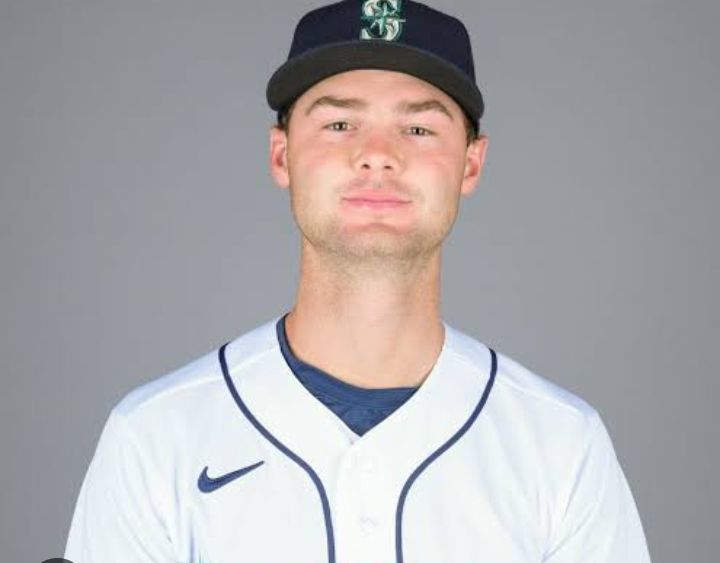
The possibility of Kade Anderson making his Major League Baseball debut is becoming increasingly realistic as the Seattle Mariners look toward the final stretch of the 2026 season.
Anderson’s chances of reaching the majors this year were always expected to depend heavily on how Seattle reshaped its pitching staff following the Trade Deadline. With Luis Castillo no longer part of the rotation and the Mariners settling into a conventional five-man starting group, the highly regarded left-hander has moved up the organizational depth chart.
He is now viewed as the Mariners’ sixth starting option, putting him in position to become an important piece if the club needs additional help during its playoff push.
Seattle’s baseball operations department is expected to discuss how best to integrate Anderson into the Major League picture. However, one thing appears certain: the Mariners have no intention of rushing him into a bullpen role simply to get him to the majors sooner.
Mariners president of baseball operations Jerry Dipoto has made it clear that the organization remains committed to Anderson’s development as a starting pitcher. The club believes the young lefty has been one of the most dominant starting pitchers in the Minor Leagues this season and does not want to interrupt that progress unnecessarily.
Anderson’s statistical performance helps explain why the Mariners are so excited about his future.
Among 235 qualified Minor League pitchers, he ranks first in several major categories. His 40.5% strikeout rate leads the group, while his 36.4% strikeout-to-walk rate is also the best. His 1.88 FIP ranks first as well. Anderson also owns a remarkable 1.20 ERA, which places him second among the qualified pitchers, while his .408 opponent OPS is also second.
Those numbers have helped push Anderson into the upper tier of baseball’s prospects. MLB Pipeline currently ranks him as the No. 5 overall prospect in baseball and the top prospect in Seattle’s organization.
The Mariners selected Anderson with the No. 3 overall pick in last year’s MLB Draft, and his rapid development has continued to justify that investment.
However, Seattle’s decision-making is about more than simply determining when Anderson is talented enough to pitch in the majors. The organization is also carefully monitoring his workload.
Anderson has thrown 82 1/3 innings through 16 starts this season, all of them coming with Double-A Arkansas. Last year, while at LSU, he logged 119 regular-season innings before adding another 16 innings during the College World Series. He was outstanding during that tournament and earned Most Outstanding Player honors.
That means Anderson already has significant competitive innings under his belt, but Seattle appears to be managing his workload with the bigger picture in mind.
A total somewhere around 135 innings for the entire 2026 season could potentially represent the general range the Mariners have in mind. If that is indeed the target, the organization would have to carefully balance his development with the possibility of bringing him to Seattle.
The Mariners do not want to shorten Anderson’s workload or dramatically change his preparation simply to provide temporary bullpen help.
That is why September could become particularly important.
Major League rosters are scheduled to expand from 26 players to 28 on Sept. 1, creating an opportunity for Seattle to add another pitcher without having to remove someone from its existing roster structure.
If the Mariners remain in postseason contention and their five regular starters are healthy, one possible scenario would involve Anderson joining the rotation and Seattle temporarily operating with six starters.
Such an arrangement could benefit both Anderson and the rest of the pitching staff.
September offers limited off-days, with only three scheduled during the month. Having six starting pitchers could therefore give Seattle additional flexibility while allowing its established starters to receive more rest heading into the postseason.
The concept is not unprecedented. Other contenders have used similar approaches to preserve their starting pitchers for a potentially long postseason run.
For Anderson, however, the Mariners are thinking beyond September.
The organization appears unwilling to use him as a conventional reliever merely to get him onto the Major League roster. Instead, if he reaches Seattle, the club could look for creative ways to deploy him while still protecting his development as a starter.
That could become more realistic once Anderson gets closer to his season workload target.
If Seattle reaches September and determines that it does not need Anderson to make a traditional start, the club could explore alternative ways of using him. But the organization has emphasized that a bullpen transition is not the plan.
The Mariners would rather preserve his starting routine and consider flexible opportunities after he reaches the Major League level.
That approach reflects how highly Seattle views Anderson’s long-term potential.
The 2026 season could provide Anderson with his first taste of the majors, but the organization appears to be thinking about what comes next. A carefully managed introduction could help prepare him for a much larger role in 2027, potentially putting him on a path toward becoming a permanent member of Seattle’s starting rotation.
Anderson’s development has already impressed the Mariners. His velocity has improved, while his command and precision have also taken significant steps forward since he signed with the organization.
The combination of power, control and consistency has made him one of the most intriguing young pitchers in professional baseball.
For now, Anderson remains at Double-A Arkansas and continues to work as a starting pitcher. But his position within Seattle’s pitching hierarchy has changed considerably since the Trade Deadline.
With Castillo gone, Anderson is now the next starter in line.
If injuries strike, if the Mariners need additional rotation help, or if the club decides that September is the right time to introduce him to the majors, his opportunity could arrive sooner rather than later.
The Mariners therefore appear to be balancing two objectives: getting the most out of Anderson in the present while ensuring that his development is not compromised for a short-term opportunity.
That patience could ultimately pay off.
Anderson has already established himself as one of the most dominant pitchers in the Minor Leagues. His statistics, prospect ranking and continued development all suggest that he is approaching the next major step in his career.
Seattle may not have announced an exact date for his MLB debut, but the path is becoming clearer.
If the Mariners remain in playoff contention, September could provide the perfect window. And if everything continues according to plan, Anderson could make his first Major League appearance this year before positioning himself for an even bigger role in Seattle’s rotation in 2027.
For a Mariners organization with postseason ambitions, having a pitcher of Anderson’s caliber waiting in the wings could become a major advantage.
His arrival may not be immediate, but everything points toward the highly touted left-hander getting closer to his Major League opportunity with every start.