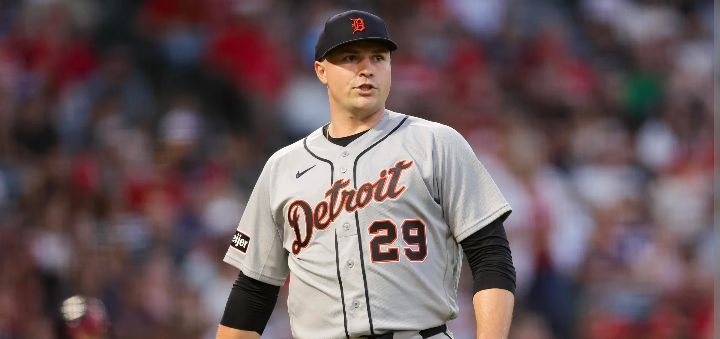
As Major League Baseball’s trade deadline draws closer, speculation continues to swirl around some of the game’s biggest stars. Among the most talked-about names is Detroit Tigers ace Tarik Skubal, whose dominant performances have made him arguably the most valuable starting pitcher potentially available on the market. Every contender in need of frontline pitching has been connected to him in one way or another, and naturally, the New York Mets have entered the conversation.
However, despite the intrigue surrounding the possibility, a blockbuster move bringing Skubal to Queens appears to be far more fantasy than reality. While the idea of pairing one of baseball’s premier pitchers with an ambitious owner like Steve Cohen is exciting, several significant obstacles make such a deal extremely difficult to envision.
Why Tarik Skubal Is Baseball’s Most Coveted Pitcher
Skubal has established himself as one of Major League Baseball’s elite starters over the past two seasons. Armed with an overpowering fastball, devastating secondary pitches, and outstanding command, the left-hander has consistently dominated opposing lineups.
His ability to miss bats while limiting hard contact has elevated him into Cy Young conversations, and he has become the type of ace every championship contender dreams of adding before a postseason run.
Pitchers capable of leading a playoff rotation are exceptionally rare, making Skubal one of the most valuable assets in the sport. If Detroit genuinely entertains trade offers, nearly every contender with enough prospect capital would likely make a call.
That intense demand would naturally drive the asking price to extraordinary levels.
Mets Face a Different Reality at the Deadline
Although the Mets entered the season with postseason aspirations, their recent struggles have dramatically altered their position heading into the trade deadline.
Instead of aggressively shopping for superstar additions, New York has increasingly been viewed as a club that could sell certain veterans or make only modest moves aimed at improving future flexibility.
That context alone makes a pursuit of Skubal difficult to justify.
Acquiring a pitcher of his caliber would require sacrificing multiple elite prospects while also assuming the responsibility of eventually negotiating one of the richest pitching contracts in baseball.
For a team not firmly positioned as a World Series contender this season, such an aggressive investment may not align with its current strategy.
The Theory Behind a Skubal-to-Mets Deal
Despite the long odds, some analysts have floated one interesting scenario.
The concept is relatively simple: acquire Skubal before he reaches free agency, then immediately work toward signing him to a long-term extension.
On paper, the strategy has some appeal.
Rather than competing against every big-market franchise during free agency, the Mets could attempt to secure exclusive negotiating rights after completing a trade.
If successful, they would land one of baseball’s best pitchers for the foreseeable future while strengthening their rotation for years.
It’s an aggressive strategy, but one that depends on several uncertain assumptions.
Why an Extension Is Far From Guaranteed
The largest hurdle involves Skubal’s future plans.
He is widely expected to become one of the premier names available whenever he reaches free agency. Given his age, performance, and durability, numerous organizations would likely pursue him with record-setting offers.
Adding another layer of complexity is his representation by the Boras Corporation.
Players represented by Scott Boras often choose to test the open market rather than sign early contract extensions. Free agency provides the opportunity to maximize earning potential through competitive bidding among multiple franchises.
Because of that history, many around baseball believe Skubal would prefer hearing offers from every interested club instead of committing immediately after a trade.
That makes any acquiring team’s gamble significantly riskier.
Steve Cohen Has Money, but Money Isn’t Everything
No discussion involving the Mets is complete without mentioning owner Steve Cohen.
Cohen has demonstrated repeatedly that he is willing to spend aggressively if he believes it improves the team’s championship chances. Since purchasing the franchise, he has authorized enormous payrolls and shown little hesitation in pursuing elite talent.
Financially, matching or even exceeding competing offers for Skubal would not be impossible.
Yet baseball decisions are not driven solely by dollars.
Players consider championship opportunities, organizational stability, coaching staffs, market preferences, and long-term career goals before signing contracts.
Even if the Mets eventually presented the largest offer, there would be no guarantee Skubal would bypass free agency to accept it.
The Massive Trade Package Detroit Would Demand
Detroit holds tremendous leverage in any negotiations.
The Tigers understand that elite starting pitching is among the most valuable commodities in today’s game. Unless overwhelmed by an extraordinary offer, they have little reason to move their ace.
A realistic package would almost certainly require multiple top-ranked prospects, young major-league-ready talent, and possibly additional high-upside players.
Such a haul could reshape an organization’s farm system overnight.
For the Mets, surrendering that level of talent while also facing uncertainty regarding Skubal’s future contract could represent too much risk.
Front offices constantly weigh present success against future sustainability, and sacrificing years of prospect development for a player who may eventually leave would be difficult to justify.
What Detroit Must Consider
From Detroit’s perspective, the decision is equally complicated.
Trading one of baseball’s best pitchers is never easy, particularly when the organization has spent years building toward contention.
Keeping Skubal allows the Tigers to compete immediately while maintaining one of the strongest rotations in the American League.
On the other hand, if the front office believes it cannot sign him long term, maximizing his trade value before free agency becomes a legitimate strategic option.
A blockbuster return could strengthen multiple areas of the roster, adding young hitters, pitching depth, and future flexibility.
Still, moving an ace always carries significant risks.
Fans expect organizations to compete, and trading away a franchise cornerstone can send a discouraging message if the return fails to develop as expected.
Could Another Team Outbid Everyone?
Even if Detroit decides to listen seriously to offers, the Mets would likely face stiff competition.
Several contenders possess deeper farm systems, greater urgency to win immediately, and stronger reasons to sacrifice premium prospects for an elite starter.
Teams already positioned for deep postseason runs may view Skubal as the missing piece capable of delivering a championship.
That urgency often leads to aggressive bidding wars.
In comparison, New York’s current position makes it harder to justify matching the enormous price required.
Should the Mets Stay Patient?
Patience may ultimately prove to be the smarter approach.
The Mets have spent recent seasons balancing immediate competitiveness with rebuilding their player development system. Emptying that pipeline for one player—even one as talented as Skubal—could undermine long-term organizational goals.
Instead, New York may benefit more from preserving its young talent, evaluating internal pitching options, and targeting upgrades that better fit its competitive timeline.
If the club returns to serious contention next season, it can revisit the market with greater clarity and flexibility.
Looking Ahead to the Trade Deadline
Until the deadline passes, Tarik Skubal will remain one of the biggest names dominating baseball headlines.
Every contender searching for frontline pitching will continue to be mentioned, and rumors involving the Mets are unlikely to disappear entirely. However, speculation alone does not guarantee a realistic path to a deal.
Detroit’s enormous asking price, Skubal’s anticipated journey toward free agency, the uncertainty surrounding a contract extension, and New York’s current position all combine to make a blockbuster trade highly improbable.
While Steve Cohen possesses the financial resources to pursue virtually any superstar, even the wealthiest owner cannot eliminate every obstacle. Acquiring Skubal would require a historic package of young talent, followed by the challenge of convincing one of baseball’s premier pitchers to forego free agency.
As exciting as the possibility may sound, the smarter expectation is that the Mets will focus on more practical moves before the trade deadline. Whether Skubal ultimately remains in Detroit or is dealt to another contender, his future will remain one of baseball’s most closely watched storylines in the days ahead.