The St. Louis Cardinals continue to search for answers as the Major League Baseball trade deadline approaches, and pitching remains one of the organization’s biggest concerns. While the team’s bullpen has received much of the criticism in recent weeks, the starting rotation has also struggled to consistently provide length, placing additional pressure on relief pitchers and contributing to several frustrating losses.
That issue was evident once again during the Cardinals’ 10-6 defeat against the Arizona Diamondbacks. Rookie right-hander Michael McGreevy delivered a respectable outing and kept St. Louis competitive through the early innings, but the bullpen unraveled late, surrendering six runs and turning a winnable game into another disappointing defeat.
As the front office evaluates possible moves before the deadline, Seattle Mariners starter Emerson Hancock has emerged as an intriguing name on the trade market. Reports indicate the Mariners are at least willing to discuss the talented right-hander, opening the door for clubs seeking controllable starting pitching.
Although St. Louis is widely expected to move veterans before the deadline rather than aggressively buy, acquiring a pitcher with multiple years of club control could still make sense if the price is right. Hancock represents exactly the type of long-term asset that could help reshape the Cardinals’ rotation beyond this season.
Why Hancock Is Appealing
Hancock, 27, has quietly enjoyed an impressive campaign with Seattle. Through 19 starts, he has compiled a 6-4 record while posting a strong 3.16 ERA. Across 105 1/3 innings, he has struck out 97 hitters, demonstrating the ability to generate swings and misses while limiting damage.
His combination of youth, durability, and production makes him an attractive option for any club seeking rotation stability. More importantly, Hancock remains under team control through the 2030 season, meaning whichever organization acquires him would not simply be renting his services for a playoff push.
That long-term control significantly increases his value. Instead of serving as a temporary addition, Hancock could become a foundational member of a rotation for several seasons.
For the Cardinals, that type of acquisition aligns with a broader retooling strategy. Rather than sacrificing future flexibility for short-term gains, St. Louis could focus on adding younger players capable of contributing well beyond 2026.
Rotation Could Need Reinforcements
Even if the Cardinals move into seller mode, they will still need dependable starters entering next season. One player who has frequently appeared in trade speculation is Dustin May. If the veteran right-hander is dealt to a postseason contender, his departure would leave another vacancy in the rotation.
Landing Hancock would help offset that potential loss while giving the Cardinals another reliable arm to pair with their emerging young starters.
Adding a pitcher under long-term control would also reduce the need to pursue expensive free-agent starters during the offseason, allowing the club greater payroll flexibility in other areas of the roster.
Seattle’s Trade Demands Present a Challenge
While Hancock appears to be an excellent fit from St. Louis’ perspective, the biggest obstacle may be what the Mariners are seeking in return.
Seattle is reportedly interested in adding a right-handed bat if it chooses to move Hancock. Although the Mariners could also benefit from strengthening their bullpen, acquiring offensive help appears to be a higher priority.
The Cardinals certainly possess right-handed hitters with value, but most of their premier options are considered untouchable.
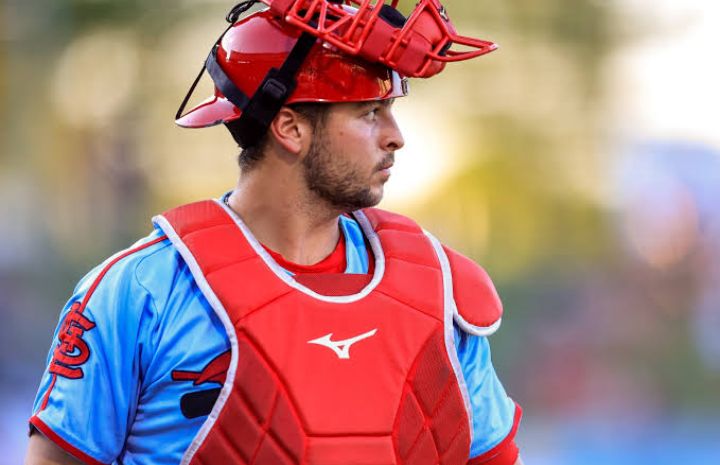
Catcher Ivan Herrera has emerged as one of the club’s most important young offensive players and remains a key part of the franchise’s long-term plans. Likewise, former top prospect Jordan Walker continues to be viewed as a cornerstone talent despite experiencing ups and downs early in his career.
Given their importance to the organization’s future, it seems extremely unlikely that St. Louis would include either player in a deal for Hancock.
Without one of those impact bats available, matching Seattle’s reported asking price becomes significantly more difficult.
A Three-Team Trade Could Offer a Solution
Although a straightforward trade between the Cardinals and Mariners appears challenging, a multi-team transaction could create a path forward.
In such a scenario, St. Louis could send one of its available pitchers or other trade assets to a third club. That team, in turn, could provide Seattle with the right-handed hitter it desires.
The Mariners would receive the offensive upgrade they are seeking, while the Cardinals would acquire Hancock without surrendering Herrera or Walker.
Three-team trades are naturally more difficult to negotiate because they require multiple organizations to agree on player values and roster needs simultaneously. Nevertheless, these types of creative deals often emerge around the trade deadline when teams pursue different objectives.
Selling Doesn’t Mean Ignoring the Future
Although the Cardinals are expected to sell at this year’s deadline, that does not necessarily mean they cannot improve the roster simultaneously.
Many organizations use the deadline to exchange veterans on expiring contracts for younger players who can contribute for several seasons. Instead of focusing exclusively on immediate postseason hopes, those clubs attempt to strengthen both the present and future.
That approach could fit St. Louis perfectly.
If veterans such as Dustin May or other trade candidates are moved for prospects or controllable major-league talent, the Cardinals could still emerge from the deadline with a stronger long-term outlook.
Adding Hancock would fit that philosophy because he offers years of team control rather than serving as a short-term rental.
Why a Direct Deal Still Appears Unlikely
Despite the appealing fit, several factors make a direct Cardinals-Mariners swap difficult to envision.
Seattle’s desire for an impact right-handed hitter does not align well with St. Louis’ willingness to move its roster. The Cardinals are unlikely to entertain offers involving Herrera or Walker, while other right-handed bats may not carry enough value to convince Seattle to part with one of its controllable starting pitchers.
Unless the Mariners significantly lower their asking price or become interested in different types of assets, negotiations between the two clubs could quickly stall.
That leaves a three-team framework as the most realistic avenue if the Cardinals truly decide Hancock is one of their preferred pitching targets.
Looking Ahead
With the trade deadline rapidly approaching, the Cardinals must determine whether they want to focus solely on accumulating prospects or pursue players capable of helping immediately while remaining under team control for years.
Emerson Hancock checks many of the boxes the organization should prioritize. He is young, productive, cost-controlled, and capable of strengthening a rotation that has lacked consistency throughout the season.
However, baseball trades are rarely determined by one team’s needs alone. Seattle’s preference for a quality right-handed hitter complicates matters considerably, making a conventional two-team trade difficult to complete.
If the Cardinals ultimately acquire Hancock, it will likely require creative negotiations involving multiple clubs. While the odds of such a move remain uncertain, the fit from St. Louis’ perspective is undeniable, making Hancock one of the more intriguing names to watch as the deadline draws closer.