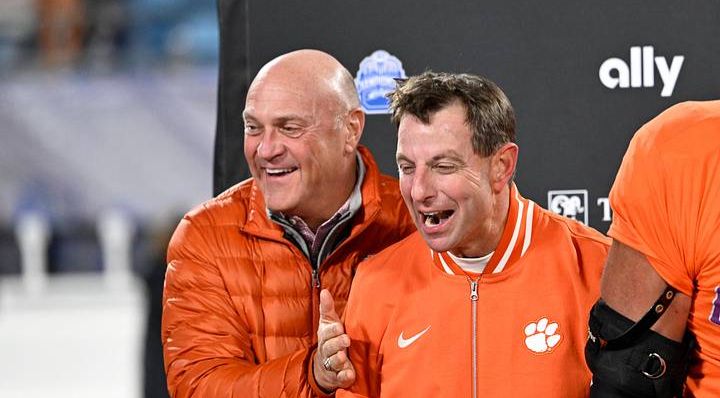
Clemson football continues to build strong momentum on the recruiting trail, with head coach Dabo Swinney and his staff making major progress in securing top defensive talent. After a productive stretch that included commitments from safety Jarrell Chandler, running back Gary Walker, and wide receiver Jamarin Simmons, the program has now added another major development in its pursuit of elite prospects, particularly in the secondary.
One of the biggest recent storylines involves highly regarded cornerback Nash Johnson III, who has shifted attention away from Tennessee and redirected focus toward Clemson. Johnson initially had plans to take an official visit to Tennessee, but those plans have now been canceled. Instead, he has scheduled an official visit to Clemson, which is set for mid-June. This change signals a notable shift in his recruitment and adds further excitement around Clemson’s growing appeal to top defensive backs.
Clemson’s defensive staff, especially associate head coach and cornerbacks coach Mike Reed, has played a central role in this development. Reed has been heavily involved in Johnson’s recruitment from the beginning and quickly established contact after the prospect reopened his recruitment earlier in the spring. The relationship between player and coach appears to have developed quickly, with Clemson becoming one of the schools that immediately stood out once Johnson began reconsidering his options.
Johnson is a 6-foot-1 cornerback from Powder Springs, Georgia, and he has steadily gained attention as one of the more intriguing defensive prospects in his class. While not initially considered among the highest-ranked recruits nationally, his stock has risen due to his athletic ability, coverage skills, and physical style of play. He is known for his ability to match up against receivers in man coverage while also showing awareness in zone schemes, making him a versatile option for programs that value defensive flexibility.
Originally, Johnson had been committed to Alabama. However, that commitment did not last, as he decided to reopen his recruitment in early April. The decision to step back from Alabama allowed other programs to re-enter the race, and Clemson quickly became one of the most active schools pursuing him. Shortly after reopening his recruitment, Johnson visited Clemson unofficially and received an offer from the coaching staff, further strengthening the relationship between both sides.
According to recruiting evaluations, Johnson is considered a three-star prospect. He is ranked among the top cornerbacks nationally and is also viewed as one of the more notable players in the state of Georgia, which is consistently one of the most competitive high school football regions in the country. Even though he is not a five-star prospect, his rising profile and physical tools have made him a priority target for several major programs across the Southeast.
Another interesting factor in Clemson’s pursuit of Johnson is his existing connection to one of the program’s current commits, running back Gary Walker. The two players were once high school teammates, and although Walker missed a season due to injury, the relationship between them remains a talking point in recruiting discussions. This connection could potentially help Clemson build familiarity and comfort with Johnson as he considers where he will continue his football career.
Johnson is expected to make his final college decision on July 1. His recruitment has narrowed significantly, with several major programs still involved. His list of finalists includes Clemson, Auburn, Georgia, Miami, Ole Miss, and Tennessee. While Tennessee was once considered a strong contender, their position has weakened following the cancellation of his planned visit.
At this stage, multiple recruiting analysts believe Auburn is one of the strongest competitors in the race. Auburn was among the earliest programs to show consistent interest in Johnson and has hosted him on several visits throughout the spring. Their repeated contact and strong relationship-building efforts have positioned them as a serious contender. Some recruiting projections have even leaned in Auburn’s direction due to their early momentum and familiarity with the player.
Despite Auburn’s strong push, Clemson remains firmly in contention and may even be gaining ground at a crucial time. The Tigers have an advantage in timing, as Johnson’s official visit to Clemson is scheduled in the middle of his summer visit schedule. He is expected to visit Auburn first, followed by Miami, then Clemson, and finally Ole Miss. This sequence gives Clemson a key opportunity to leave a strong final impression before his decision date.
Official visits are often a turning point in recruiting battles, especially when a program hosts a prospect after several other schools have already made their pitch. Clemson’s staff is known for its ability to close strong during official visits, and this will be a major test of that reputation. With Mike Reed leading the charge for the secondary unit, Clemson will aim to showcase its defensive development, player success, and long-term vision for cornerbacks.
The broader context of Clemson’s recruiting success also plays a role in Johnson’s interest. The program has continued to attract defensive talent despite increasing competition from SEC schools and other national powers. Their recent recruiting run has helped create a sense of momentum, and that energy often influences undecided prospects who are looking for stability and development opportunities.
Another factor working in Clemson’s favor is the program’s defensive identity. Historically, Clemson has been recognized for producing high-level defensive backs capable of performing at the next level. That track record is frequently emphasized during recruiting pitches and continues to resonate with prospects who want to develop into professional-caliber players.
While Auburn may currently be viewed as a slight favorite by some observers, the recruitment is still very much open. Clemson’s position strengthens significantly if Johnson’s official visit goes well, particularly given the timing just before his decision. Miami and Ole Miss remain in the picture as well, but they are generally seen as less dominant threats compared to Clemson, Auburn, and Georgia in this specific recruitment.
Georgia also remains a school to watch, especially given its proximity to Johnson’s home state and its reputation for recruiting elite defensive talent. However, Clemson’s ability to recruit outside of its immediate geographic footprint has been one of its strengths in recent years, and that could be a deciding factor once Johnson evaluates all his options.
As July 1 approaches, the competition for Johnson’s commitment is expected to intensify. Each of his official visits will play a crucial role in shaping his final decision, and Clemson’s mid-June visit places the Tigers in a strong position to make a lasting impression. If the visit goes according to plan, Clemson could very well position itself as the team to beat entering the final stretch.
In the end, this recruitment represents another example of Clemson’s aggressive and strategic approach on the recruiting trail. The program continues to target rising talent, build strong relationships, and position itself as a serious contender for highly sought-after prospects. Whether that approach results in a commitment from Johnson will depend on how each visit unfolds, but Clemson has clearly placed itself in the middle of a tightly contested battle for one of the region’s most intriguing cornerback prospects.