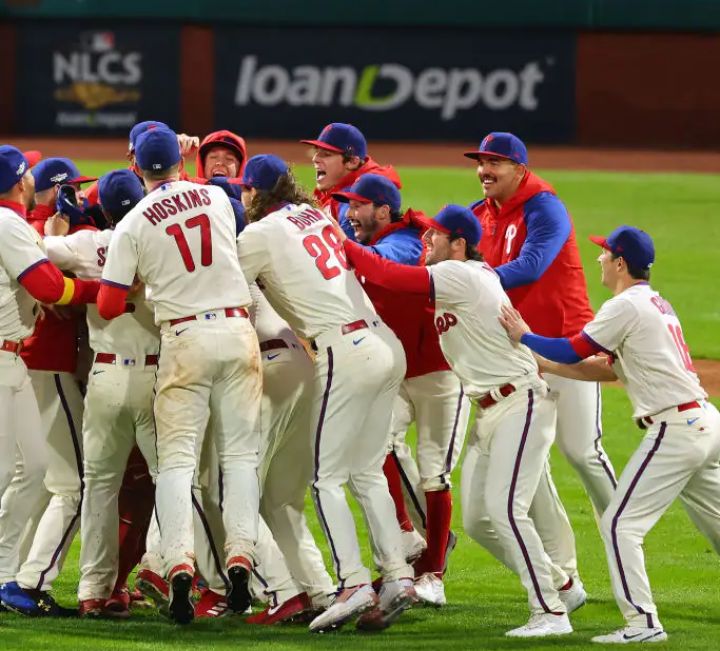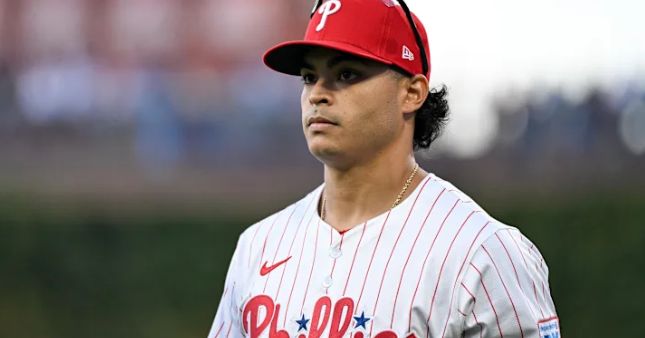
If you’ve watched a Phillies game at Citizens Bank Park this season, you’ve likely experienced a specific kind of sensory overload. It’s the crack of the bat that sounds different from every other crack—that metallic, irrevocable sound of a baseball meeting its maker. It’s the immediate eruption of 40,000 fans who didn’t come to watch a chess match; they came to watch bombs.
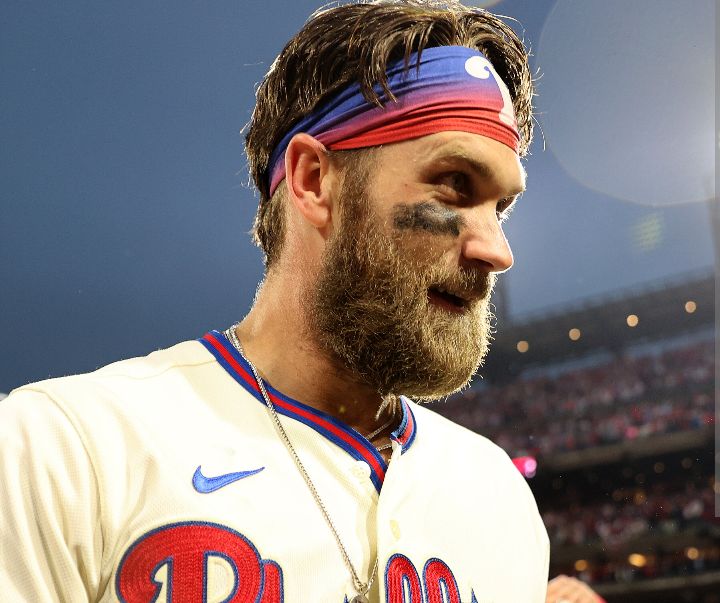
By any statistical measure, the Philadelphia Phillies lineup is a highlight reel machine. They lead the league in barreling the baseball. They possess three guys (Bryce Harper, Kyle Schwarber, and Nick Castellanos) who have made careers out of turning a pitcher’s mistake into a viral moment. On any given night, your Twitter feed is flooded with grainy videos of baseballs landing in the shrubbery beyond the center-field batter’s eye.
But as the summer heat intensifies and the October lights begin to flicker in the distance, a gnawing question lingers in the stomach of every Phillies fan: Is this actually sustainable? Or are we just the world’s most exciting team to watch lose in the NLDS?
The Allure of the Three-Run Homer
Let’s be honest about the identity of this club. Under the guidance of hitting coach Kevin Long, the Phillies have embraced a philosophy that is perfectly suited for the modern game: swing hard, lift the ball, and don’t apologize for the strikeouts that come with it.
There is a certain logic to this approach when October arrives. The playoffs are a different beast. Starting pitchers are elite. They don’t make mistakes in bunches. In the postseason, stringing together three or four singles against a bullpen throwing 100 mph gas is a statistical improbability.
The argument for this lineup being “built for October” rests on the concept of the knockout punch.
In a short series, you don’t need to out-hit the opponent for nine innings; you just need to bludgeon them in one. We saw it in 2022 when Bryce Harper hit that iconic home run off Robert Suarez in the NLCS. We saw it in 2023 when Kyle Schwarber led off games with walks and bombs to set the tone. When this lineup is clicking, it doesn’t just score runs; it demoralizes opponents. It turns a 0-0 game into a 4-0 game in the span of four pitches.
For a fanbase that lived through the “Macho Row” era of the 1990s and the 2008 championship, there is a romanticism attached to the long ball. It’s violent, it’s decisive, and it fits the blue-collar ethos of Philadelphia—why chip away at the foundation when you can just knock the whole building over?
The “Highlight Reel” Trap
But here is where the skepticism creeps in. We’ve seen this movie before. In fact, we’ve seen it for the last three years.
The “Highlight Reel” label isn’t a compliment; it’s a warning. It suggests a team that is allergic to the mundane. A team that can go ice cold for three games in a row because the “patient, grinding” approach disappears when the home run swing takes over.
The primary concern is sequencing. Home run-dependent offenses often struggle with situational hitting. They struggle to score runs without the benefit of the home run. In the regular season, that’s fine—you can survive a 3-for-40 slump with runners in scoring position because the schedule is 162 games long.
In October, you can’t.
We saw this in the 2023 NLCS against the Arizona Diamondbacks. While the narrative focused on the bullpen blowing leads, the offense quietly went dormant in the critical moments. In Games 6 and 7 at home, the Phillies scored two runs in each game. The bats that had set records for home runs in a single postseason suddenly looked lost. They were chasing breaking balls in the dirt, trying to hit five-run homers with the bases empty. The highlight reel stopped rolling, and the exit interviews began.
The “Highlight Reel” label also implies a lack of versatility. When the weather turns cold in October, the baseball de-juices. The wind blows in. Elite pitching staffs (like the Braves’ or the Dodgers’) are designed specifically to neutralize power hitters by living on the edges of the zone. Can this lineup shorten up? Can they hit the opposite-field single when the defense is shifted? Can Trea Turner stop swinging for the fences and simply start a rally?
The X-Factor: Patience vs. Passivity
Another distinction between a title contender and a highlight reel is the quality of at-bat.
A highlight reel shows the result: the bat flip, the trot. What it doesn’t show is the 10-pitch at-bat that wears down a starter, forcing him to throw a hittable fastball to the next guy.
The 2008 Phillies had Ryan Howard and Pat Burrell hitting bombs, but they also had Jimmy Rollins and Shane Victorino setting tables and grinding. The 2024 iteration of the Phillies has moments of elite plate discipline (Bryce Harper’s walk rate remains elite), but too often, the lineup devolves into a feast-or-famine model.
If the opposition throws strikes, the Phillies usually hit them. But if a pitcher has a good breaking ball and lives on the black, we’ve seen this lineup turn into a swing-and-miss factory.
October baseball is about pitching and defense, but it’s also about toughness in the box. It’s about fouling off pitches to stay alive. It’s about moving the runner over when you need to, even if it hurts your slugging percentage.
Can They Evolve?
The good news for the Phillies is that they have the personnel to bridge the gap between highlight reel and championship DNA.
Bryce Harper is a unicorn. He can hit a 500-foot bomb, but he can also take a walk or hit a double down the line. He is built for October. The question is whether the hitters around him can follow his lead.
For this lineup to be truly “built for October,” we need to see a shift in mentality during the dog days of summer. It’s not enough to mash the bad pitchers. They need to prove they can win ugly.
· Can J.T. Realmuto stop trying to lift every ball and start using the gaps again?
· Can Nick Castellanos accept the single to right field when the defense is begging him to take it?
· Can the bench (the Edmundo Sosas and Cristian Pache-types) provide the gritty, small-ball spark that a homer-happy lineup sometimes lacks?
The Verdict
Is this Phillies lineup built for October, or is it just a highlight reel?
The truth lies somewhere in the middle, and the answer likely depends on the matchup.
If the Phillies draw a team with a middling bullpen and starters who leave fastballs over the heart of the plate, they are absolutely built for October. They have the capacity to sweep a series before the other team even unpacks their bags.
But if they draw a team with elite, swing-and-miss stuff—a team that can force them to chase sliders off the plate for three straight games—the highlight reel can turn into a horror show.
The 2024 Phillies have the talent to win a World Series. But talent is just the price of admission. To get Beyond the Blast, they must fall in love with the boring stuff. They must learn to value a 10-pitch walk as much as a 450-foot home run.
Until they prove they can win the 2-1 slugfest in a cold October wind, the jury will remain out. For now, they remain the most exciting show in baseball. But in Philadelphia, we don’t hang banners for highlight reels.
We hang them for rings.