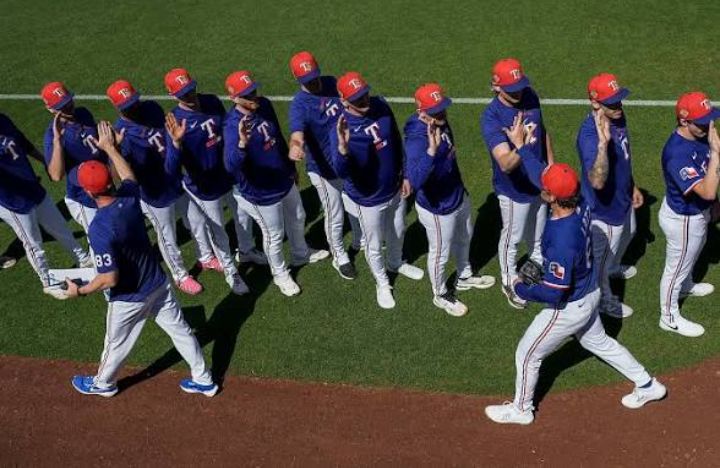
The Texas Rangers found another painful way to lose on Saturday night, falling 6-3 to the Tampa Bay Rays in 10 innings. Despite battling back to force extra innings, Texas once again struggled to deliver when the game was there to be won, extending what has become an increasingly frustrating stretch for the club.
The defeat dropped the Rangers to 70-73 on the season, leaving them three games below the .500 mark. For a team hoping to make something meaningful out of the closing weeks of the campaign, the latest loss served as another reminder of how many opportunities have slipped away.
From the opening inning, the game looked as though it might follow a familiar script.
Texas fell behind early after Tampa Bay put a run on the board, and the Rangers’ offense had difficulty generating much momentum. The Rays eventually added another solo home run, putting Texas in an even deeper hole and making it look as though another frustrating night could be developing.
The Rangers, however, refused to go quietly.
Evan Carter provided an important spark in the eighth inning when he launched a solo home run, cutting Tampa Bay’s advantage to one run. It was a crucial moment for Texas, which had spent much of the night searching for a way to create sustained pressure against the Rays.
The Rangers then created an opportunity to level the game.
Danny Jansen reached base with a one-out single, and Texas brought Cam Cauley into the game as a pinch-runner. Justin Foscue followed with a big double, giving Cauley the opportunity to use his speed and race all the way around from first base.
Cauley scored, and suddenly the Rangers had tied the game at 3-3.
It was one of the few occasions during the night when Texas appeared to have genuine momentum.
Foscue’s double also represented the Rangers’ first trip into scoring position. With Corey Seager and Wyatt Langford coming to the plate, the situation appeared favorable. If either of Texas’ key hitters could deliver, the Rangers would have had an excellent opportunity to take the lead.
Neither player could come through.
Seager grounded out, followed by Langford also failing to produce the breakthrough hit. Instead of taking control of the game, Texas left the opportunity behind.
That missed chance would ultimately become even more significant once the game reached extra innings.
One positive development for the Rangers was the appearance of Jacob Latz. The All-Star closer entered during the ninth inning with the score tied and delivered an extremely efficient performance. Latz needed only nine pitches to record three outs, keeping Tampa Bay off the scoreboard and giving Texas a chance to win the game in the bottom half of the inning.
The Rangers could not capitalize.
With the game still tied after nine innings, the contest moved into extras, where Major League Baseball’s automatic runner rule immediately increased the pressure on both clubs.
Latz remained on the mound for Texas in the 10th inning. Tampa Bay successfully advanced its automatic runner to third base with a sacrifice bunt, putting the go-ahead run just 90 feet from home.
Texas then made the decision to intentionally walk Yandy Díaz.
The strategy was understandable. By putting another runner on base, the Rangers hoped to create a force at multiple bases and potentially turn a double play that would end the inning without significant damage.
Instead, the decision produced the exact opposite result.
Jonathan Aranda stepped to the plate and delivered the decisive blow.
With two strikes against him, Aranda connected on a low slider and sent it deep into the night. The ball traveled an estimated 409 feet before landing beyond the outfield wall.
It was a three-run home run.
Suddenly, what had been a tightly contested game turned into a 6-3 Tampa Bay advantage.
For Texas, the timing could hardly have been worse.
The Rangers had battled back from an early deficit, tied the game late and successfully kept Tampa Bay off the scoreboard in the ninth. But after getting the game to extra innings, one swing completely changed the outcome.
Texas still had an opportunity in the bottom of the 10th to respond.
Unfortunately, the offense could not produce the kind of rally it desperately needed.
The Rangers were unable to score their automatic runner and failed to bring any of their other opportunities home. By the end of the night, Texas had gone 0-for-5 with runners in scoring position.
That statistic summarized much of the problem.
The Rangers managed to score three runs, but they struggled to produce the timely hit that could have turned a close game into a victory. Their inability to take advantage of important situations ultimately left them watching another winnable contest slip away.
Evan Carter was one of the brighter spots for Texas.
His eighth-inning home run gave the Rangers a much-needed boost and moved him to within one homer of reaching double digits for the season. While his contribution was not enough to change the final result, the young hitter continues to provide signs of progress.
The loss, however, overshadowed those individual positives.
At 70-73, Texas now finds itself three games below .500. With the season moving toward its conclusion, every game carries greater importance, making losses like this increasingly difficult to absorb.
The Rangers have shown that they can fight their way back into games. The bigger issue has been finishing them.
Against Tampa Bay, Texas had several opportunities to seize control. The offense could have taken the lead after Foscue’s eighth-inning double. Seager and Langford had chances to drive him in. The bullpen successfully kept the Rays scoreless in the ninth. Yet the Rangers ultimately could not find the final play needed to secure a victory.
Instead, Aranda’s three-run blast became the difference.
Texas will now have one more opportunity to salvage something from the series when the Rangers and Rays meet again Sunday afternoon.
MacKenzie Gore is expected to start for Texas, while Tampa Bay had not yet announced its starting pitcher at the time of the report. The series finale is scheduled for a 1:35 p.m. CDT first pitch.
For the Rangers, the objective is simple: find a way to turn their late-game competitiveness into actual victories.
The team has repeatedly demonstrated that it can stay within striking distance. What has been missing is the execution needed in the biggest moments.
After another extra-inning defeat, Texas will be hoping Sunday’s finale provides a different ending.