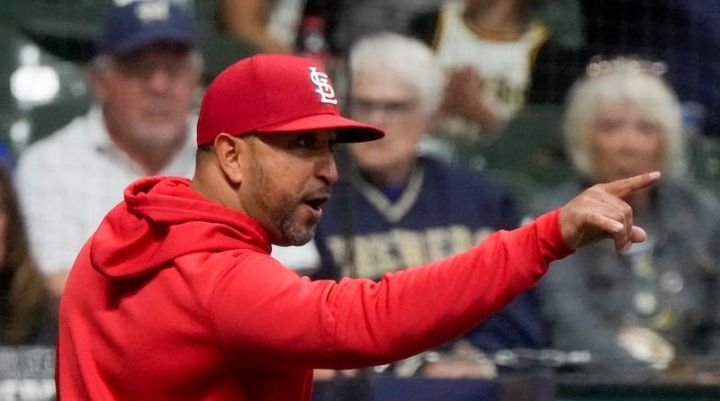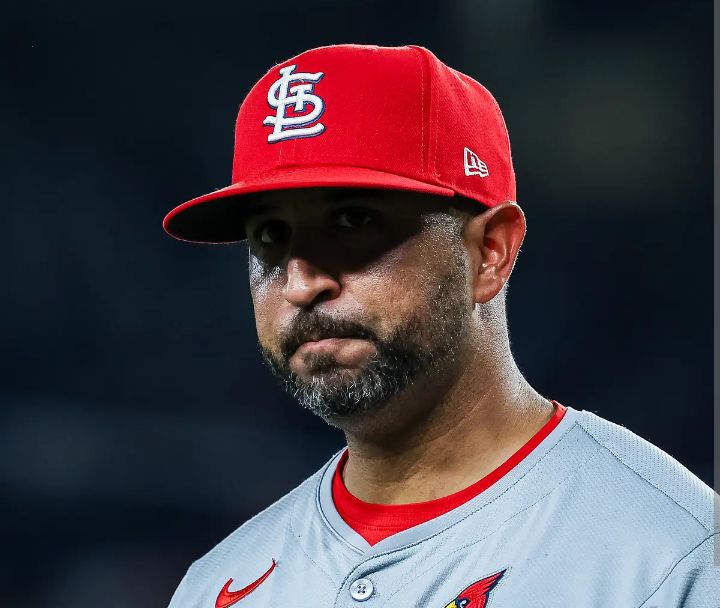
The St. Louis Cardinals are supposed to be in the middle of a rebuild, a period that should be defined by patience, development and a clear commitment to building a sustainable future. Instead, growing frustration among the fan base has once again placed manager Oli Marmol under intense scrutiny.
For some Cardinals supporters, the issue is no longer simply about individual losses, poor stretches or questionable decisions in a single game. It is about a larger concern that has developed over several seasons: whether Marmol is the right manager to lead St. Louis through its rebuilding process.
The criticism is becoming increasingly difficult to dismiss. Three years into the current chapter of Marmol’s tenure, some fans believe the Cardinals are seeing many of the same problems repeatedly. The team has struggled to establish consistent identity, develop young talent into dependable major-league contributors and maintain the kind of on-field discipline expected from one of baseball’s most recognizable franchises.
And if St. Louis truly intends to rebuild, critics argue that the organization needs to start with the coaching staff.
A Rebuild Requires More Than Young Players
A successful rebuild is not simply about trading veterans, acquiring prospects and giving younger players opportunities. It requires a strong developmental structure around those players.
Young baseball players need coaches who can teach them how to adjust to major-league pitching, understand game situations, improve their defensive fundamentals and develop the mental toughness required to compete over a 162-game season.
That is why the Cardinals’ coaching situation has become such an important topic.
Marmol has often been judged on wins and losses, but his supporters can reasonably point to the difficulties that come with managing a team undergoing transition. Rebuilding teams are rarely consistent, and managers are frequently forced to work with inexperienced players, changing rosters and limited short-term expectations.
However, that explanation only goes so far.
At some point, a rebuilding organization has to demonstrate progress.
If the same mistakes continue appearing season after season, the front office has to ask whether the problem is simply a lack of talent or whether the team requires a different voice in the clubhouse.
Why Marmol’s Teaching Ability Is Being Questioned
One of the strongest criticisms from frustrated Cardinals supporters is that Marmol has not established himself as the kind of teacher or developmental manager they believe the club needs during this period.
That criticism is particularly significant because the Cardinals cannot afford to waste valuable development years.
When an organization decides to rebuild, every opportunity given to a young player matters. Every at-bat, inning, defensive assignment and coaching conversation should contribute toward making that player better.
The manager does not have to be solely responsible for player development, of course. Baseball development is a collaborative process involving coaches, analysts, front-office personnel and minor-league instructors.
But the manager is still one of the most visible leaders in the organization.
The Cardinals therefore need a coaching staff capable of creating accountability while also helping young players understand what is expected of them.
If players are repeatedly making the same mistakes without visible improvement, the organization must take a hard look at its developmental philosophy.
Three Years of Similar Frustrations
For critics, the most troubling part of the Marmol debate is the feeling that this is not a new problem.
Three years into the current era, some Cardinals fans believe they are still watching the same issues play out.
That does not automatically mean Marmol is responsible for every failure. Baseball is too complicated for that. Injuries, roster construction, player performance, front-office decisions and organizational philosophy all influence the outcome of a season.
Still, managers are ultimately evaluated on how their teams perform and how effectively they establish a culture.
When frustration continues to build over multiple seasons, change becomes a legitimate conversation.
The Cardinals have historically been associated with stability and continuity, but stability cannot become an excuse for refusing to make necessary changes.
A rebuilding organization should be willing to experiment, evaluate and make difficult decisions when something is not working.
The Coaching Staff May Be the Bigger Issue
Perhaps the most important question for St. Louis is whether the organization needs to move beyond simply debating Marmol.
If the Cardinals believe their rebuild is legitimate, they need a coaching staff that can maximize the talent already in the organization.
That means coaches who can communicate effectively with young players, identify weaknesses quickly and create individualized development plans.
It also means establishing a consistent baseball philosophy throughout the organization.
Players should not be receiving contradictory messages as they move between the minor leagues and the majors. The approach to hitting, pitching, defense and game preparation needs to be connected from the development system all the way to Busch Stadium.
That is where leadership becomes particularly important.
A new manager would not automatically fix the Cardinals. Changing the manager without addressing the broader coaching and developmental structure could simply create another short-term solution.
But if the organization genuinely believes the current leadership is not producing the desired results, there should be no fear of making a change.
The Cardinals Cannot Afford to Waste the Rebuild
Perhaps the biggest reason this debate matters is the timing.
St. Louis has an opportunity to reset its baseball operation and build something capable of competing for years. But rebuilding windows do not last forever.
Prospects develop at different speeds. Players reach free agency. Veterans age. Injuries happen. Competitive windows open and close.
The Cardinals therefore need to maximize every season of the rebuild.
If the organization determines that a different manager and coaching staff could better develop its young players, improve accountability and establish a stronger culture, then making that move would not necessarily represent failure.
It could represent a commitment to getting the rebuild right.
The worst outcome would be remaining committed to the same approach simply because the organization is uncomfortable admitting that changes are necessary.
A Difficult Decision Awaits St. Louis
There is still a case for giving Marmol an opportunity to prove that he can lead the Cardinals through the next phase. A rebuilding team needs stability, and constantly changing managers can create its own problems.
But patience must come with measurable progress.
The Cardinals need to see young players improving. They need to see better execution. They need to see a clearer identity. And they need to see a coaching structure capable of preparing the next generation of Cardinals for sustained success.
If those things are not happening, the organization has to be honest about why.
For an increasingly frustrated fan base, the message is simple: the rebuild cannot just be about rebuilding the roster. It must also be about rebuilding the culture and coaching structure surrounding that roster.
That is why Marmol’s future will remain a major talking point.
The Cardinals have a chance to reset their direction and create a stronger foundation for the years ahead. If they believe the current leadership is not the right fit for that mission, they should not hesitate to make a difficult decision.
For many fans, the question is no longer whether change would be uncomfortable.
It is whether refusing to make changes could cost the Cardinals even more valuable time.