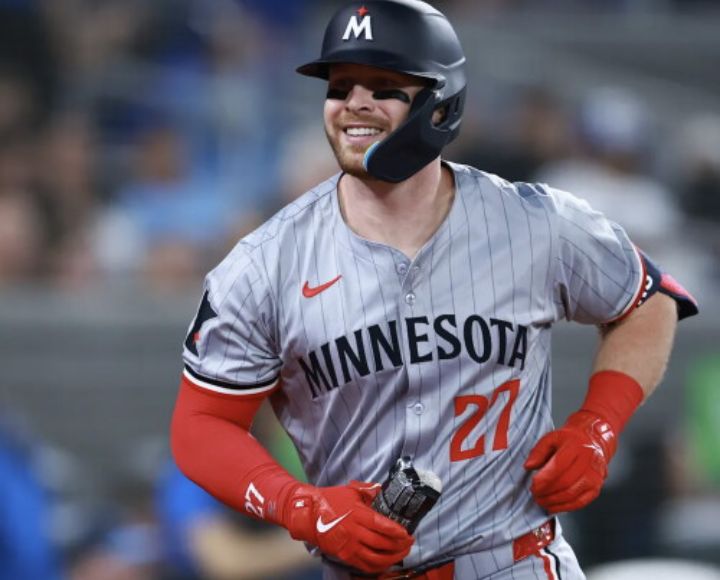
As the MLB trade deadline approaches, few potential matches appear as logical as a deal between the New York Yankees and Minnesota Twins catcher Ryan Jeffers. While most deadline targets attract interest from numerous contenders, the market for quality catchers is unusually limited, making Jeffers one of the most attractive options available. Because the Yankees have struggled badly at catcher throughout the 2026 season, many around baseball believe they could make a serious push to acquire the veteran backstop if Minnesota decides to sell.
The Yankees have received almost no offensive production from their catchers this season. Austin Wells, who entered the year expected to be the club’s primary catcher, has endured an extremely difficult campaign at the plate. His batting average has remained well below expectations, while backup catcher J.C. Escarra also failed to provide offensive support before being sent back to Triple-A.
As a group, New York’s catchers have ranked among the weakest offensive units in Major League Baseball. Their production in key offensive categories has fallen to the bottom of the league, creating one of the Yankees’ biggest weaknesses despite having talent elsewhere on the roster. The lack of run production from behind the plate has become increasingly noticeable as the season has progressed.
Another issue facing New York is roster balance. Both Wells and Escarra bat from the left side, leaving the Yankees without a reliable right-handed hitting catcher who can complement Wells in a platoon situation. That makes finding a right-handed bat an obvious priority before the trade deadline.
Ryan Jeffers fits that description almost perfectly.
Although Jeffers does not receive the same level of attention as some of baseball’s biggest stars, he has quietly developed into one of the league’s more productive offensive catchers over the past several seasons. Since the beginning of the 2023 campaign, he has consistently delivered above-average offensive numbers for his position while supplying power and driving in runs.
Across that stretch, Jeffers has produced a strong batting line while averaging the equivalent of more than 20 home runs and close to 80 RBIs over a full 162-game season. Among primary major league catchers during that period, only a handful have produced better offensive metrics, placing him among the game’s better hitters at one of baseball’s most demanding defensive positions.
That offensive consistency is exactly what the Yankees have been missing.
While Jeffers excels with the bat, his defensive reputation is more mixed. Catching involves much more than simply receiving pitches. Teams evaluate catchers on their ability to frame pitches, block balls in the dirt, manage pitching staffs, and prevent stolen bases.
In several of those defensive categories, Jeffers has received below-average evaluations during recent seasons. He has struggled at times throwing out baserunners and blocking pitches, while pitch framing has also been viewed as an area needing improvement.
Those defensive concerns could make him a less-than-perfect fit for a Yankees organization that has emphasized catcher defense in recent years. The club has invested significant time in improving pitch framing and overall defensive performance behind the plate under its catching development program.
However, Jeffers has shown improvement in certain defensive metrics this season. Whether those gains represent genuine long-term progress or simply a small sample of better play remains uncertain. Either way, the Yankees may decide that his offensive value outweighs any defensive shortcomings.
Before suffering an injury earlier this year, Jeffers appeared to be putting together the finest offensive season of his career.
He was producing at an elite level and carrying one of the highest OPS marks among major league catchers before fracturing the hamate bone in his left hand during May. Hamate injuries can temporarily affect a hitter’s power, making recovery an important storyline for any interested club.
Fortunately for Minnesota, Jeffers returned shortly before the All-Star break and looked healthy in his first games back. His successful return likely reassured potential trade partners that he can contribute during the second half of the season.
Another factor increasing Jeffers’ trade value is his contract status.
The 29-year-old is scheduled to become a free agent after the season, meaning any acquiring team would likely view him as a rental player unless a contract extension follows. Rental players often become attractive deadline targets because acquiring teams only commit prospects without assuming long-term salary obligations.
Under normal circumstances, a team sitting below .500 with an impending free-agent catcher would almost certainly consider moving him before losing him for nothing in free agency.
This season, though, the American League playoff race has complicated those decisions.
Despite their inconsistent record, the Twins remain firmly involved in the postseason picture. They continue battling for one of the American League Wild Card positions while also remaining within striking distance in their division standings.
Because of that, Minnesota’s front office faces a difficult choice.
One option is becoming sellers by trading expiring contracts like Jeffers in exchange for young prospects that could strengthen the organization for years to come.
The alternative is keeping their veterans together in hopes of making a playoff push.
A third possibility may ultimately prove the most realistic. Minnesota could trade players approaching free agency while simultaneously acquiring major league talent capable of helping the club compete immediately. Such an approach would allow the Twins to improve both their present and future without committing fully to either buying or selling.
The emergence of veteran catcher Victor Caratini provides Minnesota with additional flexibility. During Jeffers’ absence, Caratini stepped into the starting role and performed exceptionally well offensively. His production demonstrated that the Twins possess another capable major league catcher, making it easier for the organization to consider moving Jeffers if the right offer arrives.
For the Yankees, that situation creates an opportunity.
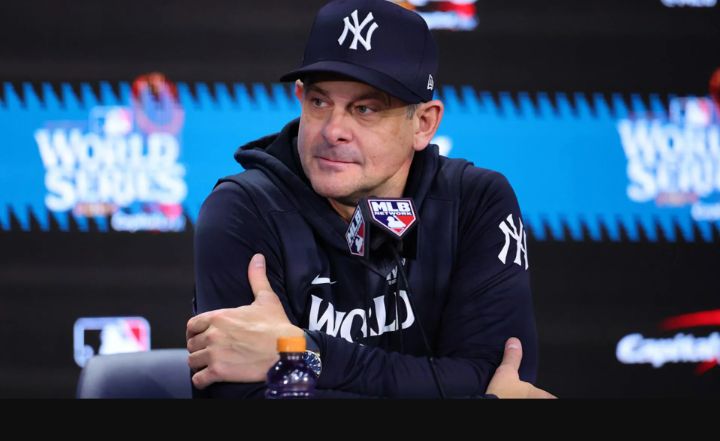
Even though Jeffers may not perfectly match New York’s defensive preferences, he would significantly improve the lineup. His right-handed bat would complement the left-handed hitting Wells, giving manager Aaron Boone greater flexibility depending on opposing pitchers.
Wells could continue contributing primarily through his defense while Jeffers supplies much-needed offense against left-handed pitching or even earns regular playing time if his bat continues producing.
Compared to relying on Wells alongside reserve options such as Escarra or veteran Ali Sánchez, adding Jeffers would represent a substantial upgrade for the Yankees’ catching situation.
The timing also matters.
The number of impact catchers expected to be available before the trade deadline is extremely small. If Minnesota ultimately decides against trading Jeffers, New York could find very few comparable alternatives on the market. That scarcity could increase the urgency for the Yankees to pursue a deal should the Twins indicate they are willing to negotiate.
With the deadline approaching, Jeffers stands out as one of the clearest positional fits for a contender seeking offensive help behind the plate. If Minnesota chooses to capitalize on his value, the Yankees are expected to be among the most aggressive teams pursuing his services, hoping he can transform one of their weakest positions into a legitimate strength for the stretch run.