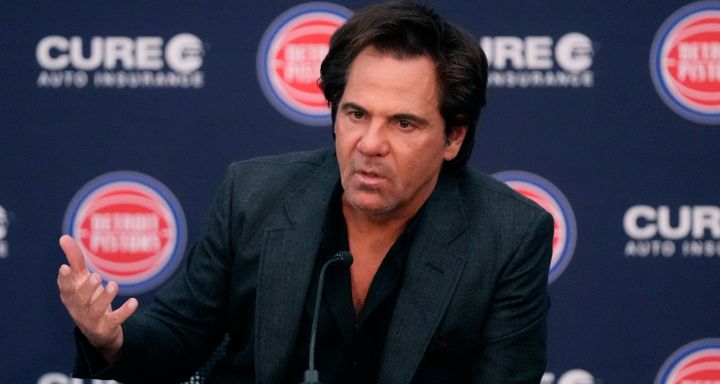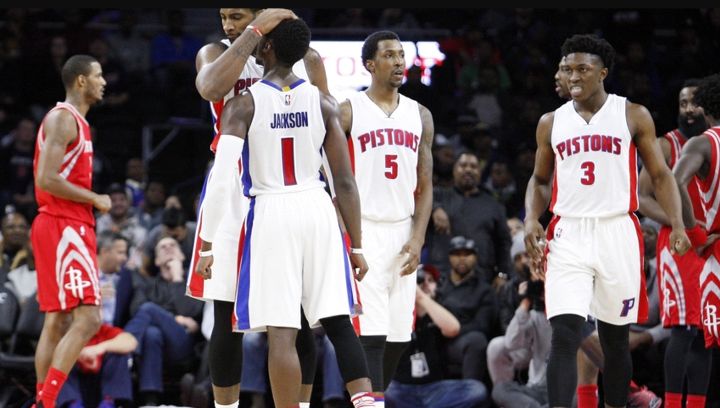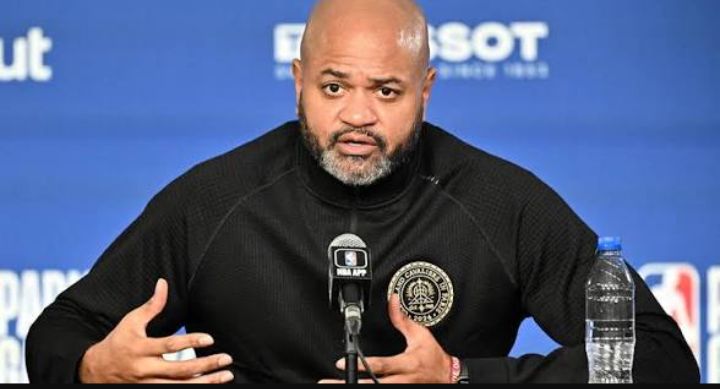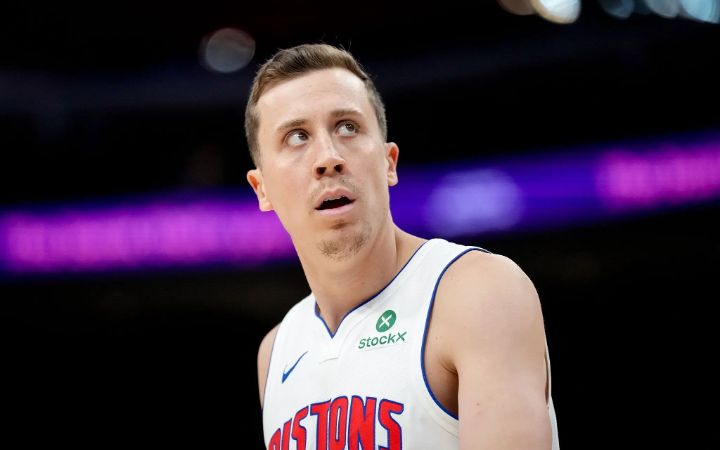
The Detroit Pistons continue to make aggressive moves as they reshape their roster for the 2026-27 NBA season, and their recent acquisition of sharpshooter Isaiah Joe has sparked fresh speculation about the future of veteran forward Duncan Robinson.
Detroit recently completed a deal with the Oklahoma City Thunder, acquiring Joe in exchange for two future second-round draft picks. While the trade immediately strengthens the Pistons’ perimeter shooting, it has also led many around the league to wonder whether Robinson could become the next player moved as Detroit creates additional financial flexibility ahead of free agency.
NBA insider Brett Siegel reported that Robinson’s position on the roster has become increasingly uncertain following the arrival of Joe. With the Pistons expected to remain active in the free-agent market, particularly in pursuit of experienced scorers and wing talent, Robinson’s contract could prove to be one of the team’s most valuable assets from a financial standpoint.
Isaiah Joe arrives in Detroit after establishing himself as one of the NBA’s elite long-range shooters during his four seasons with the Thunder. Throughout his time in Oklahoma City, he consistently ranked among the league’s most efficient three-point specialists, making him an ideal fit for a Pistons team looking to surround its young core with reliable floor spacing.
Although Oklahoma City valued Joe’s production, financial considerations reportedly influenced the Thunder’s decision to part ways with him. The move allowed Detroit to capitalize on an opportunity to add one of the league’s most dependable perimeter threats without surrendering premium draft capital.
Joe’s shooting numbers speak for themselves. He has connected on more than 40 percent of his three-point attempts in each of the last four NBA seasons, demonstrating remarkable consistency from beyond the arc. During that stretch, he has knocked down 681 three-pointers, placing him among the NBA’s top shooters in total makes over that period.
For Detroit, adding a player with that level of accuracy addresses one of the team’s most important offseason priorities. Floor spacing has become increasingly valuable in today’s NBA, and Joe’s ability to stretch defenses should create more driving lanes for Detroit’s primary ball handlers while opening up offensive opportunities across the roster.
However, the acquisition also creates a potential logjam among the Pistons’ perimeter shooters.
Before Joe’s arrival, Duncan Robinson projected to play a significant role as one of Detroit’s primary outside shooting options. Now, with another elite marksman joining the roster, questions naturally arise regarding Robinson’s long-term place within the organization.
League executives and rival front offices have reportedly begun discussing whether Robinson could become available through either a trade or a salary-clearing move. While Detroit has not publicly indicated that Robinson is on the trading block, the financial structure of his contract gives the franchise considerable flexibility if it chooses to make another significant roster move.
One of the biggest factors fueling the speculation is Robinson’s contract. His deal includes a non-guaranteed salary for the 2027-28 season, while only a small portion of his current salary is guaranteed if Detroit decides to waive him before specific contractual deadlines.
That structure provides the Pistons with multiple options.
Should the front office decide to move on from Robinson, the organization could create approximately $14 million in additional salary flexibility. Those savings could then be redirected toward signing another impact player during free agency or facilitating a larger trade.
Detroit has already been linked to several notable players expected to become available this offseason. Among the names mentioned is veteran guard Norman Powell, whose scoring ability and playoff experience would provide another boost to an already improving roster.
If the Pistons ultimately pursue Powell or another established veteran, Robinson’s contract may become one of the easiest ways to generate the necessary financial room.
From a basketball perspective, Robinson remains a valuable player. Throughout his NBA career, he has built a reputation as one of the league’s premier catch-and-shoot specialists, capable of changing games with his outside shooting. His ability to stretch defenses still carries significant value, especially for teams looking to improve their offensive spacing.
Nevertheless, roster construction often requires difficult decisions. Detroit must balance on-court production with long-term financial planning as it attempts to build a championship contender.
The Pistons enter this offseason in a far stronger position than they have been in for years. After finishing the regular season with an impressive 60-22 record, Detroit secured the top seed in the Eastern Conference, signaling the franchise’s dramatic turnaround.
Despite that success, the postseason ended in disappointment. The Pistons were eliminated by the Cleveland Cavaliers in the second round, exposing several areas where the roster could still improve.
The front office appears determined to address those weaknesses aggressively rather than simply bringing back the same group.
Acquiring Isaiah Joe represents one step in that process. His elite shooting should immediately improve Detroit’s offensive efficiency while giving head coach additional lineup flexibility.
Yet the Pistons’ offseason work is far from complete.
League insiders believe Detroit remains active in exploring additional trades, free-agent signings, and other roster upgrades. Beyond adding shooting, the organization is reportedly seeking experienced playmakers and versatile offensive contributors who can elevate the team’s chances of making a deeper playoff run next season.
Every contract on the roster will likely be evaluated through that lens.
For Robinson, that means uncertainty. Whether he ultimately remains with the Pistons or becomes part of another transaction may depend less on his individual performance and more on the organization’s broader financial strategy.
Joe’s arrival doesn’t necessarily guarantee Robinson’s departure, but it certainly changes the conversation. Detroit now possesses another proven three-point specialist at a lower acquisition cost, giving management greater flexibility when planning future moves.
As free agency approaches, the Pistons are expected to remain one of the league’s more active teams. With salary-cap considerations, trade opportunities, and potential veteran additions all in play, Robinson’s contract could become one of the franchise’s most important tools.
Ultimately, Detroit’s front office appears focused on maximizing its championship window. Whether that means retaining Robinson as part of the rotation or using his contract to facilitate another major acquisition remains to be seen.
For now, Isaiah Joe’s arrival has strengthened the Pistons on the court while simultaneously creating one of the biggest roster questions heading into the remainder of the offseason. The coming weeks will determine whether Robinson continues to be part of Detroit’s future or whether the Pistons leverage his contract in pursuit of another significant addition as they continue building a roster capable of competing for an NBA title.