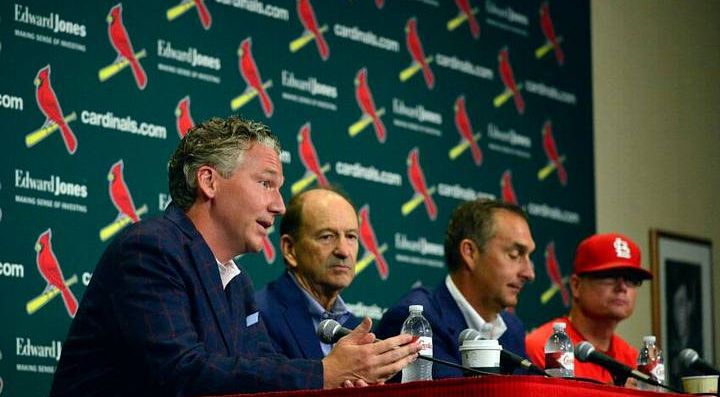
The St. Louis Cardinals have announced a significant overhaul of their leadership structure, marking another major transition period for one of Major League Baseball’s most successful and historic organizations.
At the center of the changes is Bill DeWitt III, who has been promoted to Chief Executive Officer. He succeeds in a role that reflects the growing responsibilities he has taken on within the franchise over the years. Meanwhile, Anuk Karunaratne has been elevated to team president after previously serving as Senior Vice President of Business Operations. Despite these adjustments, longtime owner Bill DeWitt Jr. will remain the club’s principal owner and chairman, maintaining his influential presence within the organization he has overseen since purchasing the team in 1996.
The leadership transition comes only months after another major organizational change. Earlier this year, Chaim Bloom officially succeeded John Mozeliak as President of Baseball Operations, ending an era that had lasted nearly two decades. Together, these moves represent one of the most substantial periods of change the Cardinals have experienced in years.
DeWitt Family Continues Its Influence
Although the new structure shifts responsibilities, the DeWitt family remains firmly at the helm of the franchise. Bill DeWitt Jr. has guided the Cardinals through one of the most successful stretches in modern baseball history. During his tenure, the club captured 12 division championships, reached four National League pennants, and won two World Series titles.
His leadership also extended beyond the field. Under his direction, the Cardinals opened a new Busch Stadium in 2006 through private financing and later spearheaded the development of Ballpark Village, a major entertainment district adjacent to the stadium that has become a cornerstone of downtown St. Louis.
Bill DeWitt III has played a crucial role in many of those projects. Since becoming team president in 2008, he has been heavily involved in both business development and strategic planning. His work contributed significantly to the completion of Busch Stadium and the continued expansion of Ballpark Village.
In recent years, DeWitt III also became one of the organization’s leading voices in media and broadcasting negotiations. He helped manage relationships with Bally Sports Midwest and later worked alongside Major League Baseball as the league reshaped its local broadcasting landscape. His promotion to CEO reflects the growing influence he has accumulated throughout his career with the club.
Karunaratne Earns Expanded Role
The appointment of Anuk Karunaratne as president signals the Cardinals’ commitment to modernizing their business operations and reconnecting with fans.
Karunaratne joined the organization before the 2024 season after spending several years in a similar executive position with the Toronto Blue Jays. His arrival coincided with a challenging period for the Cardinals, as attendance numbers declined following multiple seasons without a playoff appearance.
One of his primary objectives was to enhance the overall fan experience and make attending games more appealing to younger audiences. The Cardinals responded with several initiatives designed to create a more engaging atmosphere at Busch Stadium.
Among those efforts were postgame concerts, which were introduced in 2025 and became a popular attraction. The organization also embraced creative fan-focused campaigns that generated excitement around the team and helped build renewed interest in attending games.
Karunaratne’s promotion suggests ownership believes his vision can help strengthen the Cardinals’ relationship with supporters while positioning the franchise for long-term business growth.
A Year of Organizational Change
The latest executive moves represent the second major restructuring effort within the Cardinals during the past year.
The first occurred when John Mozeliak stepped aside from his role leading baseball operations. Mozeliak had spent nearly twenty years guiding the franchise’s roster construction, player acquisitions, and overall baseball strategy. Recognizing the importance of continuity, the Cardinals designed a transition plan that allowed Chaim Bloom and Mozeliak to work together before Bloom assumed full control.
That approach was intended to ensure stability while gradually introducing new ideas and philosophies into the baseball operations department.
Now, the organization has extended that transition process beyond the baseball side and into its executive leadership ranks, indicating a broader effort to modernize the franchise.
On-Field Results Have Been Better Than Expected
Interestingly, these changes arrive during a season that has exceeded many expectations.
Entering the year, the Cardinals were widely viewed as a team in transition. Many observers anticipated a rebuilding phase as the organization focused on developing younger talent and reshaping its roster.
Instead, St. Louis has emerged as one of baseball’s pleasant surprises. Powered by a youthful core and improved performances across the roster, the team has remained competitive throughout the season and positioned itself firmly in the playoff race.
With a record above .500 and a strong standing in the National League Central, the Cardinals have remained within striking distance of the division lead. Their unexpected success has also sparked discussions about whether the club could become buyers at the trade deadline rather than sellers.
The improved results suggest that the franchise’s rebuilding efforts may be progressing faster than originally anticipated.
Addressing Past Challenges
Despite the encouraging season, the Cardinals’ leadership recognized that significant changes were necessary.
Over the last several years, the organization struggled to meet the lofty standards that have long defined the franchise. One of the biggest concerns involved the decline of its player development system, which historically had been one of the Cardinals’ greatest strengths.
For decades, St. Louis consistently produced homegrown talent capable of contributing at the major-league level. However, recent years brought setbacks in prospect development, roster construction, and overall organizational performance.
Those issues contributed to disappointing seasons and playoff absences, creating pressure for ownership to reevaluate the club’s structure and long-term direction.
The appointment of Bloom to oversee baseball operations was one step toward addressing those concerns. The latest executive promotions indicate ownership is also focused on strengthening the organization’s business and leadership operations.
Looking Ahead
The Cardinals now find themselves at a pivotal moment. While the DeWitt family remains firmly in control, a new generation of leadership is taking on greater responsibility throughout the organization.
Bill DeWitt III’s promotion to CEO and Anuk Karunaratne’s rise to president represent more than simple title changes. They signal a strategic effort to position the franchise for future success both on and off the field.
With Chaim Bloom guiding baseball operations, a competitive young roster emerging on the field, and a refreshed executive structure overseeing business operations, the Cardinals appear determined to adapt to the evolving landscape of modern baseball while preserving the traditions that have made the franchise one of the sport’s most respected organizations.
As the team continues its surprising 2026 campaign, these leadership changes could ultimately shape the next chapter of Cardinals baseball for years to come.