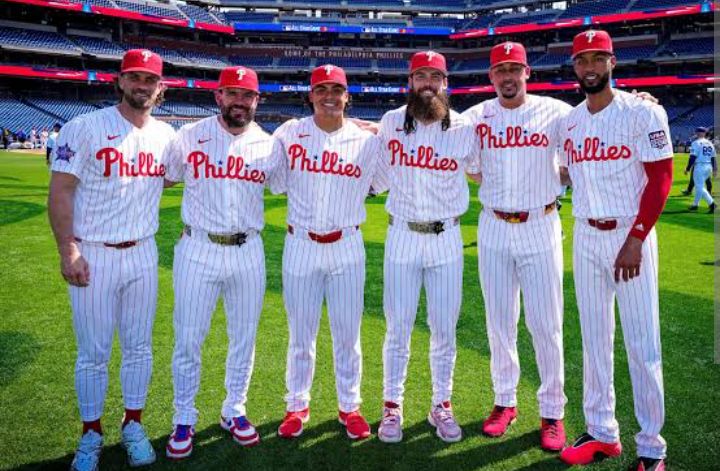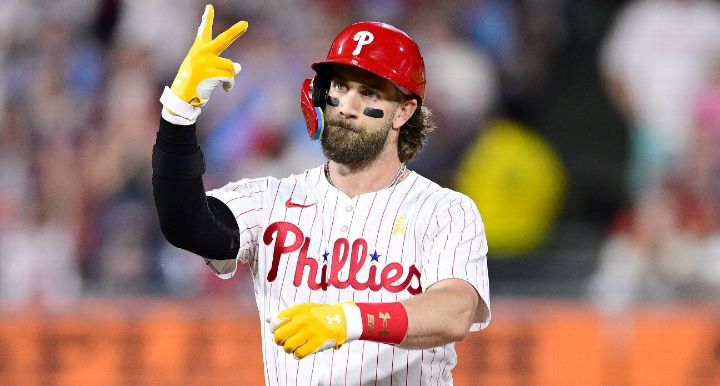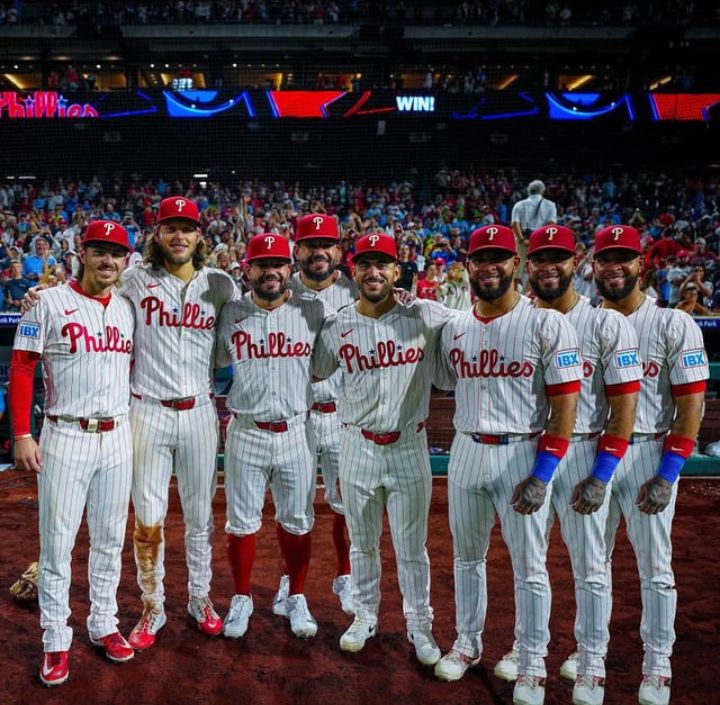
The Philadelphia Phillies have experienced a turbulent but increasingly promising 2026 season, one that began in disappointing fashion but has recently shifted toward stability and competitiveness. After a rough start that led to a managerial change, the organization has shown signs of recovery, sparking renewed optimism among fans and front office decision-makers about the direction of the team moving forward.
At the center of this early-season storyline is the turnaround in performance following the departure of manager Rob Thomson. The Phillies, who had struggled to find consistency under his leadership early in the year, have responded with improved play since the change. In their most recent stretch, the team has won 11 of 15 games, pushing their record to 20–22. While that record still places them below .500, it reflects a significant improvement compared to their earlier form and has kept them within striking distance of the National League Wild Card race.
Despite this positive momentum, there is a growing belief around the league that Philadelphia still lacks the offensive depth needed to compete with the top-tier teams over a full season. The pitching staff has remained relatively stable, but the lineup has been inconsistent, particularly in generating sustained power production and run support in key moments. As a result, speculation has already begun regarding potential midseason upgrades ahead of the 2026 MLB trade deadline.
One of the most intriguing names to emerge in early trade discussions is star slugger Rafael Devers, currently with the San Francisco Giants. Devers, who signed a massive long-term contract and entered the season with high expectations, has recently become a focal point of league-wide rumors due to both team performance and financial considerations.
The Giants themselves have endured a disappointing start, sitting at 18–24 and failing to establish themselves as serious contenders in the National League. With the team underperforming and roster decisions beginning to shift toward the future, there has been increasing speculation that San Francisco could explore the possibility of moving some of its higher-profile, high-salary players if the struggles continue.
According to league reporting referenced in multiple discussions, Devers has emerged as one of the more surprising potential trade candidates. While moving a player of his caliber and contract size would represent a major organizational decision, the Giants’ early-season results have opened the door to at least considering roster restructuring if improvement does not come quickly.
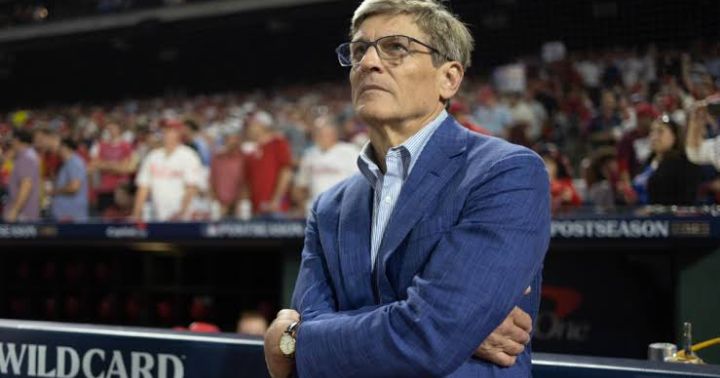
In evaluating possible landing spots for a player like Devers, analysts have identified the Phillies as a team that could both afford and benefit from such a move. The connection is not random; Philadelphia’s front office leadership, headed by president of baseball operations Dave Dombrowski, has a long history of pursuing elite offensive talent. Dombrowski’s past involvement with Devers during his time with the Boston Red Sox adds another layer of familiarity that could influence any future discussions.
From a baseball perspective, the appeal is straightforward. Philadelphia has relied heavily on its core hitters in recent seasons, but adding another proven middle-of-the-order bat could significantly deepen the lineup. Devers, despite a slow start in 2026, remains one of the most productive power hitters of his generation when performing at his best. His ability to drive the ball, hit for consistent power, and produce runs in bunches makes him an attractive option for any contender seeking offensive reinforcement.
Last season, Devers demonstrated his impact across 163 combined games between Boston and San Francisco, hitting 35 home runs and driving in 109 runs. Those numbers reinforced his reputation as a consistent offensive force capable of anchoring a lineup. In addition, he has surpassed the 30-home-run mark multiple times throughout his career, including at least four seasons with 32 or more home runs, highlighting his sustained power production over time.
For the Phillies, the potential acquisition of Devers would represent a clear attempt to maximize their competitive window. The team has invested heavily in its roster and expects to contend annually, but inconsistency in offensive output has occasionally held them back in tightly contested games. A player of Devers’ caliber could provide the kind of middle-order protection and run production needed to elevate the entire lineup.
However, while the upside is significant, the risks associated with such a move are equally substantial. Devers is only in the fourth year of a 10-year contract worth approximately $313.5 million, making any trade involving him a long-term financial commitment. For any acquiring team, taking on that level of salary requires confidence not only in current performance but also in future sustainability.
His early-season struggles in 2026 further complicate the evaluation. Although slow starts are not uncommon for elite hitters, especially in small sample sizes, concerns naturally arise when a player with such a large contract does not immediately produce at an expected level. Teams considering a trade would need to weigh whether his decline is temporary or indicative of a longer-term trend.
For Philadelphia, this decision would also have roster construction implications. Adding Devers would likely require adjustments elsewhere, both financially and in terms of playing time distribution. While his bat would be welcomed, integrating him into an already established offensive core could present challenges, particularly in maintaining balance across the lineup.
Still, the “high-risk, high-reward” nature of such a move is precisely what makes it intriguing. If Devers were to rediscover his elite form, the Phillies would instantly gain one of the most dangerous hitters in baseball, potentially transforming their offense from good to elite. In a competitive National League landscape, that type of addition could be the difference between a Wild Card appearance and a deep postseason run.
As the 2026 season progresses, the Phillies’ trajectory will likely determine how aggressive they become. If their recent improvement continues and they solidify themselves as contenders, the front office may view a blockbuster trade as a necessary final push. If inconsistency returns, they could either scale back expectations or explore bold moves in an effort to salvage the season.
For now, the idea of Rafael Devers wearing a Phillies uniform remains speculative, but it is grounded in logical circumstances: a struggling but talented team in need of offense, a rebuilding-leaning opponent potentially open to trade discussions, and a star player whose talent level remains undeniable despite recent struggles.
Whether or not such a deal materializes, the speculation alone highlights Philadelphia’s intent to remain active in the market and reinforces the expectation that the team will continue searching for ways to strengthen its roster as the season moves toward the trade deadline.