Being a passionate sports fan often comes with emotional highs and lows, but for Philadelphia Phillies supporters, the current stretch has felt more draining than exciting. What was supposed to be a promising season has instead turned into a frustrating reminder of lingering issues the organization has failed to address. At the center of the growing discontent is manager Rob Thomson, whose recent comments and decisions have only deepened the divide between the team and its fanbase.
The frustration isn’t just about losses—it’s about a pattern. Year after year, the Phillies have rolled out a roster that looks strikingly similar, hoping for different results without making meaningful improvements. Fans have watched this cycle repeat itself, and patience is wearing thin. The team’s sluggish start has only amplified concerns that the front office and coaching staff are either unwilling or unable to recognize the team’s most obvious flaws.
One of the clearest examples of this disconnect is the handling of Otto Kemp. The 26-year-old utility player has found himself in a difficult and arguably unfair situation. Naturally an infielder, Kemp has been asked to step into an outfield role he isn’t fully equipped to handle at the major league level. While versatility can be a valuable trait, there’s a significant difference between occasional flexibility and being thrust into a position that exposes a player’s weaknesses.
Kemp’s rookie season showed some promise. His offensive numbers suggested he could develop into a solid contributor, but nothing indicated he was ready to take on a major role, especially not in an unfamiliar position. Despite this, the organization chose to rely on him as part of their outfield solution rather than bringing in more proven talent. It was a gamble that many fans immediately questioned—and one that has not paid off.
Predictably, Kemp has struggled. His limited production at the plate and defensive missteps have made him an easy target for criticism. However, placing the blame solely on him ignores the bigger picture. He didn’t put himself in this position; the team did. Expecting a developing player to suddenly adapt to a demanding role at the highest level of competition was always a risky move, and the outcome has followed that script.
The Phillies’ offensive issues only make matters worse. This isn’t a new problem—it’s something that has lingered for several seasons. The lineup has often lacked consistency, and when key players go cold, there hasn’t been enough depth to compensate. Instead of addressing these concerns with impactful acquisitions, the organization has repeatedly opted for short-term fixes and aging veterans who no longer perform at a high level. This approach has left the team stuck in mediocrity, unable to take the next step forward.
Kemp’s situation is just one symptom of this larger issue. When a team fails to build a balanced and competitive roster, it inevitably places extra pressure on players who aren’t ready to carry that burden. In this case, Kemp has become a symbol of the organization’s miscalculations—a player caught between his potential and unrealistic expectations.
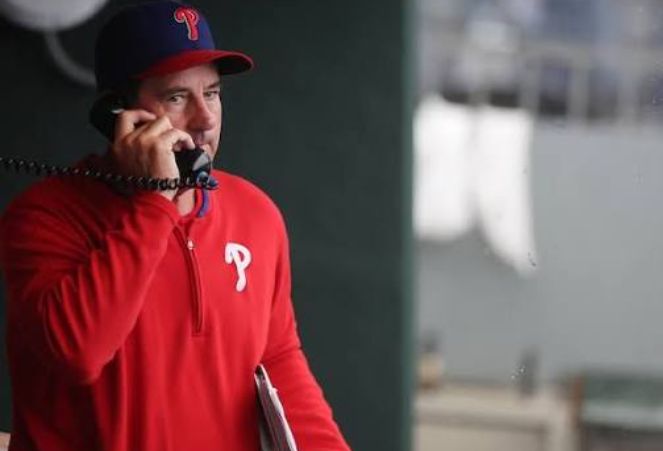
What has truly frustrated fans, though, is Rob Thomson’s response to the situation. When asked whether expectations for Kemp had been set too high, Thomson’s answer focused on the player’s personality and composure rather than addressing the core issue. While it’s important to support players and maintain their confidence, it’s equally important to acknowledge when a mistake has been made.
The question wasn’t about Kemp’s mindset—it was about the organization’s decision-making. Did the team expect too much from a player still trying to establish himself? Did they misjudge his readiness to take on a new role? These are the questions fans want answered, and Thomson’s response failed to provide any clarity.
This lack of accountability is what continues to fuel frustration. Fans understand that not every decision will work out, but they expect honesty when things go wrong. A simple acknowledgment—that Kemp was placed in a challenging situation and might need more time to develop—would have gone a long way. Instead, the response felt dismissive, as if the concerns being raised weren’t valid.
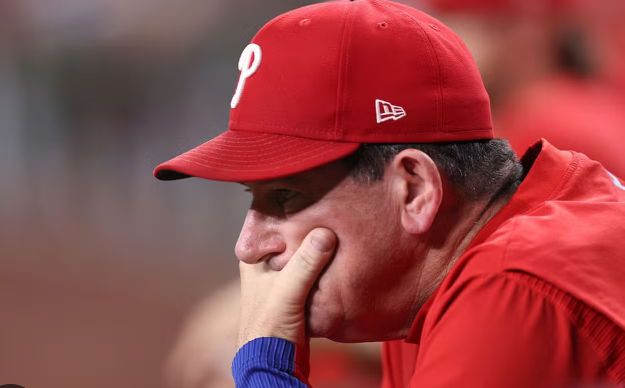
Thomson’s leadership style plays a significant role in this perception. He is widely regarded as a player-friendly manager, someone who builds strong relationships and avoids publicly criticizing his team. In many situations, this approach can be beneficial. It fosters trust and creates a positive clubhouse environment. However, when results are poor, that same approach can come across as complacency.
There’s a fine line between supporting players and ignoring problems. Right now, it seems like the Phillies are leaning too far toward the latter. By refusing to openly address the team’s shortcomings, the organization risks appearing out of touch with reality. Fans aren’t asking for harsh criticism or dramatic overreactions—they’re asking for honesty and a willingness to adapt.
The broader concern is that this isn’t an isolated incident. It reflects a pattern of behavior from the Phillies’ leadership. For years, there has been a reluctance to make bold changes or confront underlying issues. Instead, the team has relied on incremental adjustments and hopeful thinking. While that strategy can occasionally yield short-term success, it rarely leads to sustained improvement.
As the losses pile up and frustrations grow, the gap between the team and its supporters continues to widen. Fans see the problems clearly: a lack of offensive consistency, questionable roster construction, and players being asked to perform roles they aren’t suited for. When those in charge fail to acknowledge these issues, it creates a sense of disconnect that is hard to ignore.
Otto Kemp’s struggles should have been a moment for reflection—a chance for the organization to reassess its approach and make necessary adjustments. Instead, it has become another example of missed opportunities and unaddressed concerns. The longer this pattern continues, the more difficult it will be to regain the trust of the fanbase.
Ultimately, the Phillies’ situation isn’t hopeless, but it does require a shift in mindset. Recognizing mistakes, making necessary changes, and communicating openly with fans are all essential steps toward improvement. Until that happens, frustrations will persist, and players like Kemp will continue to bear the consequences of decisions that were never in their control.
For now, Phillies fans are left watching a familiar story unfold—one where the problems are obvious, but the solutions remain just out of reach, largely because those in charge refuse to fully acknowledge them.