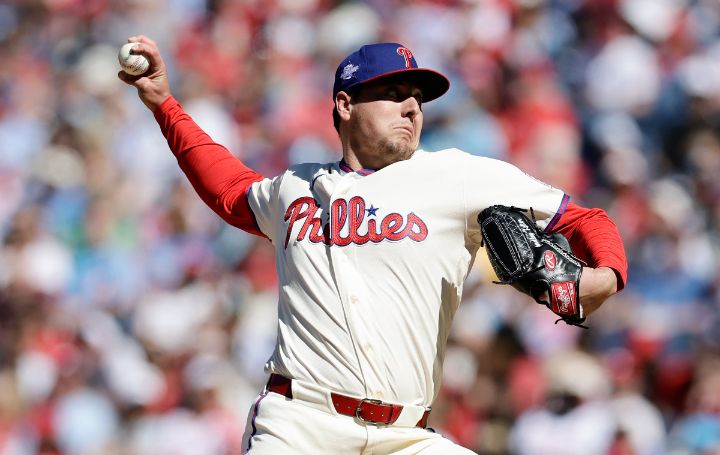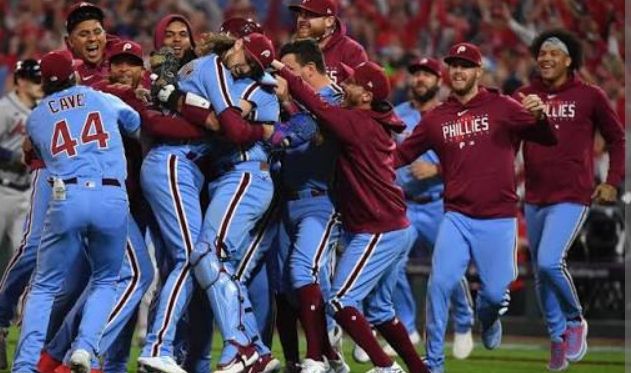
Just when fans thought the roster was settled and the front office would take a more conservative approach, news broke of another unexpected trade that has instantly reshaped the conversation around the team. No warning. No gradual buildup. Just a sudden move that has left fans scrambling for answers and analysts debating its true impact.
At first glance, the trade feels like classic Phillies—bold, aggressive, and unwilling to sit still. This is a franchise that has made it clear in recent seasons that mediocrity is not acceptable. Competing isn’t enough—they want to dominate. And moves like this prove they are willing to take risks to get there.
But with that ambition comes uncertainty.
The biggest question on everyone’s mind right now is simple: why this move, and why now? The Phillies were already considered contenders, with a strong core and a lineup capable of going toe-to-toe with anyone in the league. So pulling off another major trade at this stage raises eyebrows. Is this the final piece of a championship puzzle, or an unnecessary gamble that could disrupt team chemistry?
Fans are split right down the middle. On one side, you have those who trust the front office completely. They see this as another calculated decision—one backed by data, scouting, and a long-term vision. To them, this trade signals confidence. It shows that the Phillies believe they are close enough to a title to justify making bold moves.
On the other side are the skeptics. These are the fans who have seen how risky trades can backfire. They worry about what the team gave up to make this deal happen. Prospects, depth players, or even key contributors—every trade comes with a cost. And sometimes, that cost isn’t fully understood until it’s too late.
One of the most interesting aspects of this move is how it changes the team’s identity. The Phillies have built a reputation around power hitting, star talent, and an aggressive approach. This trade seems to double down on that philosophy—or possibly shift it in a surprising new direction. Depending on how the new player fits into the lineup or rotation, this could either elevate the team to another level or create new challenges that weren’t there before.
Chemistry is another huge factor that cannot be ignored. Baseball isn’t just about talent—it’s about how players connect, communicate, and perform together over a long season. Introducing a new piece, especially through a high-profile trade, can shake things up in ways that aren’t immediately visible. Will the clubhouse embrace the change, or will it take time to adjust?
Then there’s the pressure.
A move like this doesn’t happen in a vacuum. It raises expectations instantly. Fans, media, and even the players themselves now see this season differently. It’s no longer just about making the playoffs—it’s about proving that this trade was worth it. Every game, every at-bat, every inning will be viewed through that lens.
And let’s be honest—Philadelphia is not a forgiving sports city. If this trade doesn’t pay off quickly, the criticism will be loud and relentless. But if it works? If this turns out to be the missing piece that pushes the Phillies to a championship? Then the front office will be praised as visionary, and this move will be remembered as a defining moment in franchise history.
Another layer to consider is how this trade affects the competition. The rest of the league is watching closely. Rivals now have to adjust their strategies, knowing the Phillies have made a significant change. It could trigger a ripple effect, with other teams scrambling to respond with moves of their own.
That’s the nature of modern baseball. One big decision rarely stands alone—it influences everything around it.
Of course, it’s still too early to fully judge the trade. Baseball seasons are long, and outcomes are rarely immediate. The true impact of this move will unfold over weeks and months, not days. Early reactions are driven by emotion, speculation, and incomplete information.
But that’s part of what makes moments like this so exciting.
For fans, it’s a rollercoaster. One minute you’re comfortable, confident in the team you know. The next, everything changes, and you’re forced to rethink what this season could become. It’s unpredictable, intense, and sometimes frustrating—but it’s also what keeps people invested.
In many ways, this trade is a statement. It says that the Phillies are not content with standing still. They are willing to take risks, to challenge expectations, and to chase greatness even when the path is uncertain.
Whether that boldness leads to triumph or disappointment remains to be seen.
For now, all eyes are on the field. Fans will watch closely to see how the new addition performs, how the team adapts, and whether this shocking move lives up to the hype. Every game will bring new clues, new reactions, and new debates.
One thing is certain: the Phillies have once again captured the spotlight.
And in a sport where attention, momentum, and belief can be just as important as statistics, that might be the biggest move of all.