The narrative surrounding the Buffalo Bills’ offense since the trade of star wide receiver Stefon Diggs has been one of remarkable quarterback excellence juxtaposed with a lingering, unfulfilled need. Josh Allen, the franchise’s generational talent, has secured an MVP award and maintained a perennial playoff presence, yet the ultimate goal of a Super Bowl victory remains elusive. This paradox highlights a critical gap: the absence of a definitive, game-breaking receiving weapon to complement Allen’s extraordinary skills. A recent mock draft by CBS Sports’ Ryan Wilson, which projects the Bills to select Texas A&M wide receiver KC Concepcion in the first round, has reignited discussion on how Buffalo plans to solve this pivotal issue. This move, whether realized or hypothetical, serves as a lens through which to examine the team’s offensive philosophy, the development of current personnel, and the strategic calculus of building a championship-caliber roster around a quarterback in his prime.
The Post-Diggs Era: An Offensive Recalibration
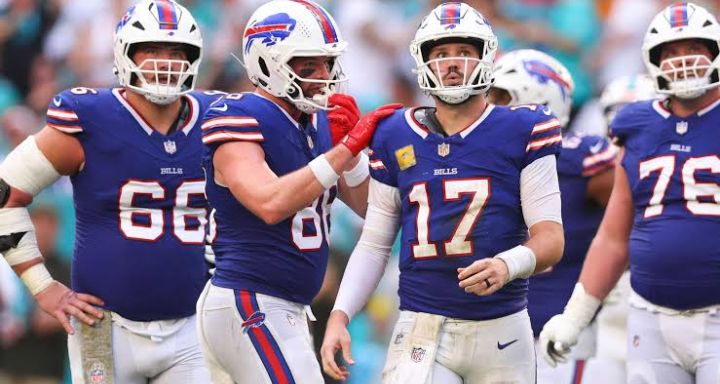
The departure of Stefon Diggs created a void that was both statistical and psychological. Diggs was not just a prolific pass-catcher; he was a trusted security blanket for Allen in critical moments, a route-running savant who could dictate coverage and create separation against any defender. His presence fundamentally shaped defensive game plans. In the seasons following his trade, the Bills have employed a committee approach, spreading targets among a group of solid but not spectacular players. While this has kept the offense functional and even highly productive at times, it has arguably lacked the singular, defense-warping element that top-tier contenders often possess.
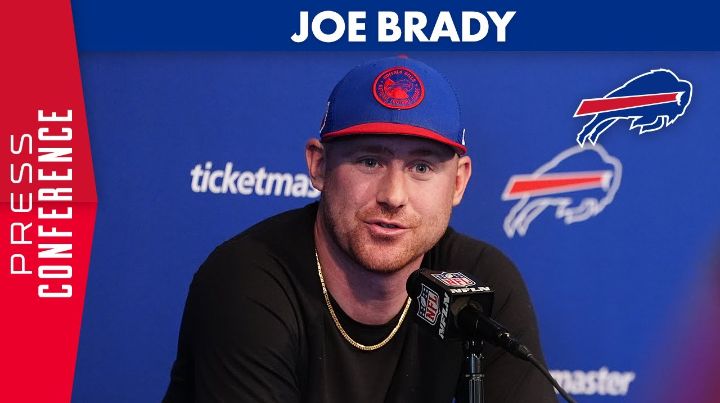
The onus to fill that void initially fell heavily on Keon Coleman, the team’s 2024 first-round pick. Coleman’s rookie season was a classic display of rookie inconsistency—flashes of spectacular athleticism and contested-catch ability tempered by moments of struggle with route precision and separation. Entering his third season in 2026, Coleman stands at a critical juncture in his career. The physical tools are undeniable, but the transition to a consistently dominant, number-one option is a demanding one. The organization, particularly new head coach Joe Brady, who served as offensive coordinator during Coleman’s first two years, has publicly expressed faith in his development. Brady’s intimate knowledge of Coleman’s strengths and weaknesses is a significant asset, suggesting the playbook will be tailored to maximize his capabilities. However, faith alone does not guarantee production, and the competitive pressures of the NFL are relentless.
The Mock Draft Proposition: KC Concepcion as a Catalyst
Ryan Wilson’s mock draft selection of KC Concepcion introduces a fascinating variable into this equation. Concepcion is described as a “versatile WR who uses his quickness and burst to consistently get open against man coverage,” a “deep threat with the speed to stack defenders,” and a “natural hands-catcher” with “impressive YAC ability.” This profile suggests a player who could address specific needs in the Bills’ receiving corps. His alleged prowess against man coverage is particularly salient, as playoff defenses often rely on these schemes to disrupt timing and challenge receivers physically. Furthermore, his value as a dynamic punt returner adds a special teams dimension that the Bills have prized in the past.
From a strategic standpoint, drafting a receiver like Concepcion, even with Coleman on the roster, is not an indictment but an augmentation. It embraces the modern NFL philosophy of positional abundance. The most potent contemporary offenses, from Cincinnati to Miami to Detroit, are characterized not by one alpha receiver but by multiple high-level threats who stress defenses in complementary ways. Imagine an offensive set featuring the physical, jump-ball prowess of Coleman, the quick-twitch separation and vertical speed of a player like Concepcion, and the reliable intermediate presence of a Dalton Kincaid at tight end. Such a group would present nightmare scenarios for defensive coordinators, making it impossible to bracket or double-team any one player without leaving another in a highly advantageous matchup.
Moreover, the selection would introduce healthy competition, a cornerstone of successful team building. Nothing accelerates development like the presence of a talented peer vying for snaps and targets. For Coleman, a first-round investment at his position could serve as the ultimate motivational spark, pushing him to hone his craft and solidify his role. It creates an environment where performance is the sole currency, elevating the entire unit’s standard.
The Broader Context: Building Around Josh Allen’s Championship Window
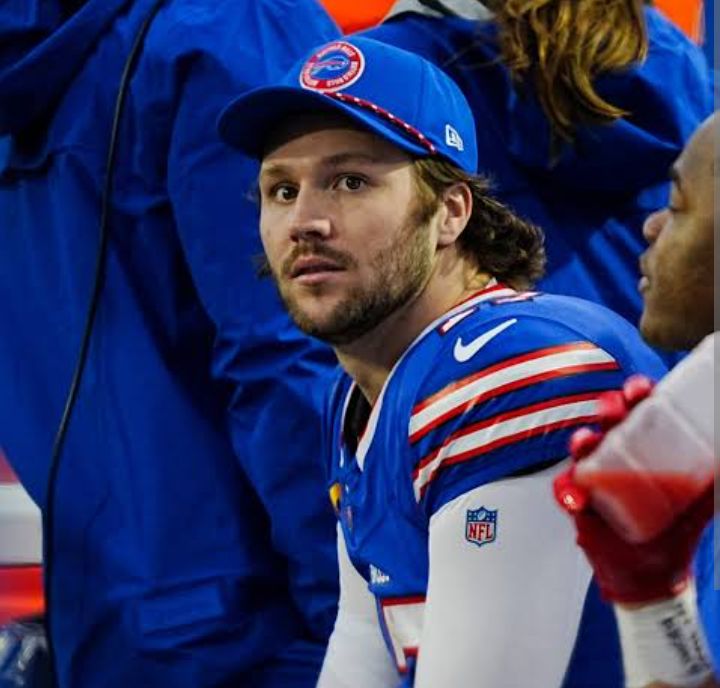
Any personnel decision the Bills make must be viewed through the imperative of maximizing Josh Allen’s championship window. Allen is in the heart of his athletic prime, a player capable of single-handedly winning games through both his arm and his legs. The organization’s mission is to construct a roster that alleviates the burden on him to perform superhuman feats every week. A more diverse and potent receiving corps does precisely that. It provides easier, quicker reads in the progression, creates bigger throwing windows, and makes the offense less predictable. When a quarterback trusts that his receivers will win their routes consistently, it leads to quicker decisions, fewer sacks, and reduced turnover risk.
The Bills’ playoff shortcomings, while multifaceted, have occasionally featured moments where the passing game appeared stagnant or one-dimensional against elite defenses. Adding a receiver with a different skill set—specifically, elite speed and separation ability—provides an alternative answer when physical press coverage disrupts the timing of other routes. It forces safeties to play deeper, which in turn opens lanes for the running game and Allen’s own scrambles. This is about giving the offensive coordinator, now Joe Brady as head coach, a more complete and versatile toolkit to deploy against the sophisticated defenses encountered in January.
Conclusion: A Necessary Evolution
The speculation surrounding the Bills selecting KC Concepcion, or any highly-rated receiver in the first round, is more than just routine draft chatter. It is a reflection of a clear and persistent roster need that aligns perfectly with the franchise’s overarching goal. Relying solely on the internal development of Keon Coleman is a viable path, but it carries risk. Pairing his continued growth with an infusion of high-end talent at the position represents a more aggressive, proactive strategy.
The Buffalo Bills, with Josh Allen under center, have established a floor of excellence. They are a guaranteed playoff team and a tough out for any opponent. However, to break through the AFC’s upper echelon and win a Lombardi Trophy, they must elevate their offensive ceiling. The difference between a very good offense and a truly great one often lies in the multiplicity of its weapons. Investing significant draft capital in a dynamic receiver like Concepcion signals a commitment to providing Allen with the arsenal he deserves. It would be a declaration that the front office is not merely content with contention but is obsessively focused on solving the final piece of the puzzle. Whether through this specific draft pick or another avenue, bolstering the receiving corps is not just an option for the Buffalo Bills; it is an essential step in their evolution from perennial contenders to champion.