The St. Louis Cardinals entered 2026 knowing that patience would be required.
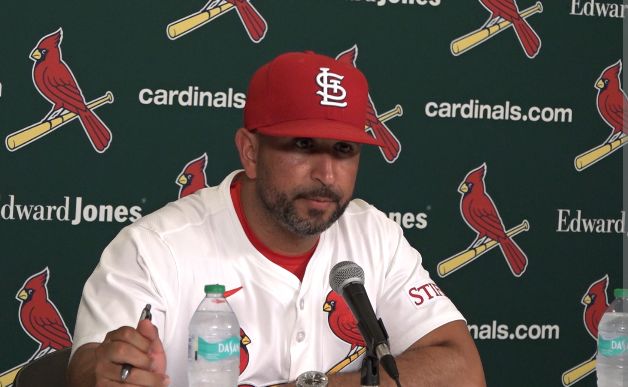
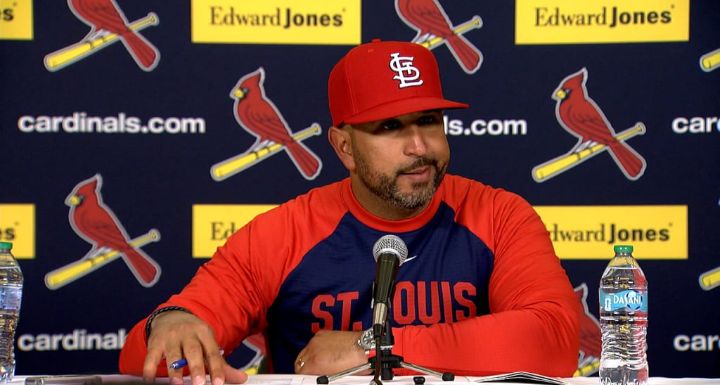
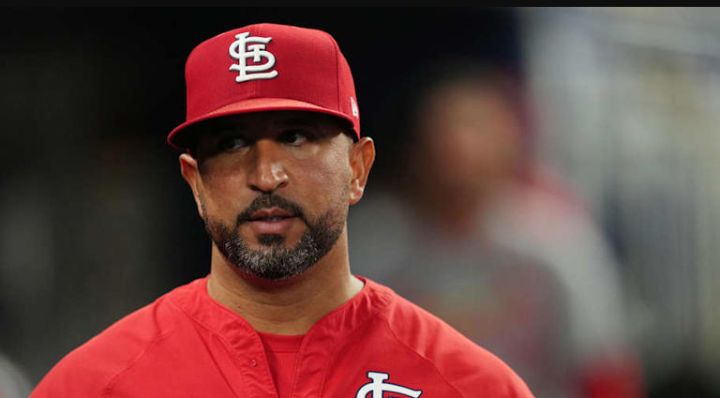
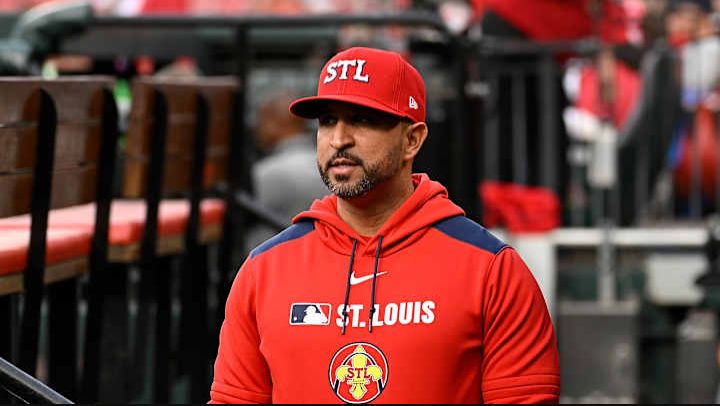
After a major roster transition, the organization committed to a younger core, moved on from several established veterans and gave manager Oli Marmol a contract extension through the 2028 season, with a club option for 2029.
Yet as the season moves toward its conclusion, questions about Marmol’s future have returned to the conversation.
For some Cardinals fans, the issue is simple: the team needs a new voice in the dugout.
Others believe Marmol is being judged too harshly while managing a roster that is still developing and a pitching staff that has frequently been inconsistent.
The debate has become particularly interesting because one familiar name immediately stands out whenever Cardinals fans discuss potential alternatives:
Skip Schumaker.
Schumaker is a former Cardinals player, former Cardinals bench coach and a manager who has already demonstrated that he can lead a major-league club. But there is a major obstacle to the idea: Schumaker is currently managing the Texas Rangers, meaning a St. Louis return would be purely hypothetical at this point.
Still, the possibility raises an intriguing question:
If the Cardinals ever decided to move on from Marmol, could Schumaker be the kind of manager they would consider?
Marmol’s Situation Is Complicated
It would be premature to suggest that the Cardinals are preparing to fire Marmol.
In March, St. Louis made a significant commitment to him, signing him to a two-year extension through 2028 and adding a club option for 2029. The decision came after Marmol had already managed the club for four seasons.
Marmol entered 2026 with a 325-323 managerial record and one division title.
That record tells an important story.
He has not been a consistently dominant manager, but he also has not been a complete failure.
His first season in charge was arguably his strongest statement. In 2022, Marmol guided the Cardinals to 93 victories and the National League Central title.
The problem is that the organization has changed dramatically since then.
The veteran-heavy Cardinals of 2022 are gone.
The current team is younger, less experienced and being built for the future.
That makes evaluating Marmol particularly difficult.
Why Some Fans Want a Change
The criticism of Marmol has become familiar.
Some fans believe he lacks the necessary feel for managing a baseball game. Others remain frustrated by his pitching decisions, particularly when a starter or reliever struggles and the game begins to get away from St. Louis.
The bullpen has become another major source of frustration.
When relief pitchers issue walks, fail to execute pitches or surrender leads, the manager naturally becomes part of the conversation.
But there is an important distinction.
Marmol doesn’t throw the pitches.
He can make the pitching change, but the player still has to execute.
That is why the Cardinals’ problems cannot reasonably be placed entirely on the manager.
The offense has also played a role.
There have been games in which St. Louis has had opportunities but failed to convert them. When runners are stranded and scoring opportunities disappear, changing managers will not automatically solve the problem.
The Cardinals need better execution throughout the roster.
Marmol Has Actually Improved in Some Areas
Interestingly, Marmol’s reputation inside the organization is more positive than the loudest fan criticism might suggest.
An MLB.com analysis earlier this year argued that Marmol had evolved considerably since the difficult early stages of his managerial career. The report specifically praised his bullpen management, his calmer demeanor and his ability to work with the front office.
That is significant.
The perception of Marmol outside the organization can sometimes be very different from how the people around him view his work.
He has also spent nearly two decades in the Cardinals organization, first as a player and later as a minor-league manager and major-league coach.
That familiarity with the organization is one reason the Cardinals have continued to trust him.
The Young Roster Changes the Equation
Perhaps the strongest argument for keeping Marmol is the team’s rebuilding process.
St. Louis entered the 2026 season after trading several established veterans and committing more heavily to younger players. The organization knew that there would be growing pains.
Young players do not develop in a straight line.
There will be mistakes.
There will be slumps.
There will be difficult games.
There will also be moments when the potential becomes obvious.
Recent opportunities for young players such as Hancel Rincon and Cooper Hjerpe demonstrate the organization’s willingness to give prospects meaningful major-league experience.
Hjerpe, for example, made his MLB debut against Colorado and delivered four perfect innings with six strikeouts in a game St. Louis eventually won 10-8.
That is exactly the type of development the Cardinals need to see during a rebuilding season.
It also makes the manager’s job different.
Marmol isn’t simply trying to win games. He’s helping oversee the development of a younger roster while trying to keep the team competitive.
Then There Is Skip Schumaker
If the Cardinals ever decided that a managerial change was necessary, Schumaker would naturally attract attention from fans familiar with his history in St. Louis.
Schumaker played eight seasons for the Cardinals from 2005-12 and later returned to the organization as Marmol’s bench coach in 2022. That season ended with St. Louis winning 93 games and capturing the NL Central title.
The relationship between the two managers also remains friendly.
When Schumaker returned to St. Louis with Texas earlier this year, Marmol even wore a Schumaker-themed shirt that his former bench coach had given him as a joke. The two have maintained a close friendship since working together.
But familiarity alone would not make Schumaker the correct choice.
He would have to leave his current position with Texas, and there is no indication that such a move is being considered.
Still, from a purely hypothetical standpoint, his Cardinals background would make him an intriguing name if St. Louis ever went looking for a new manager.
Would a New Manager Actually Fix the Cardinals?
That may be the bigger question.
If the Cardinals replace Marmol but continue to have inconsistent pitching, an inexperienced roster and offensive struggles, what exactly changes?
A new manager cannot magically create a closer.
A new manager cannot turn every young player into an established star.
A new manager cannot prevent injuries.
And a new manager cannot fix every roster construction decision.
The front office has to provide the talent.
That is why the Cardinals’ next offseason could be more important than the managerial debate itself.
If St. Louis can add dependable pitching, strengthen the bullpen and continue developing its young players, Marmol—or whoever eventually manages the club—will have a much better opportunity to succeed.
The Decision Could Ultimately Come Down to Results
For now, the Cardinals have made their position clear by extending Marmol.
He is expected to be part of the organization’s long-term plan.
But baseball is a results-driven business.
If the Cardinals remain stuck around .500 and fail to make meaningful progress, eventually the front office will have to evaluate every part of the organization—including the manager.
That does not mean Marmol should be fired today.
It means the extension does not make him immune from future scrutiny.
And if the Cardinals eventually decide they need a different voice, fans will immediately begin asking who should take over.
Schumaker would undoubtedly be one of the most fascinating names to discuss because of his history with the organization and his previous relationship with Marmol.
But whether he would ever actually become available is another question entirely.
For now, the Cardinals have bigger issues to solve.
They need pitching.
They need offensive consistency.
They need their young players to develop.
And they need a clear vision for what the next competitive Cardinals team is supposed to look like.
Only then will the organization truly know whether Marmol is the manager who can lead that team.