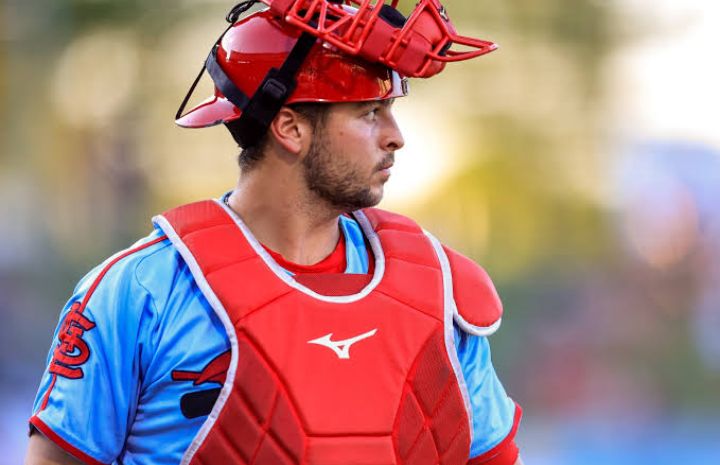
The growing conversation surrounding Jimmy Crooks and the St. Louis Cardinals is becoming impossible to ignore. While the organization entered the 2026 season emphasizing patience, development, and long-term planning, the current state of the team has created an interesting dilemma. The Cardinals are competing harder than many expected, and with that competitiveness comes pressure to improve the roster wherever possible. One move that increasingly makes sense is promoting catcher prospect Jimmy Crooks to the major leagues.
Crooks may not be viewed as a flawless prospect, but his recent performance at Triple-A Memphis has forced the organization to seriously consider whether he is ready for a larger opportunity. At 25 years old, he has reached the point in his development where additional time in the minors may no longer provide the same benefits it once did. Instead, the Cardinals could gain more value by allowing him to adjust to big league pitching while also strengthening a roster that has already exceeded preseason expectations.
One of the biggest reasons for the excitement surrounding Crooks is his offensive production. Few hitters in Triple-A have displayed the same level of raw power this season. He has already launched 13 home runs while producing an OPS above 1.000, numbers that immediately stand out for a catcher. More importantly, the advanced metrics suggest his success is not built on luck. Crooks has consistently generated elite contact quality, producing impressive exit velocities and ranking near the top of Triple-A hitters in barrel percentage.
That power potential alone makes him intriguing, but it is not the only area where he has improved. Crooks has also shown progress with his plate discipline. His walk rate has climbed significantly, helping him maintain an on-base percentage above .400. Earlier in his professional career, there were concerns that he relied too heavily on aggressive swings and power chasing. This season, however, he has appeared more selective at the plate, forcing pitchers into tougher situations and taking advantage when mistakes are left over the middle.
Of course, there are still concerns about his game. The biggest issue remains his strikeout rate. Crooks has struck out more than 30 percent of the time this season, and swing-and-miss tendencies remain part of his offensive profile. Major league pitching could expose those weaknesses even more. Pitchers at the highest level are far more capable of exploiting holes in a hitter’s swing, particularly against players who chase breaking balls or struggle with pitch recognition.
Still, there are signs of improvement. His strikeout numbers have begun to trend downward recently, and his improved walk totals suggest he is becoming more disciplined. The Cardinals likely understand that no prospect arrives perfectly polished. The key question is whether his strengths outweigh the risks. Considering his power, improving approach, and defensive reputation, there is a strong case that they do.
Defensively, Crooks has long received praise throughout the organization. Catching remains one of the most demanding positions in baseball, and teams place enormous value on players who can manage pitching staffs effectively while also contributing offensively. Reports from within the Cardinals system continue to highlight Crooks’ game-calling ability, leadership, and defensive instincts behind the plate.
That defensive reputation is particularly important because the Cardinals are still trying to establish long-term stability at catcher. Ivan Herrera has shown offensive promise but continues to face questions defensively. The organization clearly believes Herrera’s bat belongs in the lineup, but balancing his workload behind the plate has become part of the challenge. Bringing up Crooks could actually help solve several problems at once.
One possible solution would involve shifting Pedro Pages into a more limited backup role. Pages could continue serving as a veteran presence while mentoring Crooks at the major league level. Herrera could still receive time at catcher while also spending additional games at designated hitter, keeping his offense in the lineup without overloading him defensively. Such a rotation could create a healthier balance for the roster overall.
The Cardinals also have other catching depth options currently occupying roster space, including Yohel Pozo. Carrying multiple catchers is not ideal, but the organization has enough flexibility to experiment with roster adjustments if it believes Crooks is ready. Another option could involve sending younger players back to Triple-A for consistent at-bats while giving Crooks an extended opportunity in St. Louis.
Beyond the immediate roster implications, promoting Crooks could also benefit the organization’s long-term development structure. Prospects such as Leonardo Bernal and Rainiel Rodriguez are continuing to move through the system. Allowing Crooks to establish himself in the majors could create clearer developmental pathways for the next wave of catching talent behind him.
For a franchise focused on long-term planning, these decisions matter. The Cardinals are trying to balance development with competitiveness, and promoting players at the correct moment is critical to that process. Crooks appears to be approaching the stage where the organization needs to determine whether he can become part of the next successful core in St. Louis.
There is also an argument that the Cardinals owe it to the current roster to maximize every available resource. The team has remained competitive despite entering the season with modest expectations. Rather than sacrificing top prospects or major assets at the trade deadline, the organization could improve internally by rewarding players already producing within the system.
That approach would align with the franchise’s broader vision. Instead of aggressively chasing short-term fixes, the Cardinals could use this season to evaluate which young players deserve significant roles moving forward. Crooks fits perfectly into that strategy because he addresses both present and future needs simultaneously.
Naturally, there is still risk involved. If Crooks struggles badly against major league pitching, the experiment could quickly lose momentum. His strikeout issues may become more pronounced, and the transition from Triple-A to the majors is rarely seamless, especially for catchers who must handle both offensive and defensive responsibilities. But development at the highest level sometimes requires taking calculated risks.
There is also the possibility that Crooks thrives immediately. His power could provide an important boost to the lower half of the lineup, giving the Cardinals another legitimate run-producing threat. Catchers capable of delivering above-average offensive production are extremely valuable in today’s game, and even moderate success at the plate could dramatically increase his value to the team.
The timing may ultimately be what makes this conversation so compelling. The Cardinals are not fully rebuilding, but they are also not operating like a franchise willing to empty the farm system for immediate upgrades. In that type of environment, internal promotions become especially important. Crooks represents a chance to improve organically while continuing to evaluate future pieces of the organization.
At some point, teams must decide whether prospects are ready for the next challenge. Jimmy Crooks may not be perfect, but he has reached the stage where his combination of power, defensive ability, and improving plate discipline deserves a real opportunity. For the Cardinals, calling him up may no longer feel like a bold gamble. It may simply be the logical next step.