Tension has reached a boiling point around the Philadelphia Phillies, and the spotlight has never burned brighter on manager Rob Thomson. After weeks of inconsistent performances, frustrating losses, and growing unrest among the fan base, the organization has made a decision that is already sending shockwaves through the clubhouse and beyond. Whether it proves to be a turning point or the beginning of deeper turmoil remains to be seen, but one thing is clear—this is a defining moment for the Phillies.
The season began with high expectations. With a roster packed with star power and postseason ambitions, many believed this team had what it takes to make a deep run. Instead, what has unfolded is a stretch of baseball that has left fans confused and, at times, furious. Costly errors, quiet bats in key moments, and questionable in-game decisions have all contributed to a sense that something just isn’t clicking.
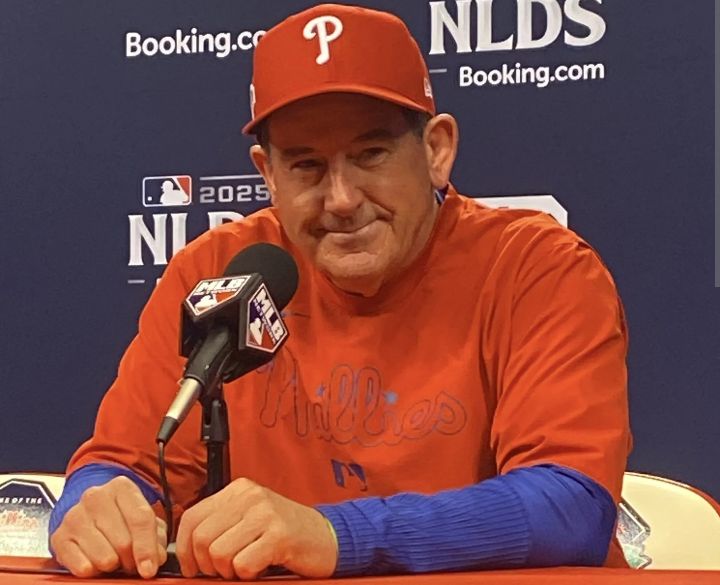
At the center of it all is Rob Thomson. Once praised for his calm demeanor and leadership, he now finds himself under intense scrutiny. Fans and analysts alike have begun to question whether his approach is still effective, or if the team has simply stopped responding. Every decision—from lineup construction to bullpen usage—is now dissected in real time, with little margin for error.
The Phillies’ front office, long known for its patience, has finally taken action. In a move that few saw coming at this stage of the season, the organization has publicly backed Thomson while simultaneously signaling that changes are underway behind the scenes. It’s a delicate balancing act: showing confidence in the manager while making it clear that the current level of performance is unacceptable.
Reports suggest that adjustments to the coaching staff could be imminent, with particular focus on offensive struggles that have plagued the team. Despite having some of the league’s most dangerous hitters on paper, the Phillies have repeatedly failed to capitalize on scoring opportunities. Runners left on base, strikeouts in crucial moments, and a lack of situational hitting have all become recurring themes.
Inside the clubhouse, the atmosphere is said to be tense but not fractured. Veteran players have reportedly voiced their support for Thomson, emphasizing accountability among the roster rather than placing blame solely on the manager. Still, there is an understanding that in professional sports, leadership often bears the brunt of criticism when things go wrong.
For Thomson, the challenge now is as much about psychology as it is about strategy. He must find a way to re-energize a team that appears to be pressing under pressure. Confidence, once abundant, now seems fragile. A few early mistakes in games have snowballed into larger collapses, suggesting that the issue may be as much mental as it is physical.
Fans, meanwhile, are growing restless. Philadelphia is a city known for its passionate and demanding sports culture, and patience can wear thin quickly. Social media has been flooded with calls for drastic changes, with some demanding a managerial switch while others point fingers at underperforming players. The divide among supporters reflects the complexity of the situation—there is no single, obvious fix.
The front office’s decision to stand by Thomson, at least for now, could be interpreted in multiple ways. On one hand, it shows a belief in continuity and a recognition of what he has previously accomplished. On the other, it raises the stakes significantly. By choosing not to make an immediate change at the top, the organization is effectively putting pressure on both the manager and the players to deliver results quickly.
What makes the situation even more intriguing is the timing. With a long season still ahead, there is theoretically ample opportunity to turn things around. A strong stretch of games could quickly shift the narrative, restoring confidence and quieting critics. But the longer the struggles continue, the harder it will be to reverse the momentum.
There are also broader implications to consider. Decisions made during periods of adversity can shape a franchise’s identity for years to come. Will the Phillies be seen as a team that stays the course and trusts its leadership, or one that reacts decisively when expectations are not met? The answer may depend on what happens in the coming weeks.
For now, all eyes remain on the dugout. Every game, every inning, every managerial decision will carry added weight. Thomson is no stranger to pressure, but this may be the most challenging stretch of his tenure. How he responds could determine not only the outcome of this season but also his future with the organization.
In baseball, narratives can change quickly. A few wins can restore belief, just as a few losses can deepen doubt. The Phillies are at a crossroads, caught between the promise of what they could be and the frustration of what they have been. The controversial call to stick with Thomson has only heightened the drama, turning each upcoming game into a must-watch moment.
One thing is certain: the tension in Philadelphia isn’t going away anytime soon. Whether it explodes into a full-blown crisis or settles into a story of resilience will depend on what happens next. For the Phillies, the clock is ticking, and the pressure is on.