The Texas Rangers entered the season with high expectations after building a roster filled with experienced stars, promising young talent, and hopes of returning to championship contention. However, as the season has progressed, inconsistency has become one of the team’s biggest problems. At the center of that frustration is star shortstop Corey Seager, who is currently enduring one of the toughest slumps of his professional career.
For years, Seager has been known as one of the most reliable hitters in Major League Baseball. His calm approach at the plate, ability to deliver in big moments, and leadership qualities helped establish him as one of the Rangers’ most important players. That reputation became even stronger during Texas’ memorable 2023 World Series run, where Seager played a major role in leading the franchise to a championship. Because of those accomplishments, Rangers fans have come to expect elite production whenever he is in the lineup.
This season, though, things have looked very different.
Seager’s recent slump has become impossible to overlook. The veteran shortstop has gone through a brutal stretch in which he failed to record a hit in seven consecutive games while also going 0-for-27 overall during that period. Even more concerning, the struggles have included a rising number of strikeouts, showing that opposing pitchers have consistently found ways to keep him uncomfortable at the plate.
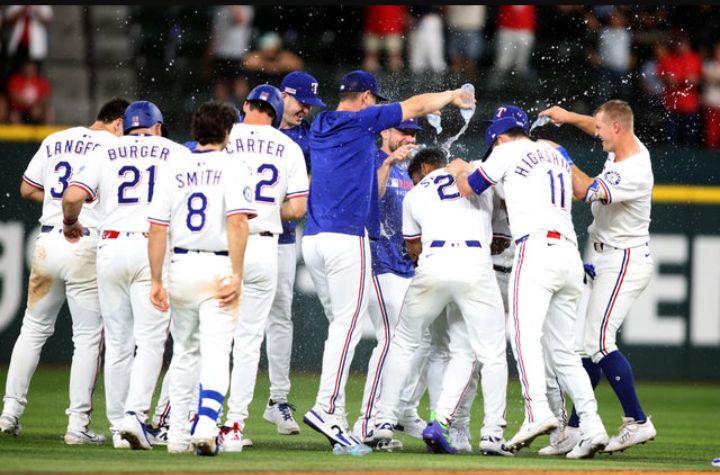
After the Rangers secured a dramatic walk-off victory against the Arizona Diamondbacks, attention still remained focused on Seager’s difficulties. While teammates like Jake Burger and Danny Jansen delivered key moments to help secure the win, many fans and analysts continued discussing the growing concerns surrounding the Rangers’ biggest offensive star.
Seager did not shy away from addressing the situation publicly. He admitted that he is still trying to work through the slump and regain his confidence. According to Seager, his approach has always been to continue competing and trust that adjustments will eventually lead to results. Rather than overthinking every at-bat, he wants to keep stepping onto the field and allow the game itself to help him rediscover his rhythm.
That honesty from Seager may not surprise longtime baseball fans. Even the greatest players in the sport go through stretches where nothing seems to work offensively. Baseball is built around failure more than almost any other professional sport. A hitter who succeeds just three times out of ten is still considered elite. Because of that reality, prolonged slumps can happen even to players with MVP-level talent.
Still, the frustration surrounding Seager’s performance continues to grow because of how important he is to the Rangers’ success. When he plays at an elite level, Texas becomes a dangerous offensive team capable of competing with anyone in the American League. His presence in the lineup changes how opposing pitchers approach every inning, and his consistency often creates opportunities for the hitters around him.
When Seager struggles, however, the Rangers’ offensive weaknesses become much more noticeable.
At this point in the season, Seager’s batting average has dropped far below his usual standards. For a player expected to lead the offense, those numbers have become alarming for fans hoping to see the Rangers pull away in the AL West standings. Although the division itself has not been particularly dominant this season, Texas has failed to fully capitalize on the opportunity.
Part of the problem is that the Rangers have not received enough consistent offensive production across the roster. Josh Jung has emerged as one of the team’s brightest spots, producing excellent numbers and giving the lineup much-needed energy. His performance has helped prevent the Rangers’ offense from collapsing entirely during difficult stretches.
Other players, including Brandon Nimmo and Ezequiel Duran, have also contributed at times. Yet the overall lineup still feels incomplete when Seager is not performing at his usual All-Star level. The Rangers have shown flashes of offensive explosiveness, but they have struggled to sustain momentum over long periods.
Because of those concerns, speculation has already started regarding possible trade deadline moves. Many believe the Rangers could become aggressive in searching for another impact bat to strengthen the lineup and reduce some of the pressure currently placed on Seager. Adding more depth would not only improve the offense but also create better protection throughout the batting order.
Of course, offensive struggles are not the Rangers’ only issue this season.
The pitching staff has also experienced inconsistency, making it difficult for the team to establish long winning streaks. While the rotation has delivered solid performances at times, it has largely remained average compared to the league’s top contenders. That lack of dominance on the mound has placed additional pressure on the offense to produce runs consistently.
For that reason, it would be unfair to place all the blame for the Rangers’ disappointing stretches entirely on Seager. Baseball remains a team sport, and Texas’ struggles reflect broader issues across the roster. Still, because Seager is the face of the franchise and one of the highest-profile players on the team, much of the attention naturally falls on him whenever things go wrong.
Fans understand how talented Seager is, which is why expectations remain extremely high. They have already seen what he can accomplish when healthy and confident. His postseason performances in previous years proved that he can carry an offense for weeks at a time. That history is exactly why many supporters still believe he can eventually break out of this slump and return to elite form.
Across Major League Baseball, even the sport’s biggest stars experience difficult periods. Shohei Ohtani, widely considered one of the best players in the world, has also dealt with stretches of inconsistency this season. Slumps are simply part of the game, no matter how talented a player may be.
The challenge for Seager now is responding the way superstar players are expected to respond. The Rangers do not necessarily need him to carry the team every single night, but they do need him to become a reliable force in the lineup once again. If he can rediscover his timing and confidence, Texas could quickly become a much more dangerous team in the playoff race.
For now, Rangers fans remain anxious but hopeful. They know the season still has plenty of games remaining, and they understand that one hot streak can completely change a player’s numbers in baseball. But patience is beginning to wear thin, especially for a team that entered the year with serious postseason ambitions.
The Rangers still have enough talent to compete for the division title and potentially make noise in October. However, reaching that level will likely depend on whether Corey Seager can finally put this difficult stretch behind him and return to being the superstar the organization desperately needs him to be.