In the high-stakes ecosystem of the National Football League, franchise-altering decisions are often cloaked in the optimistic language of progress and future promise. For Buffalo Bills owner Terry Pegula, the January 2025 decision to fire head coach Sean McDermott and promote 36-year-old offensive coordinator Joe Brady represents not just a routine coaching change, but a monumental, legacy-defining gamble. It is a calculated risk that pits the proven stability of a highly successful era against the tantalizing, yet uncertain, potential of a new offensive-minded vision. The outcome of this pivot will likely determine whether the prime years of superstar quarterback Josh Allen culminate in a long-awaited championship or become a modern parable of unfulfilled potential.
To fully grasp the magnitude of Pegula’s decision, one must first acknowledge the profound success of the Sean McDermott era. When McDermott took the helm in 2017, the Bills were mired in the longest active playoff drought in North American professional sports—a 17-year stretch of irrelevance. Within a year, he broke that drought. More impressively, he established a culture and a system that transformed Buffalo from a league laughingstock into a model of sustained excellence. Over the ensuing six seasons, the Bills compiled the best regular-season record in the NFL. They became a permanent fixture in the AFC’s upper echelon, advancing to the Divisional Round every single year. McDermott, alongside General Manager Brandon Beane, had not only resurrected the franchise but had returned it to a state of perennial contention, a feat that, in the context of Bills history, is arguably second only to Marv Levy’s four consecutive Super Bowl runs in the early 1990s.
Yet, within that remarkable consistency lay the very seed of its undoing: a persistent, heartbreaking pattern of postseason failure. The Bills under McDermott became synonymous with January frustration. Their exits were often dramatic, soul-crushing, and, most damningly, frequently attributable to the very unit that was supposed to be McDermott’s specialty—the defense. The “13 Seconds” collapse in Kansas City, the home loss to Cincinnati, and other playoff shortcomings painted a picture of a team that was brilliant in construction but brittle at the moment of ultimate truth. The franchise found itself in a purgatory of its own making: too good to rebuild, but not quite good enough to ascend the final mountain. For a fan base known as the “Bills Mafia,” whose passion is matched only by its longing for a Lombardi Trophy, this cycle of hope and despair grew increasingly intolerable. The status quo, despite its regular-season glitter, was deemed unsustainable for championship aspirations.
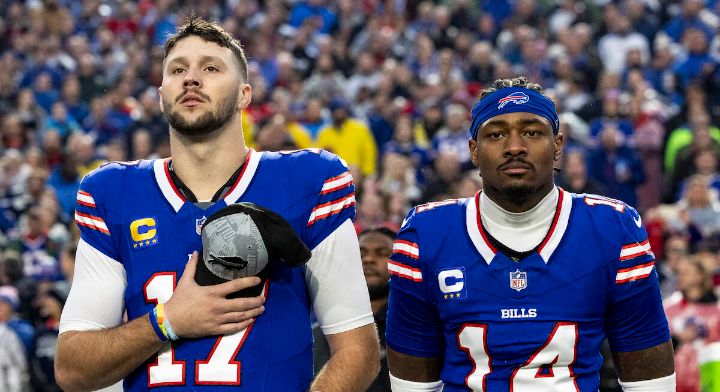
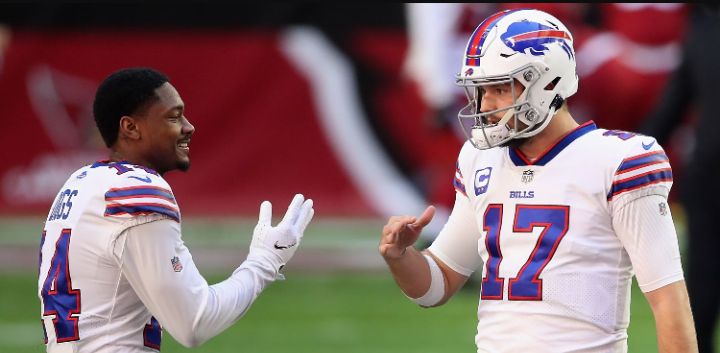
Enter Joe Brady. The young offensive coordinator, who took over play-calling duties mid-season in 2023, oversaw an immediate and electrifying resurgence in Josh Allen’s game. The offense, which had at times grown stale, exploded with creativity, tempo, and aggression. Allen’s connection with receivers like Stefon Diggs deepened, and the unit looked unstoppable for stretches. Brady’s scheme seemed to unlock a new, even more dangerous dimension of Allen’s otherworldly talent. In a league where offensive innovation is increasingly prized, and where rival teams were letting their own promising coordinators leave for head coaching jobs elsewhere, promoting Brady from within was a logical, forward-thinking move. It was a decision to double down on the team’s greatest asset—Josh Allen—and to install the architect of its most explosive performances as the new CEO.
However, beneath the surface-level excitement lies the profound risk of Pegula’s gamble. First and foremost, it is a bet on potential over proven leadership. Joe Brady, for all his offensive genius, is a first-time head coach. The jump from coordinator to the top job is notoriously difficult, encompassing responsibilities far beyond designing plays: managing an entire roster, overseeing all three phases of the game, handling the media, setting a holistic team culture, and making in-game strategic decisions under immense pressure. The history of the NFL is littered with brilliant coordinators who failed to make this transition. By moving on from McDermott, Pegula willingly discarded one of the league’s most stable and successful CEO-type coaches for a promising but unproven commodity.
Secondly, the gamble inherently jeopardizes the very foundation of the Bills’ success: their floor. Under McDermott, the Bills’ floor was the AFC Divisional Round. They were a lock for the playoffs and a nightmare matchup for any opponent. With Brady, that guaranteed high floor is immediately in question. While the offensive ceiling may be higher, the defensive identity and the overall team discipline that McDermott instilled could erode. The risk is that the Bills transform from a consistent, well-rounded powerhouse into a volatile, offense-dependent team that can light up the scoreboard but can also be undone by the kinds of systemic breakdowns that plagued them in the past.
The stakes of this gamble extend far beyond win-loss records; they are historical and personal. The clock is ticking loudly on the prime of Josh Allen. Allen is a generational talent, a physical marvel whose combination of arm strength, athleticism, and competitiveness places him among the elite quarterbacks of his era. The entire purpose of building a team over the last decade has been to maximize this unique window with Allen under center. If the Brady experiment fails—if it results in more playoff disappointments, or worse, a step backward—then Allen’s legacy will be forcibly recalibrated. He would drift from comparisons to John Elway (who needed a coaching change and a strengthened team to win his Super Bowls) toward the melancholy legacy of Dan Marino: a quarterback of undisputed greatness who never won the ultimate prize. The wasting of such a rare talent would be a sports tragedy for Buffalo.
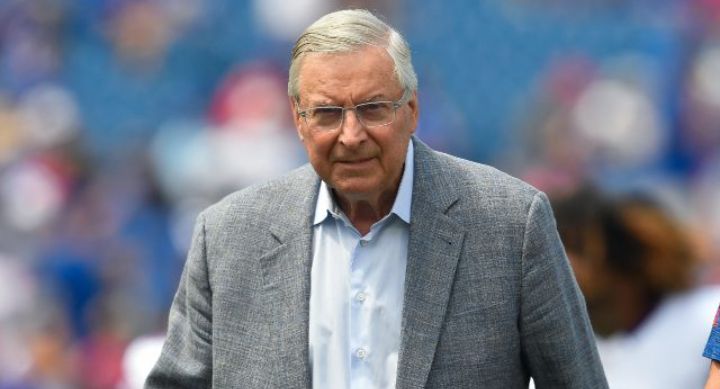
Finally, this decision is a direct referendum on Terry Pegula’s judgment as an owner. Since purchasing the team in 2014, Pegula’s tenure has been defined by two masterstrokes: hiring the McDermott/Beane regime and drafting Josh Allen. This move, however, is his most assertive and intrusive football decision. It is an admission that the previous architecture, while excellent, had reached its limit. If Brady succeeds and leads the Bills to a Super Bowl, Pegula will be hailed as a visionary who had the courage to make a tough call at the perfect time. But if the team regresses, if the playoff exits continue or the team misses the playoffs altogether, the blame will fall squarely on ownership. The narrative will be that Pegula’s impatience dismantled a championship-caliber outfit and squandered Josh Allen’s peak. The “what if” surrounding Sean McDermott’s continued leadership would haunt the franchise for years.
In essence, Terry Pegula has pushed all his chips to the center of the table. He has traded the known quantity of sustained, high-level contention for the unknown promise of championship transcendence. The 2025 season and beyond will be a live audit of this decision. Every game, every play-call, every defensive lapse, and every clutch performance will be measured against the ghost of the McDermott era and the towering expectations that come with having Josh Allen. The excitement in Buffalo is palpable, but it is underscored by a deep, nervous awareness of what is at stake. This isn’t merely a coaching change; it is a fork in the road for an entire franchise, a bet that will define the legacy of an owner, a quarterback, and a fervent fan base’s dreams for a generation.