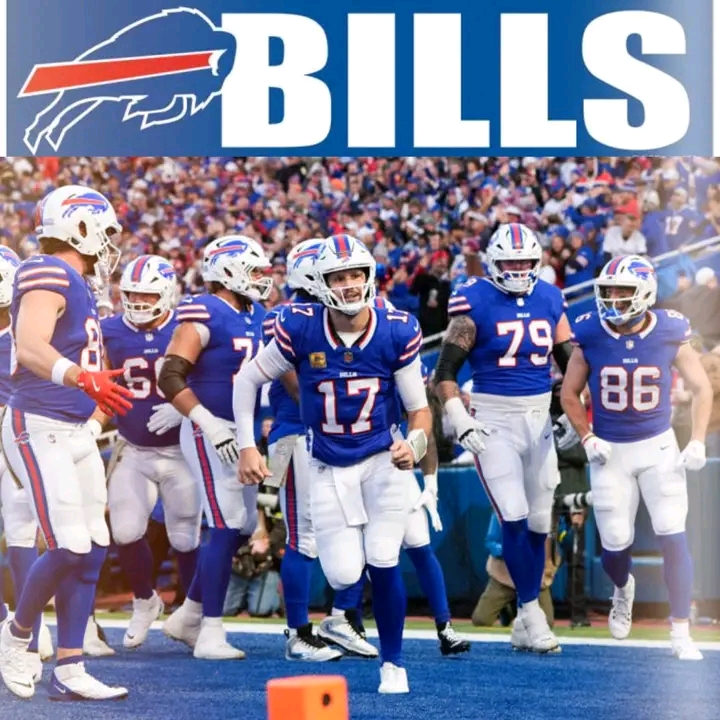
The landscape of global sports is populated by athletes whose prowess is measured in statistics, victories, and personal accolades. Yet, true influence the kind that reshapes perceptions, inspires communities, and transcends the game itself is a rarer commodity. It is this profound impact that has earned Buffalo Bills quarterback Josh Allen a place on TIME magazine’s prestigious list of the 100 Most Influential People in Global Sports for 2025. This honor is not merely a recognition of elite athletic performance, though that is certainly a cornerstone. Instead, it serves as a testament to a transformative journey: a narrative of resilience that turned professional doubt into a platform for leadership, and a career that has successfully redefined what it means to be a franchise quarterback in the modern era. Allen’s story is one of relentless evolution, proving that his significance extends far beyond the gridiron, marking him as a genuine cultural force.
Allen’s path to this point was anything but linear or assured. Entering the 2018 NFL Draft, he was a polarizing prospect a quarterback from the University of Wyoming with a cannon for an arm and breathtaking raw talent, but one whose accuracy and refinement were heavily scrutinized. The draft-night narrative framed him as a high-risk, high-reward project. For many, he stood at a career crossroads: would he become another footnote in a long list of physically gifted quarterbacks who failed to translate tools into consistent success, or would he forge a different path? The early years in Buffalo did little to immediately quell the doubters. While flashes of brilliance were evident, his game was marked by the expected growing pains of a young player adapting to the highest level of competition. The “bust” label was whispered, and the pressure mounted in a passionate, long-suffering football city yearning for a leader.
What happened next has become the essence of Allen’s legend. Rather than succumbing to the external noise, he embarked on a now-legendary process of meticulous deconstruction and reconstruction. His transformation is a masterclass in athletic perseverance. He retooled his throwing mechanics, dedicating countless off-season hours to honing his footwork and release. He deepened his understanding of offensive schemes, evolving from a reactive playmaker into a sophisticated field general capable of dissecting defenses before the snap. Most importantly, he cultivated a mental toughness that allowed him to absorb setbacks and channel them into fuel. This was not an overnight change but a gradual, relentless climb. The statistics tell part of the story his dramatic year-over-year improvements in completion percentage, touchdown-to-interception ratio, and overall quarterback rating are well-documented. But the true measure is seen in the results: transforming the Buffalo Bills from a peripheral playoff hopeful into a perennial AFC powerhouse and consistent Super Bowl contender. He didn’t just improve; he engineered the revival of an entire franchise, ending decades of frustration for one of the NFL’s most dedicated fan bases and restoring pride to Western New York.
However, Allen’s influence is not confined to his on-field heroics. His leadership, both within the confines of the Bills’ facility and in the broader community, is what truly cements his status as an influential figure. On the field, his leadership is visceral and galvanizing. He plays with a palpable, infectious energy a combination of fierce competitiveness and unbridled joy that lifts his teammates. His willingness to sacrifice his body, whether plunging for a critical first down or scrambling to extend a play, embodies a commitment that resonates throughout the roster. He is not a vocal rah-rah leader by cliché, but one who leads by example, whose work ethic and accountability set the standard for the entire organization. Off the field, this leadership takes on a more nuanced and impactful form. Allen has fully embraced the Buffalo community, understanding the symbiotic relationship between a city and its sports heroes. His philanthropic efforts, particularly through his charitable foundation, are focused and heartfelt. He has made significant contributions to local children’s hospitals, cancer institutes, and youth sports programs, often doing so with little fanfare. His actions speak to a deep sense of gratitude and responsibility. He understands his platform and uses it to advocate for positivity, resilience, and community support. In an age where athlete influence is often measured in social media followers, Allen’s influence is felt in hospital wards, community centers, and the daily lives of the people who cheer for him. This authentic connection has made him more than a quarterback; he has become a civic symbol.
This duality the elite athlete and the community pillar is what allows Allen to function as a true cultural force. He represents a contemporary archetype: the superstar who is both relatable and aspirational. His journey mirrors a universal human experience facing doubt, enduring struggle, and achieving success through unwavering grit. This narrative of resilience resonates powerfully in a global context, offering a blueprint for overcoming adversity that is applicable far beyond sports. TIME’s inclusion of Allen on this list acknowledges that his influence spills into the cultural conversation. He is part of a generation of athletes who are expected to be multidimensional to have a voice, to engage with social issues, and to leverage their fame for communal good. Allen does this not through grand political statements, but through the consistent, grounded application of effort and care, both in his profession and his philanthropy. He has helped redefine the very archetype of the modern NFL quarterback: no longer just a pocket passer or a system manager, but a dynamic, complete leader whose impact is measured in wins, in transformed communities, and in inspired individuals.
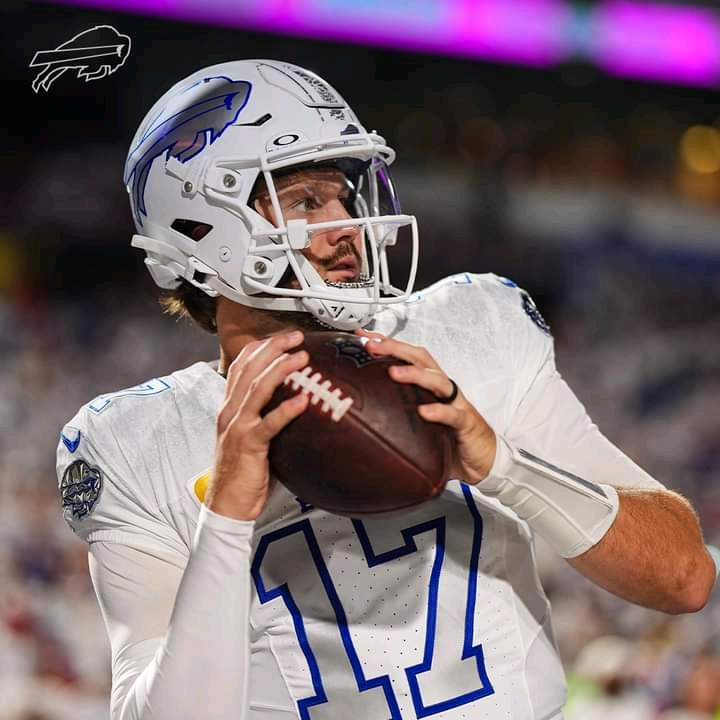
In his own response to the TIME recognition, Allen characteristically deflected the spotlight. “I’m honored to be recognized, but this is as much about the people around me as it is about my own journey,” he stated. “I’m grateful for the support from my teammates, coaches, and the incredible fans who have stood by me.” This statement encapsulates the humility that underpins his influence. He frames his success as a collective achievement, a product of ecosystem rather than solitary genius. This mindset fosters the very culture of unity and shared purpose that has propelled the Bills to success.
In conclusion, Josh Allen’s placement on TIME’s 100 Most Influential list is a validation of a journey that is still very much in progress. It honors the quarterback who resurrected a franchise with his arm and his will, but it also celebrates the man who understood that with great talent comes great responsibility. From the crossroads of his early career, he chose a path of relentless self-improvement and authentic engagement. He has become an icon of resilience for aspiring athletes worldwide, a leader who embodies the spirit of his city, and a demonstration that influence is built not just through moments of spectacular triumph, but through the daily commitment to excellence, growth, and service. As his career continues to unfold, this recognition solidifies that Josh Allen’s legacy will be defined not only by where he takes his team, but by the indelible mark he leaves on the culture of sports itself.
About the Author