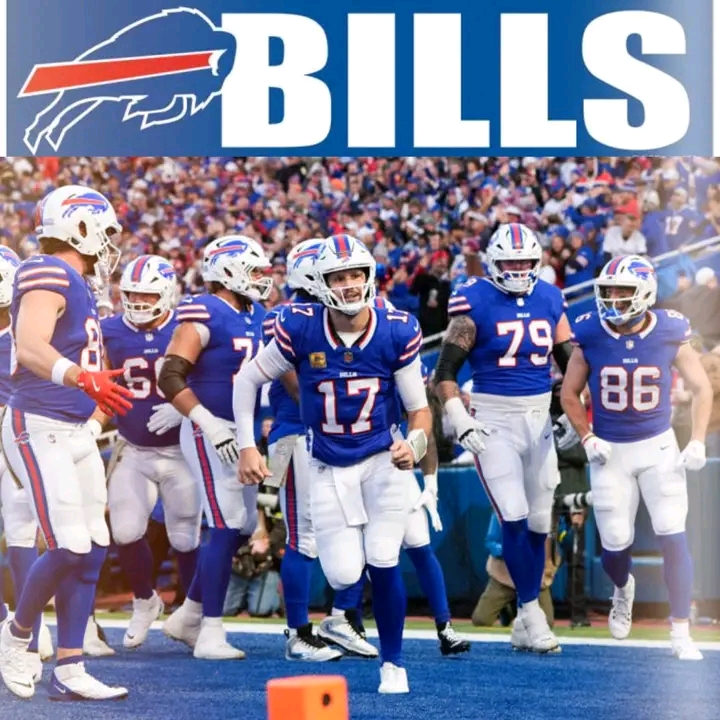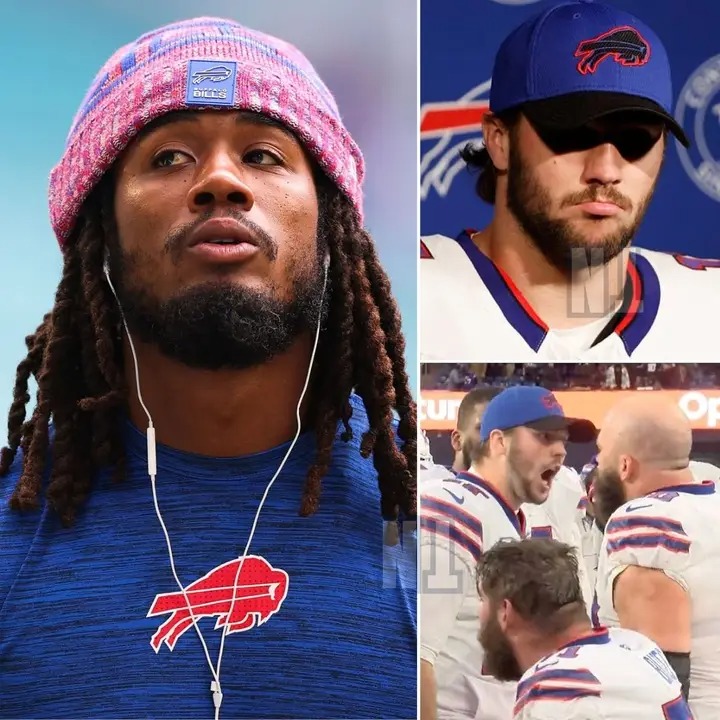
James Cook, the dynamic running back for the Buffalo Bills, has recently ignited a firestorm of debate within the NFL with an impassioned defense of his quarterback, Josh Allen. The timing of his comments couldn’t have been more crucial, as Allen has been under intense scrutiny from critics, facing relentless attacks on his performance and leadership. Cook, in a candid and unfiltered manner, expressed his frustration with the treatment of Allen, labeling it as “an absolute scandal and an NFL disgrace.” His words struck a chord with many, sparking heated discussions in locker rooms, across social media platforms, and on television panels, where opinions on Allen’s performance and his future in the league have become increasingly divisive.
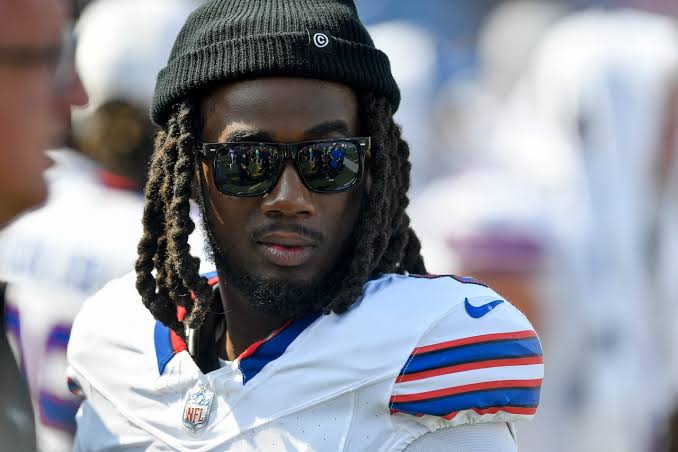
Cook’s comments were not the result of a calculated media strategy or a rehearsed soundbite for public relations. Instead, they emerged as a raw, emotional outburst, reflecting the genuine loyalty and frustration of a teammate who has witnessed firsthand the pressures and demands placed on Allen. The quarterback, often expected to perform miracles under extreme circumstances, has been unfairly vilified for factors largely beyond his control. In Cook’s view, this constant criticism was a misguided attack not just on a player, but on the very essence of what Allen represents: a symbol of resilience, competitive courage, and leadership.
“Josh Allen is a legend in the making,” Cook said emphatically, stressing that the quarterback was being judged through a distorted lens. He believed that the criticism leveled at Allen was not only unjust but lacked context, ignoring the sacrifices Allen has made and the impossible situations in which he’s asked to perform. Cook pointed out that Allen has often had to carry the weight of the franchise on his shoulders, diving headfirst into collapsing pockets, absorbing punishing hits, and extending broken plays, all while never once seeking sympathy or deflecting blame. This level of leadership and commitment, Cook argued, should be recognized and celebrated, not torn down by the very people who should be appreciating it.

At the heart of Cook’s defense is a broader critique of how the NFL and its fans treat quarterbacks. Cook accused critics of oversimplifying complex team dynamics, reducing every loss to the performance of one player. By focusing on box scores and win-loss records, these critics have created a narrative that places all the blame on Allen’s shoulders, regardless of the flaws in coaching, roster construction, or other elements of the team’s performance. In Cook’s view, this approach is not only unfair but detrimental to the game’s integrity, as it disregards the immense pressure quarterbacks face, particularly those in difficult situations with a less-than-ideal supporting cast.
Cook’s impassioned statement brought to light a significant and uncomfortable question that the NFL, as a league, rarely confronts: when does constructive critique cross the line into character assassination? Why is it that quarterbacks like Josh Allen, who are often the most visible and scrutinized players on the field, are expected to be flawless heroes, even when the systems they operate in are deeply flawed? This question strikes at the core of a larger issue in professional football, where players, particularly quarterbacks, are often held to impossibly high standards while being forced to navigate teams that are, at times, far from perfect.
The controversy Cook sparked was immediate and intense, splitting opinion within the NFL community. Supporters of Allen, particularly fans and teammates, rallied behind Cook, praising him for speaking out in defense of a player who has long been the face of the Buffalo Bills franchise. For them, Cook’s words were a much-needed reminder that Allen’s contributions go beyond the scoreboard. They celebrated Allen’s fearlessness, his willingness to take risks, and his ability to elevate a team that, at times, has struggled to perform at its highest level.
On the other hand, there were those who felt that Cook’s defense was misplaced. Critics argued that while passion is a natural part of being a teammate, it should not shield a quarterback from the responsibility that comes with playing the most important position in football. Franchise quarterbacks are paid handsomely to endure immense pressure, absorb criticism, and deliver results. The argument was made that by publicly defending Allen, Cook was deflecting accountability for the team’s overall performance. To some, it seemed like an emotional response that added fuel to an already combustible situation, inflaming tensions rather than helping to resolve them.
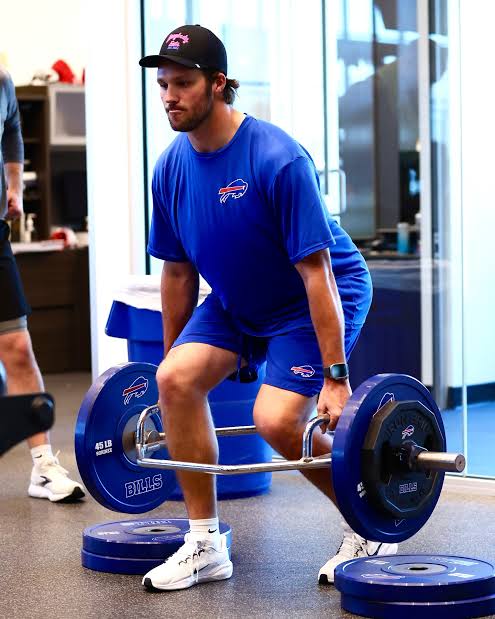
At the heart of the criticism against Allen is the notion that quarterbacks are often held to an unrealistic standard. While other positions on the field may be judged more leniently, quarterbacks, especially those who take risks and play with a fearless, improvisational style, are frequently condemned for every mistake. Allen’s style of play, built on fearlessness and raw talent, has often been a double-edged sword. When it succeeds, it is celebrated as heroic. When it fails, it is criticized as reckless. This selective admiration creates an impossible standard that no player can consistently meet. Cook’s defense of Allen directly challenged this narrative, questioning why the league celebrates quarterbacks who play within structured systems, yet punishes those who attempt to elevate their teams by taking risks and making bold plays.
Cook’s defense also touched on a crucial aspect of the NFL experience that is often overlooked: the unseen toll of leadership. While fans and analysts scrutinize the numbers on the scoreboard and the statistics of individual players, they rarely acknowledge the emotional and psychological burden that comes with being the leader of a team. Quarterbacks like Allen are expected to be the face of the franchise, absorbing the blame for every loss, every misstep, and every missed opportunity. Yet, as Cook pointed out, Allen never deflects blame, even when it would be justified. His willingness to shoulder the weight of the team, even in the most trying of circumstances, is a testament to his leadership.
Cook’s comments also highlighted the 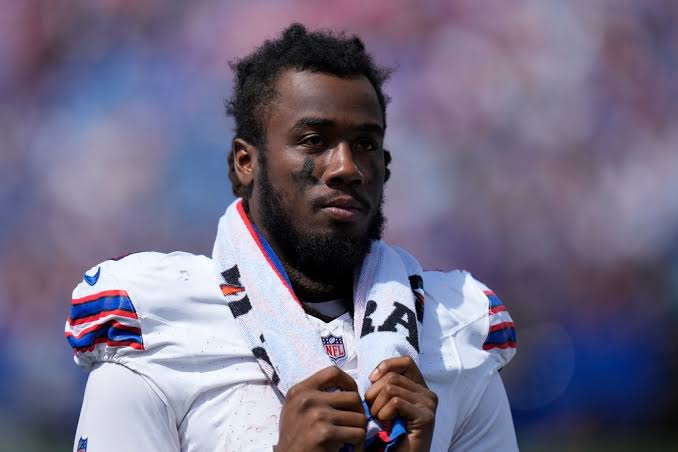 frustration among players regarding how narratives about their performance are often constructed. In an era where hot takes and emotional outrage often take precedence over thoughtful analysis, Cook’s words were a call for a deeper, more nuanced understanding of the game. He challenged analysts and fans to look beyond the surface-level statistics and to consider the broader context in which quarterbacks like Allen operate. Football is not played in controlled conditions, Cook reminded everyone. It is a chaotic, unpredictable game, shaped by injuries, weather, and unpredictable plays. To judge a quarterback based solely on statistics without considering these factors is to miss the bigger picture entirely.
In the aftermath of Cook’s comments, the NFL found itself in the midst of an important conversation about how quarterbacks are treated. The league, which has long been obsessed with quarterback performance, was forced to confront its own biases and expectations. Cook’s words resonated with many who felt that quarterbacks like Allen deserve more than just statistical scrutiny they deserve appreciation for their leadership, their resilience, and their ability to perform in the most difficult of circumstances.

While the immediate aftermath of Cook’s defense was filled with divisive opinions and debates, one thing was clear: the conversation surrounding Josh Allen had been permanently altered. The scrutiny of his performance, and the broader discussion about how quarterbacks are evaluated, would never be the same. Whether or not Cook’s defense ultimately changes the way Allen is viewed by fans and analysts remains to be seen, but one thing is certain: the NFL’s obsession with perfection will continue to be challenged by those who understand the true cost of leadership on the field. Cook’s defense wasn’t just about Allen’s legacy it was about the cost of carrying a franchise’s dreams, the toll of public perception, and the human reality beneath the helmet. And in that sense, Cook’s words will likely echo far beyond the locker room, prompting fans, analysts, and players alike to reconsider how they view quarterbacks in the modern NFL.
About the Author