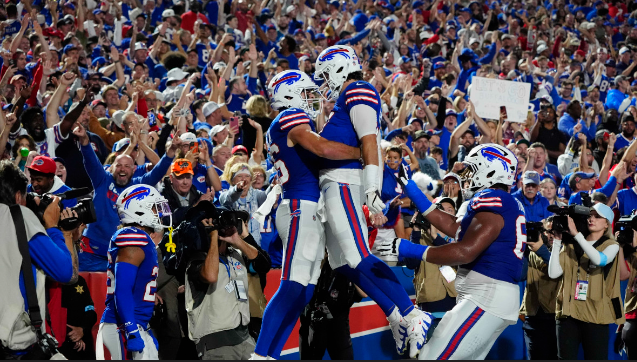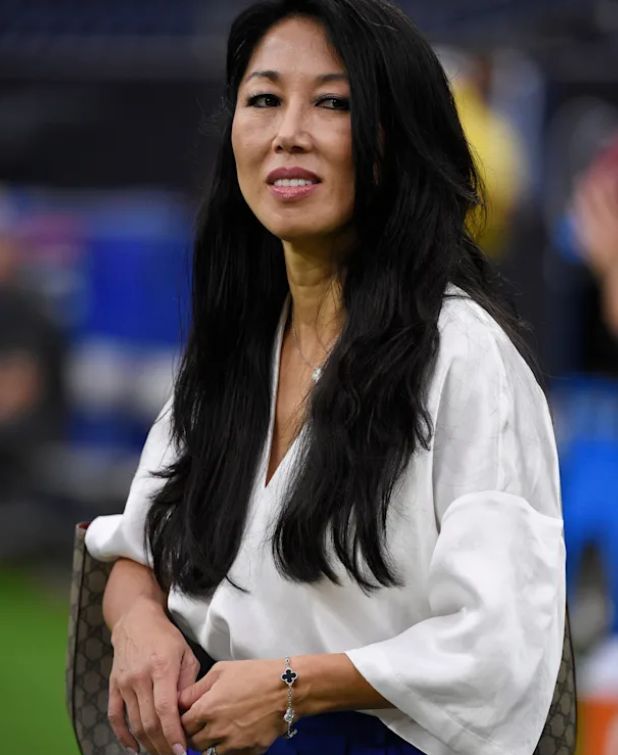
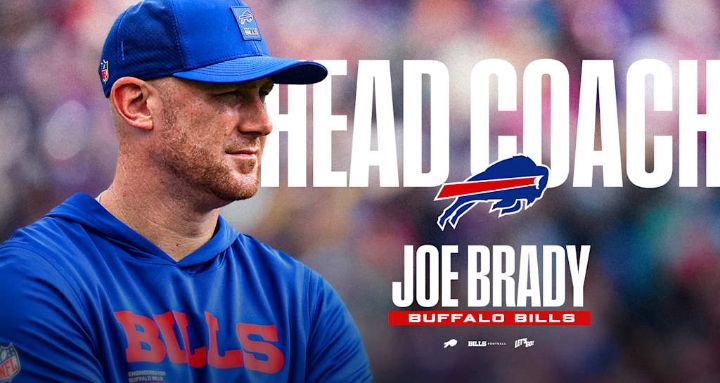
The atmosphere in the Buffalo Bills’ press conference room on January 29, 2026, was thick with the competing scents of fresh ambition and lingering uncertainty. Joe Brady, the 36-year-old newly minted head coach, stood at the podium, tasked with steering a franchise burdened by the phantom weight of an unclaimed Lombardi Trophy. His promotion from offensive coordinator, following the controversial exit of longtime coach Sean McDermott, was a decision met with measured skepticism by a fanbase known for its fervent loyalty and acute emotional investment. Yet, within minutes, Brady transformed the narrative from one of football strategy to one of profound human vulnerability, delivering a introductory address that laid bare the immense personal toll behind the professional triumph.
Brady began with grace, extending a public olive branch to his predecessor. “I want to thank and recognize Sean McDermott,” he stated, his voice firm with respect. “In 2022, Coach McDermott gave me an opportunity of a lifetime… Over the past four years, I’ve learned a tremendous amount of things from Coach McDermott. How to lead. Resilience. Standards.” This nod was more than ceremonial politeness; it was a strategic and emotional bridge, acknowledging the foundation upon which he was asked to build and seeking to unify a fractured segment of the Bills Mafia still processing McDermott’s departure. It established Brady not as a usurper, but as an inheritor—a student now charged with advancing his teacher’s work.
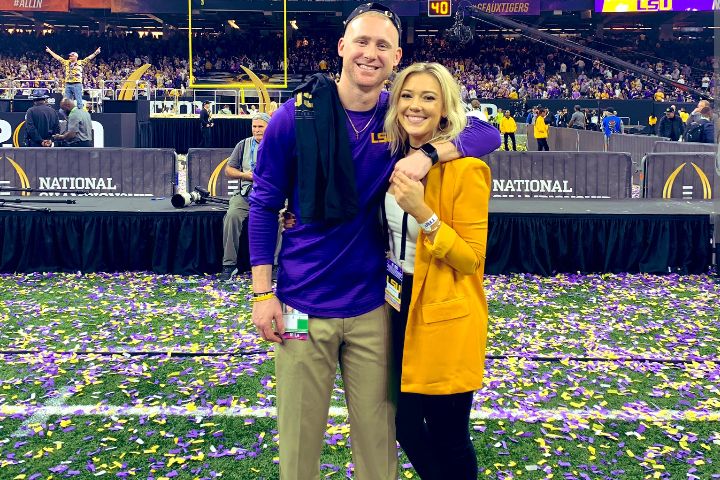
But it was when his gaze shifted from the crowd of reporters to a specific point in the room that the clinical atmosphere of the NFL machine dissipated. There sat his wife, Lauren Brady. The woman he married on a June day in 2022, now the anchor of his turbulent world. His composure, carefully maintained to this point, began to fracture as he spoke directly to her. What followed was a raw testimonial to the silent, steadfast partners who bear the unseen brunt of professional sports.
“This job demands sacrifice, right?” Brady asked, the question hanging not as a cliché but as a painful, personal confession. “I’m calling you on the way to a game while you’re going into labor. I find out after the game, you’ve given birth by yourself.” The detail was devastating in its simplicity. In 2023, during the relentless churn of an NFL season, Lauren Brady had welcomed their son into the world alone, while her husband was en route to perform his very public, high-stakes job. The game, the result, the play-calls—all were rendered instantly trivial against the backdrop of this solitary act of strength.
Brady continued, his voice thick with emotion, “This game takes away time, energy, and presence from you. And you’ve carried the weight that comes with this job so that I can pursue my calling.” In these sentences, Brady articulated the hidden economy of NFL families. The currency is not just money, but moments: missed birthdays, absent bedtimes, solitary doctor’s appointments, and in their most extreme form, solitary childbirth. The “calling” of the coach is lionized; the “carrying” of the spouse is often invisible. Brady made it starkly, tearfully visible. “Your strength, your belief and your steadiness is the foundation that allows me to do what I do,” he said, elevating Lauren from a supporting character to the essential cornerstone of his entire professional edifice. “I’m nothing without you.”
This public acknowledgment served multiple profound purposes. First, it was a pure, uncut expression of love and gratitude, a rare moment of unvarnished humanity in a league often shrouded in platitudes and clichés. Second, it implicitly framed his understanding of leadership. For Brady, true leadership is not an isolated trait of the sideline strategist; it is cultivated within a ecosystem of support, rooted in the resilience of one’s family. By honoring Lauren’s sacrifice, he was also defining the values—loyalty, gratitude, collective responsibility—he hoped to instill in his team.
Having anchored himself in this personal truth, Brady then turned to the roaring external force he must now engage: the Bills Mafia. He understood that his credibility in the building meant little without his credibility in the stands and across Western New York. “The pride and passion of the Buffalo Bills is second to none,” he declared. “Bills Mafia, I feel it. I’ve felt it… I believe in the Bills Mafia, I have so much respect for it. And I want to do everything I can to continue earning their respect.” This was not empty pandering. Having been with the organization for four years, he had witnessed firsthand the unique, blizzard-defying, table-shattering devotion of the fanbase. His challenge, explicitly stated, was to convert their passionate hope into a product worthy of their pride—a Super Bowl champion.
The press conference, therefore, became a triptych of connection: a respectful nod to the past (McDermott), a vulnerable embrace of his personal present (Lauren), and a determined vow to the team’s future (the team and the Mafia). It revealed Joe Brady not as a mere Xs-and-Os prodigy, but as a man acutely aware of the concentric circles of pressure and support that define his new role.
The story of Joe and Lauren Brady is a microcosm of the NFL’s human reality. The league operates on a calendar of brutal urgency, where “next man up” applies not only to players but to the emotional compartments of their families. Wives like Lauren Brady become single parents for swaths of the year, managing households, nurturing children, and providing a sanctuary of normalcy for partners consumed by the volatile, all-consuming world of football. Theirs is a sacrifice made without applause, often without acknowledgment, until a moment of public breakdown, like Joe’s, pulls back the curtain.
For the Buffalo Bills organization and its fans, Brady’s emotional unveiling was potentially transformative. In a city that identifies with blue-collar grit, underdog resilience, and familial loyalty, the new coach demonstrated he embodied those very traits not just professionally, but in the most intimate arena of his life. He showed that his understanding of “team” extends beyond the locker room, encompassing the silent partners who make the pursuit possible. His tears were not a sign of weakness, but a testament to the weight of the responsibility he accepts—a weight he knows is shared on the shoulders of his wife.
As the 2026 season approaches, the questions will inevitably center on playbooks, quarterback development, and playoff schemes. But the foundational message of Joe Brady’s first day as head coach was about something deeper. It was about the cost of the whistle, the strength required to hold the home front, and the understanding that the pursuit of glory in Orchard Park is a family affair, paid for in precious, personal currency. The challenge for Brady is now to channel the gratitude for his private foundation into the steel required for his public task: to finally bring a championship to a franchise, and a community, whose own passion is indeed second to none. The journey begins with a recognition that the heart required to lead must first be fortified at home.