As the St. Louis Cardinals navigate the final weeks of Spring Training, the clarity of summer baseball remains shrouded by the haze of uncertainty. While the team has a solid foundation in place, the construction of the 26-man roster is far from complete. Nowhere is this more apparent than in the outfield, a position group that was expected to be a strength but has instead become a complex puzzle with several moving parts.
The Cardinals entered camp with a relatively clear picture of their infield and catching situations, but the grass beyond the infield dirt tells a different story. Two young talents, Victor Scott II and Jordan Walker, appear penciled into the Opening Day lineup. Scott’s electrifying speed and defensive range in center field make him an invaluable asset, while the organization remains committed to unlocking Walker’s immense offensive potential in right field. Barring a late-camp collapse or injury, both will be on the field when the Cardinals kick off the 2026 regular season.
It is the third spot in the outfield, however, that has become the focal point of internal debate. This uncertainty is largely driven by the health status of Lars Nootbaar. The fan-favorite outfielder underwent dual heel surgery during the offseason, and his recovery timeline remains frustratingly opaque. While the organization has been cautiously optimistic, the reality is that Nootbaar’s availability for Opening Day is very much in question. If he is not ready, the Cardinals are left with a gaping hole in left field and a bench that lacks a definitive shape.
In Nootbaar’s potential absence, a handful of candidates have emerged. Nathan Church, a left-handed hitter who has drawn rave reviews from the coaching staff for his approach and defensive reliability, has positioned himself as a frontrunner. He offers something the Cardinals covet: stability. Church is a polished defender who can handle center field in a pinch, providing a safety net if Scott needs a breather or struggles against left-handed pitching. He seems, on paper, like the logical choice for a team that prioritizes defensive soundness and contact hitting.
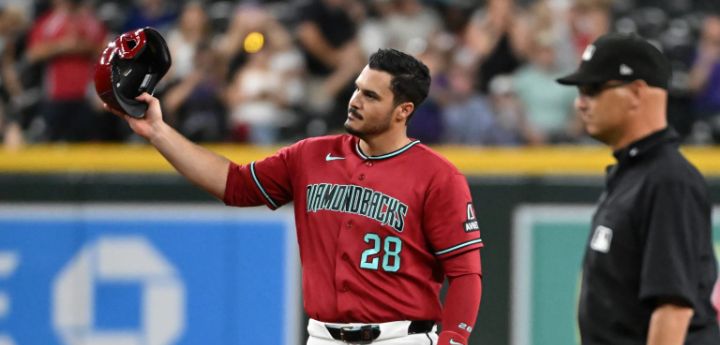
But then there is the wild card. His name is Nelson Velázquez.
Velázquez is not your typical bench candidate. Currently in camp on a minor-league contract, he does not have the same safety net as some of his competitors. To make the team, the Cardinals would need to add him to the 40-man roster, a procedural hurdle that requires them to make a corresponding move. It would be easy for the front office to simply let him fade into the background as organizational depth. However, Velázquez possesses a tool that the Cardinals currently lack in their system, especially from the right side of the plate: thunderous, game-changing power.
In 2023, split between the Chicago Cubs and the Kansas City Royals, Velázquez launched 17 home runs in just over 300 at-bats. He has the kind of raw strength that can alter the trajectory of a game with a single swing. When he connects, the ball leaves the yard with authority. For a Cardinals team that has often been criticized for a lack of right-handed pop, Velázquez represents a tantalizing option. While Church might offer a steady single, Velázquez offers the potential for a three-run homer.
The debate unfolding in the Cardinals’ clubhouse and front office is a classic baseball dilemma: stability versus upside.
Velázquez’s path to a roster spot is narrow but well-defined. He must slug. During Grapefruit League games and the controlled environments of backfield scrimmages, the evaluation of his power is paramount. The coaching staff knows what Church provides; they want to see if Velázquez can provide the one thing no one else on the bubble can. If he puts on a power display that is simply too loud to ignore, the Cardinals may have no choice but to find a way to keep him.
However, there are complications beyond the 40-man roster math. The first is the question of defensive balance. While Velázquez has experience at all three outfield positions, he is not considered a defensive standout. His glove is adequate, but it does not provide the same comfort level that Church’s does. If Scott II is in center field, the Cardinals might prefer a left fielder who can cover more ground to help a pitcher. Church fits that profile better than Velázquez.
The second consideration is the bench composition. If the Cardinals decide to use a combination of José Fermin or Thomas Saggese in a left-field platoon, they will need a true backup for center field. Church is the only candidate among the non-roster invitees who can step into center field without causing a significant defensive downgrade. If Velázquez makes the team and Scott II were to get hurt, the Cardinals would be forced to play someone out of position in center field during a critical game. That risk is not lost on the decision-makers.
Despite these hurdles, the case for Velázquez remains compelling. In a long 162-game season, there are nights when a team needs a spark. There are moments when a pitcher makes a mistake, and the difference between a flyout and a home run is simply the strength of the man holding the bat. Velázquez provides that. He brings a different energy to the batter’s box, a swing built for damage.
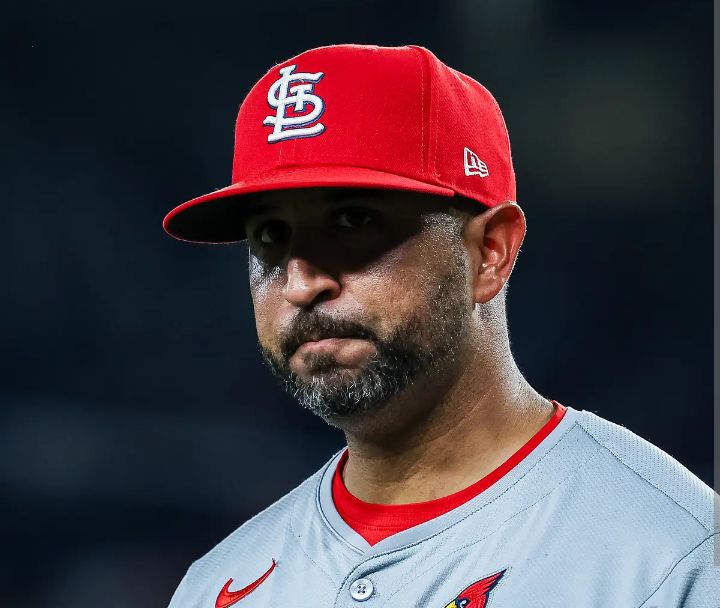
Furthermore, the Cardinals have a recent history of struggling to generate power off the bench. In tight games late, having a right-handed bat capable of tying the score with one swing is a luxury. If Nootbaar is sidelined, the Cardinals lose a significant left-handed presence. Adding Velázquez could restore some balance, giving manager Oli Marmol a weapon to deploy against left-handed relievers.
The narrative of Spring Training is often written by players who seize unexpected opportunities. For Velázquez, the opportunity is clear. The Cardinals need power. They need a right-handed presence. And they need someone to step up and claim a job that is currently up for grabs.
He may be on a minor-league deal. He may require roster gymnastics to keep. But if Nelson Velázquez continues to hit baseballs with authority, the Cardinals may find that the risk is worth the reward. In a season where every win will matter, carrying a player who can change the game with one swing might be the exact kind of gamble the front office needs to take.
Whether he makes the cut or not, Velázquez has already accomplished something significant this spring: he has made himself impossible to ignore. And in a tight roster battle, that is half the battle.