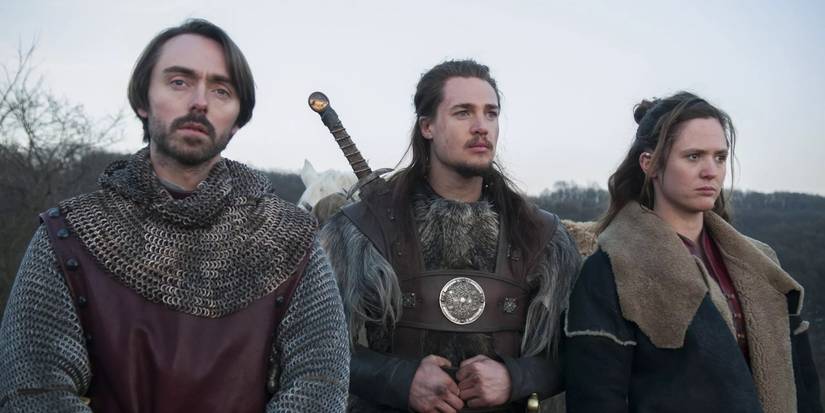
For nearly a decade, we have followed the tumultuous journey of Uhtred, son of Uhtred. We have watched him fight for his birthright, the impregnable fortress of Bebbanburg, while being torn between the two worlds that forged him: the pious Saxons of Wessex and the fierce,自由-spirited Danes who raised him. After five seasons of political intrigue, shattered shield walls, and heartbreaking losses, the saga finally comes to a close. But as the title of the Netflix film Seven Kings Must Die ominously suggests, this isn’t going to be a quiet retirement in Northumbria for our favorite arseling.
If you think the story ended with Uhtred finally reclaiming his ancestral home at the conclusion of Season 5, think again. The film, based on Bernard Cornwell’s final Saxon Stories novels, War Lord and Sword of Kings, promises a bloody, brutal, and prophetic conclusion that will answer the questions burning in every fan’s mind. It is a finale that doesn’t just close a chapter; it slams the book shut with the force of a thousand charging Danes. Here is why Seven Kings Must Die is the must-watch event that will leave you breathless, heartbroken, and ultimately satisfied.
A Prophecy of Blood: The Stakes Have Never Been Higher
The film opens not with the quiet life Uhtred deserves, but with a chilling prophecy delivered by Finan’s wife, the mysterious Ingrith: for England to be truly united, seven kings must die. This isn’t just a catchy tagline for the poster; it’s a death warrant hanging over the heads of every major player in Britain. It immediately elevates the stakes to a level the series has never dared to touch. We aren’t just fighting over a fortress or a shire anymore; we are witnessing the bloody, violent birth pangs of a nation.
Knowing that seven rulers must fall fundamentally changes how we watch the film. Viewers will be on the edge of their seats, scrutinizing every character with a crown, from the Scots to the Welsh to the Saxons themselves. Every political alliance, every toast of mead, every handshake feels like a potential prelude to an assassination. The prophecy hangs over the narrative like a dark cloud, reminding us that in the world of The Last Kingdom, peace is always temporary, and glory is always paid for in blood.
The Heir of England Has a Dark Side: The Tragedy of Æthelstan
The driving force of the final seasons was the question of who would succeed the ailing King Edward. By the end of the series, it seemed Æthelstan—the secret, illegitimate son raised in the wilderness by Uhtred—was the destined king, the one to finally unite the Saxon kingdoms. However, Seven Kings Must Die shows us a terrifying and deeply tragic transformation. The boy Uhtred taught to fight, the “carefree boy” who looked up to him as a father, is now a man haunted by his bastard status and hungry for absolute power.
Gone is the uncertain youth; in his place is a king who executes his own brother, Ælfweard, without hesitation and falls under the spell of the manipulative and ambitious Lord Ingilmundr. This isn’t the hero we hoped for. Watching Uhtred realize that his protégé has become a tyrant is one of the film’s most heartbreaking twists. It pits father-figure against spiritual son in a conflict that has no easy answers. Can Uhtred reach the king he raised and remind him of his humanity, or has Æthelstan been lost to the darkness of the crown forever? The film forces us to question whether the unification of England is worth sacrificing the soul of its would-be king.
The Ultimate Identity Crisis: Uhtred’s Impossible Choice
Uhtred has finally secured Bebbanburg, but his peace is cruelly short-lived. The prophecy and the chaos engulfing England force him to confront his oldest demon one last time: his identity. Is he the Dane who will see the Saxon kingdoms burn to avenge imagined slights, or is he the Saxon lord who must bow to a Christian king to unite England, fulfilling Alfred’s dying dream?
The film pushes him to his absolute psychological and physical limit. Exiled by the very king he helped raise, captured by Danes who see him as a traitor, and offered a chance to assassinate Æthelstan and end the threat, Uhtred faces an impossible choice. To fulfill Alfred’s vision of a united England, he may have to betray everything he stands for: his oath, his adopted son, and his own code of honor. This internal conflict reaches a fever pitch, reminding us why Uhtred is one of television’s most compelling and complex heroes. He is a man out of time, caught between two worlds, and the film forces him to finally choose which one he truly belongs to.
The Woman He Loves? A Gut-Wrenching Twist
The prophecy carries a devastatingly personal clause: “…and the woman he loves.” For a man who has lost countless lovers to tragedy—from the innocent Iseult to the devastating loss of Gisela in childbirth, and the bitter betrayal of Brida—this is the cruelest possible fate. The film teases a potential romance with the widowed Queen Eadgifu, a kind and intelligent woman who seems to offer Uhtred a glimpse of happiness in his twilight years. Naturally, this leads fans to fear for her safety from the very first scene they share.
But The Last Kingdom is known for its cruel and unpredictable twists. Without giving too much away, the resolution of this part of the prophecy is utterly gut-wrenching. It doesn’t target the romantic love you expect, but rather one that is quietly cherished, deeply buried, and all the more powerful for its subtlety. It proves once again that in this brutal world, happiness is a fleeting luxury, and that Uhtred’s greatest strength—his ability to love fiercely—is also his greatest vulnerability.
The Battle of Brunanburh: England Forged in Blood
The series has given us legendary battles, from the muddy chaos of Ethandun to the desperate siege of Winchester. But the final clash at Brunanburh is something else entirely. This is not just a skirmish for a kingdom; this is the battle that history records as the moment England truly began to take shape. As the Saxons face a massive alliance of Norse, Irish, and British kings—including the returning and cunning King Constantine of Scotland—the shield wall feels more desperate, chaotic, and apocalyptic than ever before.
With Uhtred grievously wounded and his forces vastly outnumbered, the battle hinges on a desperate, last-ditch plan involving his newly discovered and estranged son, Osbert. The tactical brilliance of the Saxon formation, the raw emotion of fathers fighting beside sons, and the sheer brutality of the hand-to-hand combat serve as a fittingly epic stage for our heroes’ final stand. It is a maelstrom of steel, mud, and screaming men, and by the time the last sword falls, the map of Britain will be forever changed.
A Bittersweet Farewell: Is It the Ending We Deserve?
Is it the ending we deserve? Opinions among the faithful are split, with some fans arguing that the complex story needed a full, ten-episode season to breathe rather than a two-hour sprint to the finish line. The pacing is relentless, and some beloved characters from the series—like the ever-pragmatic Father Pyrlig—are notably absent, their fates left to the imagination.
However, for those who have invested years, tears, and loyalty in these characters, the final moments of Seven Kings Must Die hit with the force of a Danish axe. It is a conclusion that honors the phrase “Destiny is all” in every possible way. It ties up Uhtred’s journey with a poetic final shot that is both poignant and true to his character. It doesn’t offer a fairy-tale ending, but it offers his ending—a final resting place that he has earned through a lifetime of blood, sacrifice, and unwavering loyalty to a dream that was not even his own.
So, sharpen your swords, steel your hearts, and pour one out for the fallen. Seven Kings Must Die isn’t just a movie; it’s the last call to glory for the greatest warriors of England. Destiny is waiting.