As Brandon Beane and Joe Brady prepare to lead the Buffalo Bills’ draft efforts, their focus at next week’s NFL Combine should be on addressing several critical positions that could determine the team’s success in the coming season.
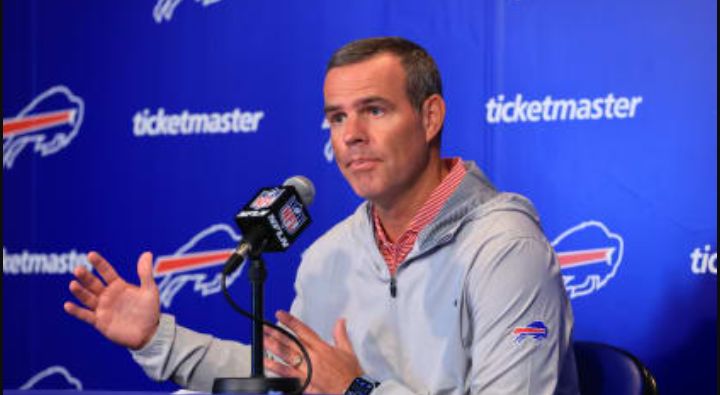
Buffalo Bills general manager Brandon Beane before an AFC Wild Card Round game against the Jacksonville Jaguars at EverBank Stadium.
The NFL Combine arrives at a pivotal moment for the Buffalo Bills. After another season that fell short of championship aspirations, the front office must now conduct a thorough evaluation of both their current roster and the incoming draft class. With needs scattered across multiple position groups, general manager Brandon Beane and head coach Joe Brady face the challenge of identifying which prospects can step in and contribute immediately.
The evaluation process that begins at the Combine will shape the team’s approach heading into the draft later this spring. But before they can properly assess the college talent on display in Indianapolis, Beane and Brady must first take an honest look at their own roster and determine which positions require immediate attention.
Five Positional Priorities for the Buffalo Bills This Offseason
1. Wide Receiver Remains a Glaring Need
Since trading Stefon Diggs to the Houston Texans in 2024, the Bills have been searching for a true number one receiver who can consistently command attention from opposing defenses. The “Everybody Eats” philosophy that emerged after Diggs departure served as a temporary solution, spreading targets across multiple pass catchers rather than relying on a single dominant threat.
During the early stages of this approach, the offense functioned effectively. Quarterback Josh Allen distributed the ball efficiently, and opposing defenses had difficulty predicting where the ball would go on any given play. However, as the league accumulated film on this iteration of the Bills offense, defensive coordinators began adjusting. They recognized that without a primary deep threat, they could compress the field and challenge Allen to fit passes into tighter windows.
The statistics from last season illustrate the issue clearly. Khalil Shakir led all Bills receivers with 719 yards, a respectable total but one that would rank as a complementary option on most elite offenses. No other wide receiver surpassed the 500-yard mark. Tight end Dalton Kincaid finished second on the team in receiving yards, functioning essentially as a hybrid pass catcher rather than a traditional tight end. While Kincaid has shown promise and could develop into a valuable long-term asset if he stays healthy, relying on a tight end as your second leading receiver creates structural limitations in the passing game.
The Bills do have returning talent at the position. Josh Palmer provides reliability and route-running precision. Curtis Samuel offers versatility and the ability to create after the catch. Keon Coleman, entering his second season, brings physical tools and the potential for growth. But this group lacks the kind of receiver who forces safeties to play deep, who draws double coverage, who commands attention on every snap. Adding a true number one receiver in the draft would give Josh Allen the consistent perimeter threat he has lacked and would elevate the entire passing attack.
2. Interior Offensive Line Faces Potential Overhaul
The offensive line has long been a strength for the Bills, characterized by continuity and cohesion among the starting five. That stability may be tested this offseason, as both Connor McGovern and David Edwards are scheduled to hit free agency. Losing both players would create significant vacancies on the interior of the line.
The team does have internal options to consider. Sedrick Van Pran-Granger and Alec Anderson have been developing within the system and could step into starting roles on more affordable contracts. Both players have shown promise in limited action, but relying on unproven talent to replace established starters carries inherent risk.
Even if the Bills manage to retain McGovern or Edwards, or both, the front office should still prioritize adding offensive line depth through the draft. The importance of a cohesive offensive line cannot be overstated. This unit protects the franchise quarterback, establishes the running game, and sets the tempo for the entire offense. When injuries strike, as they inevitably do over the course of a seventeen-game season, having capable reserves who can step in without disrupting continuity becomes essential.
Drafting interior offensive linemen may not generate the excitement that comes with selecting skill position players, but it represents the kind of foundational work that sustains winning organizations. The Bills would be wise to invest mid-round picks in guards and centers who can develop into reliable contributors.
3. Linebacker Corps Requires Reinforcements
The defensive scheme change adds urgency to the linebacker situation. With new defensive coordinator Jim Leonhard implementing a 3-4 front, the demands on the linebacker position shift significantly. In an odd-man front, linebackers must cover more ground, fill gaps against the run, and occasionally rush the passer. Quality starters and adequate depth become paramount.
Currently, Dorian Williams and Terrel Bernard project as the only guaranteed starters in this new scheme. Both players possess the athleticism and instincts to succeed in a 3-4 defense. Williams, still relatively inexperienced as a full-time starter, has shown flashes but has yet to complete a full season at this level. Bernard, despite three years as a starter, has missed twelve games during that span due to various injuries.
The veteran presence of Matt Milano and Shaq Thompson hangs in the balance. Both players may become cap casualties or could be released due to age and declining production. If they depart, the linebacker room suddenly looks alarmingly thin.
Even in a best-case scenario where Milano and Thompson return, the position still lacks sufficient depth. The Bills cannot enter the season with only two or three reliable linebackers, especially in a scheme that relies on them so heavily. The draft presents an opportunity to address this need, as linebackers often provide value in the middle rounds without requiring premium picks.
4. Edge Rusher Position Lacks Clarity and Depth
The transition to a 3-4 defense creates uncertainty along the defensive front, particularly at the edge rusher position. Players who previously lined up with their hand in the ground as defensive ends may now need to adapt to standing up and operating in space. How these adjustments unfold remains to be seen.
What is clear, however, is that the cupboard is relatively bare at this position. The Bills have lacked a consistent game-wrecking presence off the edge for several seasons. When the team has needed a critical sack in a crucial moment, that pressure has too often failed to materialize. Opposing quarterbacks have enjoyed clean pockets at the worst possible times, extending drives and altering outcomes.
The edge rushing deficiency mirrors the receiver situation in its persistence and impact. Both positions have represented ongoing challenges that the front office has struggled to fully address. The Bills may look to re-sign Joey Bosa and A.J. Epenesa, both of whom could provide stability and production. Even if those deals get done, however, the team should still target an edge rusher in the early rounds of the draft.
The question becomes one of prioritization. If a top wide receiver and a top edge rusher are available when the Bills select in the first round, which direction do they go? Alternatively, they could address one position in the first round and the other in the second, hoping that quality prospects remain on the board. However they choose to proceed, edge rusher must rank among the team’s highest priorities.
5. Cornerback Depth Can Never Be Overstated
Conventional wisdom among draft analysts sometimes suggests that teams should avoid investing significant resources in cornerback if other needs appear more pressing. This perspective, while understandable from a roster construction standpoint, fails to account for the reality of modern NFL offenses.
Ask any coach or general manager about the importance of cornerback depth, and they will tell you the same thing: you can never have enough quality defensive backs. The league remains a passing league, despite the resurgence of running games and jumbo packages in recent seasons. Teams that can’t defend the pass don’t win championships.
Leonhard’s attacking 3-4 defense will require cornerbacks who can do more than simply cover. They must be willing tacklers who can support the run. They must have ball skills to create turnovers when opportunities arise. They must possess the competitive mentality to thrive in man coverage situations.
The Bills could certainly bring back Tre White, assuming both sides can agree on terms. White’s experience and professionalism would benefit any secondary. But regardless of what happens with White, the Bills should use the draft to add young cornerbacks who can develop behind Christian Benford and contribute on special teams while learning the system.
Benford himself represents a model for this approach. Selected in the later rounds, he has developed into a reliable starter. The Bills should look for similar value in this year’s class, targeting cornerbacks in the third round or later who possess the traits to eventually compete for playing time.
The next time someone dismisses cornerback as a non-priority position, remember this: depth in the secondary is never wasted. Injuries happen. Matchup problems arise. Schemes evolve. Teams that stockpile capable defensive backs position themselves to adapt and survive over the course of a long season. The Bills would be wise to follow this philosophy.