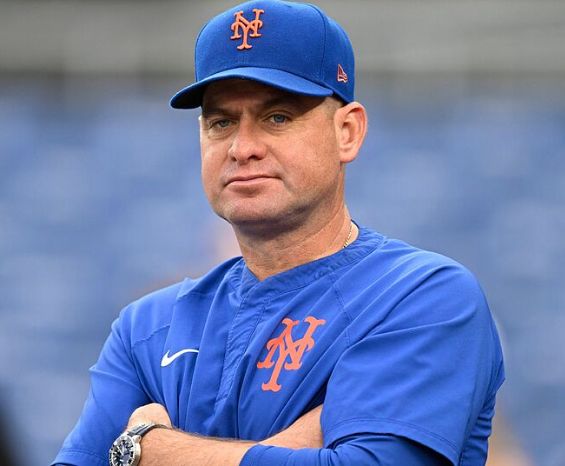
The role of a Major League Baseball manager is perpetually under scrutiny, but few find themselves in as uniquely tenuous a position as New York Mets skipper Carlos Mendoza as the 2026 campaign approaches. Mendoza’s situation is a complex tapestry woven from unmet expectations, contractual finality, and a complete sideline overhaul, creating a season that will serve as a protracted, high-stakes audition for his professional future.
The core of this uncertainty stems from the structure of Mendoza’s original appointment. Hired on a three-year deal ahead of the 2024 season, his contract was a classic “prove-it” arrangement, granting him an opportunity to establish his leadership without a long-term commitment from the franchise. This framework, while common for first-time managers, becomes inherently unstable as it nears its conclusion, especially when team performance follows a parabolic trajectory. The Mets enjoyed a resurgent and successful 2024 season, exceeding initial forecasts and re-igniting the championship aspirations endemic to the New York market. This success naturally raised the bar for 2025; the minimum acceptable outcome shifted from “competitive growth” to “playoff contention,” if not a deeper October run. The team’s failure to meet these elevated expectations has cast a long shadow, transforming the final year of Mendoza’s deal from a period of consolidation into a looming referendum.
This backdrop explains the drastic, and telling, organizational actions taken during the last offseason. Dismissing a manager coming off a winning season is a dramatic move that signals a total reset, an option President of Baseball Operations David Stearns evidently deemed too severe or disruptive. Instead, the Mets opted for a surgical, and arguably more awkward, alternative: they retained Mendoza while orchestrating a near-total turnover of his coaching staff. Hitting coaches, pitching coaches, bench coaches—practically everyone in the dugout besides Mendoza himself was replaced. This strategy is rare in professional sports for a reason. It creates an immediate and palpable tension, forcing the manager to integrate a new group of lieutenants with whom he may have no prior working relationship and whose ultimate loyalties may be ambiguous.
The critical, unanswered question hanging over this new staff is one of provenance: which hires were genuinely championed by Mendoza, and which were imposed by the front office led by Stearns? If the new coaches are largely Stearns’ selections, it creates a scenario where the manager is effectively surrounded by a monitoring committee, a group that may also be seen as a pool of potential successors. This environment can subtly undermine a manager’s authority in the clubhouse, as players may perceive the coaching staff as answering to a different hierarchy. Even if the hires were collaborative, the wholesale change disrupts the continuity and shared language a coaching staff develops over time, potentially impacting on-field strategy and player development at a moment when the team can least afford inefficiency.
The anonymous commentary from a former Mets staffer, predicting Mendoza would have “very little leeway” and speculating about a catastrophically poor start, underscores the perception of his fragility from within the industry. While such anonymous critiques should be weighed carefully, they reflect a consensus view that Mendoza is operating without the safety net typically afforded to a manager with longer-term security. Every losing streak, every tactical decision debated in the press box, will be magnified. The “lame duck” status is more than a contractual formality; it’s a psychological reality that can affect decision-making, player relationships, and the overall stability of the clubhouse. Players, acutely aware of the managerial hot seat, can become hesitant or press excessively, knowing the leader who sets their daily tone is fighting for his job.
Given these circumstances, the 2026 season for the Mets essentially presents three distinct pathways, each with profound implications for Mendoza’s tenure.
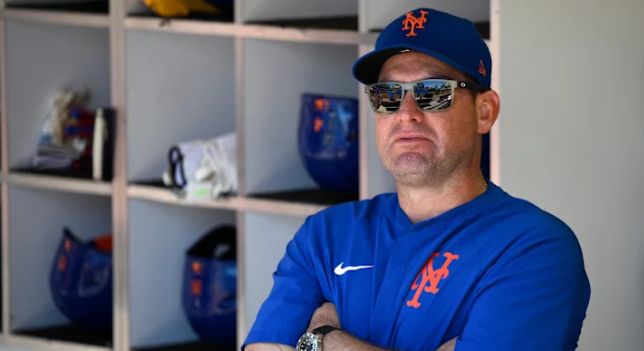
Pathway One: Triumph and Extension. The clearest route to job security is unambiguous, sustained success. If Mendoza guides the revamped Mets to a strong start, maintains contention throughout the summer, and secures a playoff berth with room to spare, he will have forcefully answered his critics. A deep postseason run, particularly one that captures the imagination of the fanbase, would make an extension before the season’s end not just possible, but probable. Success justifies all prior upheaval and validates Stearns’ decision to retain him. In this scenario, the new coaching staff is hailed as a masterstroke, and Mendoza solidifies his position as the leader of the next contending Mets chapter.
Pathway Two: Collapse and Dismissal. The opposite extreme is equally clear. A disastrous start, reminiscent of the anonymous prediction, or a season that spirals into irrelevance by the All-Star break, would almost certainly precipitate a mid-season change. In this event, the infrastructure for a transition is already curiously in place. Bench coach Kai Correa, now embedded within the organization and familiar with the players, would be a logical interim candidate. A more dramatic move could involve shifting special assistant Carlos Beltrán from the front office back to the dugout. Beltrán, whose managerial stint with the Mets in 2020 ended before it began due to his involvement in the Astros sign-stealing scandal, has since been rehabilitated through his Hall of Fame election and front-office work. He represents a high-profile, potentially unifying figure who could step in with a mandate to steady the ship, possibly with an eye toward the long term. A severe collapse would frame the previous winter’s staff overhaul as a failed experiment, making Mendoza’s departure inevitable.
Pathway Three: The Murky Middle. This is the most complex and likely scenario, and the one that most worries observers. Imagine the Mets as a fringe contender, hovering around .500, grabbing a Wild Card spot on the final day, or falling just short. They might sneak into the postseason only to be promptly eliminated, or put together a surprising playoff series win before bowing out. This gray area is a front office’s nightmare. Does a narrow playoff berth after a season of inconsistency warrant an extension? Or does it merely paper over underlying issues, delaying a necessary change? Conversely, does missing the playoffs by a game or two, but showing late fight, argue for continuity? In this “murk,” every factor is scrutinized: player development, in-game management, the performance of the new coaches, and the clubhouse culture. Stearns would be forced to make a profoundly difficult judgment call based on nuanced, often subjective, evaluations rather than a clear-cut record of success or failure.
This third pathway also highlights the unsustainable nature of the Mets’ current structural gambit. If 2026 ends with Mendoza’s departure after a middling performance, the organization will have essentially wasted a year. A new manager in 2027 would then inherit a coaching staff he did not choose, creating instant friction and another period of adjustment. The alternative—keeping the coaches and changing only the manager—is equally fraught, as it perpetuates a cycle of instability. Continual turnover at any level of leadership is corrosive, hindering the development of a consistent organizational philosophy and eroding player trust.
Ultimately, Carlos Mendoza’s 2026 season is a high-wire act without a net. He must forge cohesion with a new coaching staff, re-ignite a underperforming roster, and navigate the intense pressures of the New York media market—all while the countdown on his contract ticks audibly in the background. His challenge is not merely to win games, but to win them in a manner decisive enough to compel the front office to end the speculation and commit to him for the future. The Mets, for their part, have engineered a situation where the outcome of the season will deliver a unambiguous verdict. Whether that verdict rewards their faith in Mendoza or forces them into another transitional phase will be the defining story of the Mets’ 2026 year, a season where every pitch, every lineup card, and every clubhouse decision will be filtered through the lens of a manager fighting for his professional life.