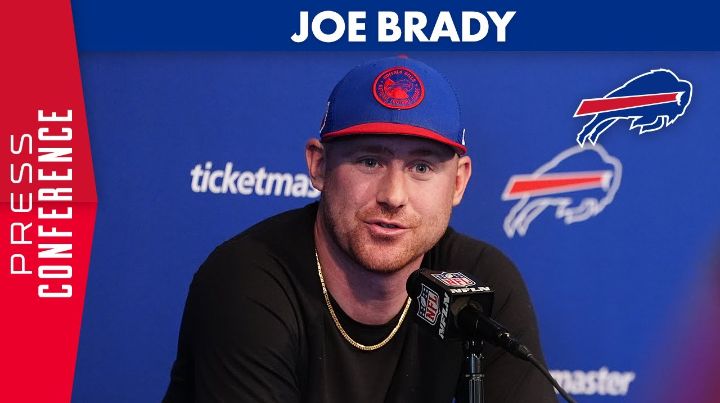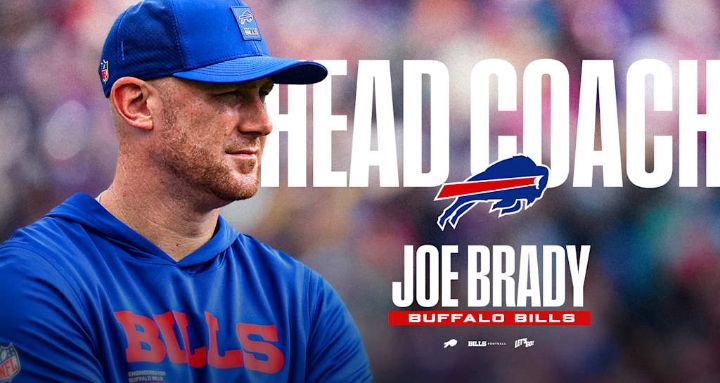
The Buffalo Bills’ decision to promote offensive coordinator Joe Brady to the position of head coach, succeeding the departed Sean McDermott, has ignited a fervent debate across the National Football League landscape. This move, perceived by some as a logical step to maintain offensive continuity and by others as a perplexing contradiction to a stated desire for organizational change, encapsulates the complex, high-stakes decisions that define NFL front offices. At the heart of this discourse is a compelling theory posited by former quarterback and current CBS analyst Tony Romo: that the promotion may have been a preemptive strike designed not merely to secure the best available leader, but to prevent a valuable asset from departing for a rival organization. This perspective invites a deeper examination of the philosophies of coaching succession, organizational inertia, and the delicate balance between stability and transformation in professional sports.
The context of Brady’s promotion is critical to understanding the reaction it has provoked. Sean McDermott’s tenure, while successful in returning the Bills to perennial playoff contention, ultimately culminated in a familiar sentiment of unmet potential—a “playoff wall” that the franchise seemed unable to breach. The decision to move on from McDermott signaled an acknowledgment from ownership and general manager Brandon Beane that a new direction was necessary to elevate the team from contender to champion. This framing inherently set an expectation for an external search, a fresh voice capable of instilling a different culture or strategic approach. The subsequent elevation of Brady, a coach who has been intimately involved in the team’s operations for the past several seasons, appears to many as a fundamental contradiction. If the problem was the ceiling of the McDermott era, how does promoting from within his staff constitute the transformative change implicitly promised?
This is where Tony Romo’s analysis provides a pragmatic, if cynical, lens. Appearing on the Pat McAfee Show, Romo distilled the decision into a single, stark rationale: retention. “I didn’t love them letting Sean McDermott go,” Romo began, “but if you’re going to make that play, this is the only reason you do that. Is because if you have a stud in your building, might get a head coaching job somewhere else, you keep him in-house. And the only way to do that is to hire him as your head coach.” Romo’s commentary shifts the focus from a search for the ideal candidate to an exercise in asset management. In this view, Joe Brady is less a chosen visionary and more a prized intellectual property whose departure would represent a significant loss, potentially strengthening a competitor while weakening the Bills’ own formidable offense.
The logic underpinning this theory is firmly rooted in the modern NFL economy, where innovative offensive minds are the league’s most coveted currency. The success of Josh Allen, a transcendent talent at quarterback, is inextricably linked to the system and play-calling around him. Brady, who took over as offensive coordinator mid-season, oversaw a unit that remained among the league’s most dynamic. His schematic influence and rapport with Allen are seen as critical components of the team’s identity. To allow Brady to interview for, and likely secure, a head coaching position elsewhere—with teams like the Las Vegas Raiders or Seattle Seahawks potentially in the market for offensive-minded leaders—would be to risk dismantling the engine of the Bills’ success. The promotion, therefore, can be interpreted as a defensive maneuver, a strategic gambit to preserve a known and productive entity in the face of external predation. It is a decision that prioritizes continuity and risk mitigation over the uncertain promise of an external candidate.
However, this interpretation carries significant and potentially troubling implications. If the primary motive was indeed retention, it raises a profound question about process and long-term planning: Did the Bills hire the best available head coach, or merely the one they were most afraid to lose? Coaching searches are meant to be comprehensive evaluations, a chance to interview diverse candidates with varied experiences to find the optimal leader for the next chapter. A decision driven primarily by fear of loss risks shortcutting this due diligence. It conflates the value of a coordinator with the distinct and vastly broader skill set required of a head coach. The roles demand different competencies—a brilliant offensive tactician must transform into a CEO, managing the entire roster, all three phases of the game, the coaching staff, media relations, and the overarching team culture. Success in one role does not guarantee success in the other, a lesson the NFL has seen repeated many times.
Furthermore, this move risks perpetuating the very environment from which the organization ostensibly sought change. By promoting from within the existing power structure, the Bills may be insulating themselves from critical external scrutiny and innovative ideas. The “playoff wall” was not merely a physical barrier but perhaps a cultural or strategic one. An external candidate could have challenged entrenched methodologies, introduced new training regimens, or altered late-game decision-making processes. Brady’s promotion, while offering seamless continuity, also carries the burden of the recent past. Can he, having been part of the staff that contributed to those playoff shortcomings, objectively diagnose and correct the systemic issues that led to them? Or will the promotion foster a continuation of the “close, but not quite” paradigm, albeit under a different title?
The counter-argument, and likely the Bills’ public and private justification, is that continuity with Josh Allen is the single most important factor for the franchise’s immediate future. Allen is in his athletic prime, and any disruption to an offense that has consistently been top-five could waste precious seasons of his career. In this frame, Brady is not a default choice but the optimal one. His existing relationship with Allen, his understanding of the quarterback’s strengths and preferences, and his demonstrated ability to call plays for this specific personnel group are unparalleled by any external candidate. The hire is then a bold affirmation that the core problem was not the offense or its philosophy, but perhaps other elements like defensive consistency in critical moments or overall team preparedness—areas a new head coach can address without overhauling the team’s greatest strength.
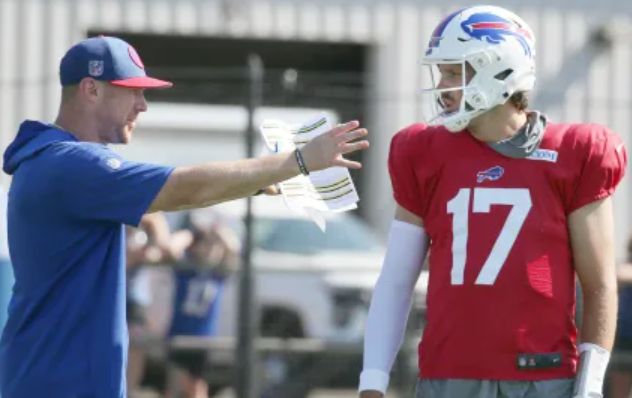
This perspective transforms the narrative from one of reactive retention to proactive preservation of a championship-caliber asset. The staff Brady assembles, particularly on the defensive side of the ball and in key support roles, will be the true indicator of this intent. If he can attract a top-tier defensive coordinator and instill a new toughness and discipline in the team’s overall identity, the promotion will be seen as a masterstroke that maintained offensive excellence while surgically upgrading other areas. The coming months, watching Brady build his staff and establish his foundational principles, will be more telling than the initial announcement.
Ultimately, the truth behind the Buffalo Bills’ decision likely resides in a nuanced middle ground. Tony Romo’s retention theory undoubtedly played a part in the calculus; the fear of losing Brady was almost certainly a tangible factor in the boardroom. However, it is reductive to believe it was the only factor. General Manager Brandon Beane is known for his meticulous approach, and the promotion likely also reflected a genuine belief in Brady’s leadership potential, his intellectual acumen, and his fit with the organization’s culture. The decision represents a hybrid strategy: a commitment to the offensive system that defines the team, coupled with a gamble that a first-time head coach can grow into the role and provide the missing pieces to the championship puzzle.
For Bills Mafia, the hire is a Rorschach test. To skeptics, it looks like a safe, insular, and potentially uninspired choice that prioritizes fear over ambition. To optimists, it looks like a savvy, player-centric move that doubles down on the team’s core competency and gives a brilliant young coach his deserved shot. The weight of this divergence of opinion now rests on Joe Brady’s shoulders. His task is to prove that he was not merely retained, but rightfully anointed; to demonstrate that the promotion was a visionary step forward, not just a defensive hold. The answer will unfold on the fields of Orchard Park, where the only retention that will ultimately matter is that of the Lombardi Trophy.