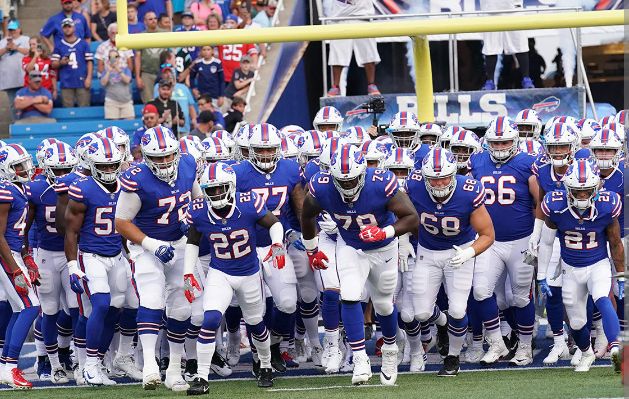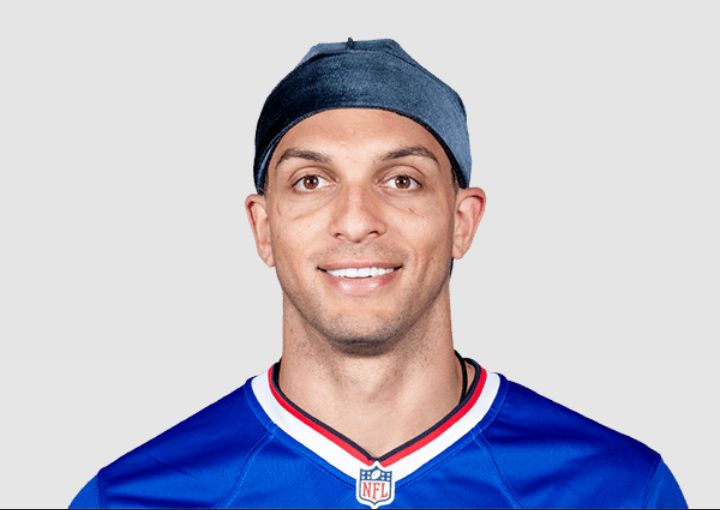
As the Buffalo Bills gear up for the 2026 offseason, the front office, led by General Manager Brandon Beane and Head Coach Sean McDermott, is once again faced with the annual puzzle of navigating a tight salary cap while trying to keep a championship-caliber core intact. Among the list of their own free agents, one name stands out as a particularly difficult decision: wide receiver and special teams captain, Mack Hollins.
Hollins, who joined the Bills on a one-year contract in 2025, is scheduled to become an unrestricted free agent. His tenure in Buffalo was short, but his impact was profound, creating a complex debate within the organization: How do you quantify the value of a player whose contributions extend far beyond the stat sheet? The decision to re-sign or let him walk is a microcosm of the tough choices championship contenders must make.
The Case for Re-Signing Mack Hollins: The Intangibles and Special Teams Dominance
To understand why the Bills would want Hollins back, one must look beyond his receiving numbers. While he served as a depth piece on offense, his primary and most valuable role was as the unquestioned leader and enforcer of the Bills’ special teams unit.
From the moment he arrived in Western New York, Hollins embraced the team’s culture with a fervor rarely seen. He quickly became a fan favorite, not just for his play, but for his unique personality. Stories of him running miles to the stadium before games or walking the field barefoot to connect with the grass became legendary, endearing him to a blue-collar fanbase that prizes authenticity and hard work. He was voted a team captain, a testament to how quickly he earned the respect of his peers in the locker room. This leadership is invaluable; he is the type of veteran who sets the professional tone, holds younger players accountable, and embodies the “team-first” mentality that McDermott preaches.
On the field, his value was most evident in the third phase. The Bills’ special teams, long a point of pride under McDermott, were anchored by Hollins. He was a missile in coverage, consistently disrupting returns and drawing holding penalties. His ability to get downfield and make a play changed field position battles, a subtle but critical aspect of winning football. Finding a “gunner” or a core special teamer who can play with that level of controlled aggression and reliability is harder than it looks. Losing him would create a significant void that would need to be filled.
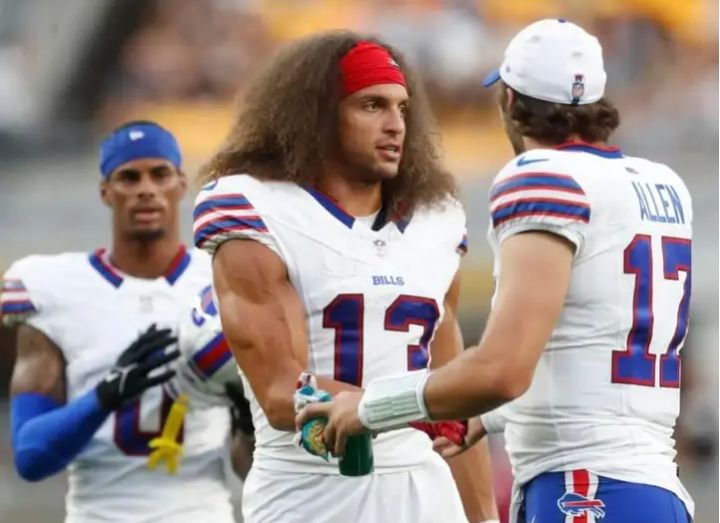
Offensively, while he was never the focal point, Hollins provided a specific skill set that offensive coordinator Joe Brady utilized. Standing at 6’4″ and 220 pounds, he is a physical presence. He is one of the best blocking wide receivers in the league, willingly mixing it up with defensive backs to spring running backs like James Cook on the perimeter. In an offense that prioritizes the run and play-action, this selfless dirty work is highly valued. He provided reliable, experienced depth behind the starting trio, ensuring there was no significant drop-off in physicality or effort when he stepped onto the field.
The Case Against Re-Signing Him: Cap Constraints and the Need for Offensive Upside
Despite all he brings to the table, the business side of football presents a compelling argument for why the Bills must, reluctantly, let Mack Hollins walk.
The most pressing factor is the salary cap. While Hollins will not command a massive contract, he played on a one-year, prove-it deal in 2025 and likely earned himself a raise. Some team with ample cap space—perhaps a younger team looking for veteran leadership—will be willing to pay him more than the Bills can reasonably afford. For a team like Buffalo, which is perpetually squeezing contracts to fit their stars like Josh Allen, Stefon Diggs (or his eventual replacement), and Von Miller, overpaying for a player who plays fewer than 30% of offensive snaps is a luxury they rarely indulge. Every million dollars counts when you are trying to re-sign your own core players or patch up holes on the defensive line or secondary.
Furthermore, there is a strategic football argument for moving on. The Bills’ receiving corps is at a crossroads. Beyond their top one or two options, they need to inject youth and speed. At 32 years old in the 2026 season, Hollins is what he is: an elite special teamer and a limited offensive contributor. He is not a developing player. To keep their offense dynamic and explosive around Josh Allen, the Bills need to find a young, cheap receiver in the draft or via an undrafted free agent who can develop into a consistent route-runner and downfield threat. This developmental player could potentially replicate some of Hollins’ special teams value while offering a higher offensive ceiling for the future. Keeping Hollins could block a roster spot for a younger player with more long-term potential.
The Verdict: A Necessary but Painful Goodbye
In the end, the Buffalo Bills’ decision on Mack Hollins will likely be dictated by the harsh realities of the NFL salary cap and roster construction. The emotional and cultural argument for keeping him is strong, and the coaching staff will lobby hard for his return. However, the front office must take a cold, hard look at the value proposition.
The most probable outcome is that the Bills thank Mack Hollins for his immense contributions, wish him well, and let him test the open market. He will almost certainly secure a multi-year deal with a team that values his leadership and special teams prowess, earning a well-deserved payday.
For Buffalo, the move will be to replace his production with a combination of younger, cheaper assets. They will likely target a special teams ace in the later rounds of the draft or scour the waiver wire for a low-cost veteran who can fill the gunner role. They may also look for a young receiver who can contribute immediately on special teams while they develop his offensive game.
It is a classic “win-now” dilemma. Mack Hollins helped make the Bills a better, tougher, and more connected team in 2025. But in the business of building a roster for 2026 and beyond, the Bills will likely have to make the difficult, unemotional choice to let him go, trusting their culture is strong enough to absorb the loss and their scouting department is sharp enough to find the next diamond in the rough.