The confetti had barely settled on the Denver Broncos’ upset victory when the familiar postseason questions began swirling around the Buffalo Bills. For the second consecutive year, a season brimming with Super Bowl aspirations ended in heartbreak, this time in a sudden-death overtime thriller. While fingers could be pointed in several directions, the most glaring deficiency was impossible to ignore: the Buffalo Bills lack a true, game-breaking number-one wide receiver.
In the cold, pressure-packed environment of the playoffs, where windows are tighter and coverage is more sophisticated, Josh Allen’s offense sputtered at the worst possible moment. The absence of a singular, dominant pass-catcher—a player who can consistently win one-on-one matchups, demand double teams, and alter a defensive coordinator’s entire game plan—was the difference between a trip to the AFC Championship and an early start to the offseason.
As the Bills now turn their attention to the spring, the mandate is clear: find Josh Allen a premier weapon. While the free-agent market and the NFL Draft (where Buffalo holds the 26th overall pick) offer potential solutions, a far more explosive, albeit complicated, option has emerged. According to Bleacher Report’s Kristopher Knox, the Buffalo Bills should aggressively pursue a trade for Dallas Cowboys wide receiver George Pickens.
The Case for a New No. 1 in Buffalo
To understand why Pickens is such an attractive target, one must first understand the Bills’ current offensive ceiling. Josh Allen is an undeniable superstar, a human highlight reel capable of carrying a team on his back. However, even quarterbacks of his caliber need elite support. The current receiving corps, while talented and gritty, lacks the alpha-dog presence that strikes fear into opposing secondaries.
Players like Khalil Shakir, Dalton Kincaid, and Keon Coleman are valuable contributors, but they are complementary pieces. They are the type of players who thrive in the space created by a true number-one receiver, not the ones who create that gravity themselves. In the playoff loss to Denver, this became painfully evident. There was no receiver that the Broncos felt they absolutely had to scheme away, no one who could consistently win a 50-50 ball or break a game open after the catch. Josh Allen needed a superhero sidekick, and instead, he had a team of reliable lieutenants.
This is where George Pickens enters the conversation. In just three seasons with the Pittsburgh Steelers, Pickens has established himself as one of the most physically gifted and vertically explosive wide receivers in the NFL. This past season, despite playing in a run-heavy offense with inconsistent quarterback play, he erupted for 1,429 yards and nine touchdowns. At 6’3″ and with extraordinary body control, Pickens possesses the rare ability to turn a broken play into a 60-yard touchdown. He is a contested-catch magnet, a deep-ball threat every single snap, and a player whose very presence warps a defense.
As Knox points out, this is precisely the dynamic the Bills are missing. “The Buffalo Bills came close to beating the Denver Broncos and advancing to the AFC title game. Had the Bills’ receiving corps come up with one more big play, they might have advanced,” Knox wrote. “Buffalo has an elite quarterback in Josh Allen, but it lacks a true go-to, No. 1 receiver. Pickens… could fill that role extremely well.”
Pairing a precision power-armed quarterback like Josh Allen with a downfield dominator like Pickens is the kind of offensive alchemy that wins championships. Defenses would be forced to pick their poison: sell out to stop the run and Allen’s physicality, only to leave Pickens isolated on an island deep, or roll coverage to Pickens’ side, opening up the intermediate areas for Allen to exploit with his other weapons.
The Obstacles: Salary Cap and Trade Compensation
Of course, acquiring a player of Pickens’ caliber is never simple. The path from Dallas (where he was traded in this hypothetical) to Buffalo is littered with two major obstacles: the salary cap and the necessary trade compensation.
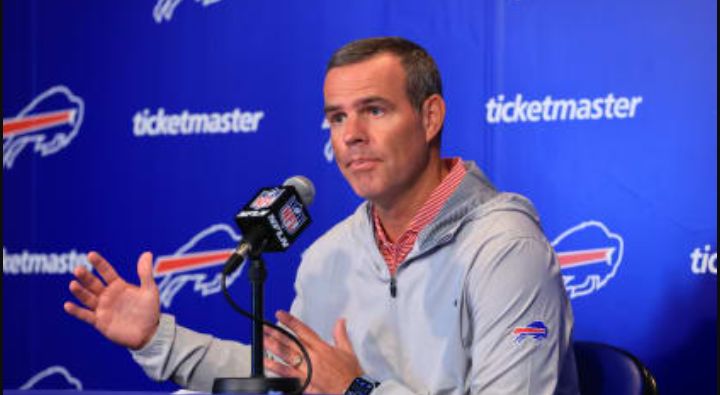
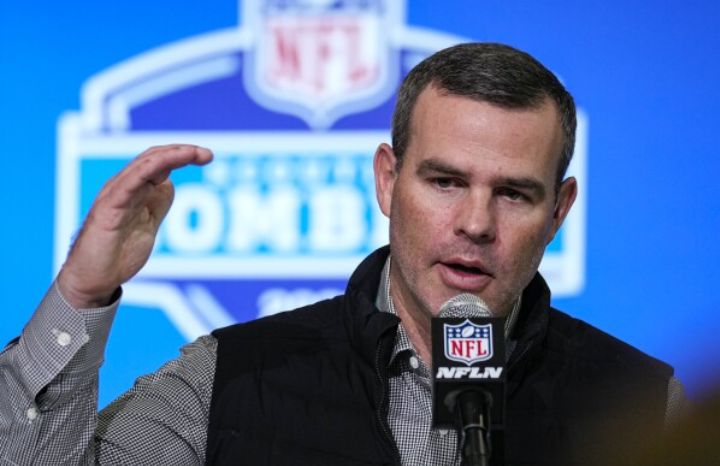
First, the finances. The Bills, perennial contenders, are once again in a tight salary cap situation. General Manager Brandon Beane has become a master of financial gymnastics, restructuring deals and pushing money into the future to keep the competitive window open. However, adding a player like Pickens, who is about to turn 25 and will command a contract north of $30 million annually, would require Houdini-level cap management. It would likely involve restructuring the deals of several high-profile veterans, converting base salaries into signing bonuses to create immediate relief. It’s a risky strategy that kicks the can down the road, but for a team in “win-now” mode with an elite quarterback, it’s a risk worth contemplating. Pickens has the talent to be the best receiver Allen has ever played with, making the financial acrobatics a potentially worthy endeavor.
The second hurdle is trade compensation. The Pittsburgh Steelers (Pickens’ actual team, though the original article places him with the Cowboys) hold all the leverage. They have a young, proven, Pro Bowl talent entering his prime. They will not let him go for anything less than a significant haul. For the Bills to even get the Steelers to answer the phone, the conversation would have to start with their first-round pick, the 26th overall selection.
While trading a first-rounder is always a difficult decision for a team that needs to constantly infuse its roster with cheap, young talent, the logic in this specific scenario is sound. As Knox argues, “Would the Cowboys really take a second-round pick for a Pro Bowl receiver just entering his prime? Maybe not, but one could easily argue that trading a first-round selection for Pickens would benefit the Bills more than adding an unproven rookie receiver with the 26th overall pick.”
This is the critical distinction between drafting for need and trading for a proven commodity. At pick 26, the Bills would be hoping to find a player who might develop into a number-one receiver in two or three years. With Pickens, they would be acquiring a player who already is one. In the final years of Josh Allen’s prime, can the Bills afford to wait for a rookie to develop? A first-round pick is a gamble on potential; trading that pick for George Pickens is an investment in a proven, high-yield asset. The immediate impact of inserting a 1,400-yard receiver into the lineup far outweighs the potential upside of an unproven draft pick.
The Championship Calculus
Ultimately, the pursuit of George Pickens comes down to a simple championship calculus. The Buffalo Bills have a franchise quarterback, a solid coaching staff, and a roster that is competitive but has hit a clear ceiling. To break through that ceiling and reach the Super Bowl, they need a difference-maker. They need a player who changes the math for the opposing defense on every single snap.
Pursuing a trade for George Pickens would be a bold, aggressive, and risky move. It would require financial ingenuity and the willingness to part with premium draft capital. It would be a bet-the-house moment for a franchise that has been knocking on the door for years.
But in the high-stakes world of the NFL, fortune often favors the bold. If Brandon Beane can navigate the financial labyrinth and strike a deal with the Steelers, bringing George Pickens to Buffalo would be the ultimate championship-or-bust declaration. It would give Josh Allen the weapon he has never had and send a clear message to the rest of the AFC: the Bills are all-in, and they are coming for the crown.