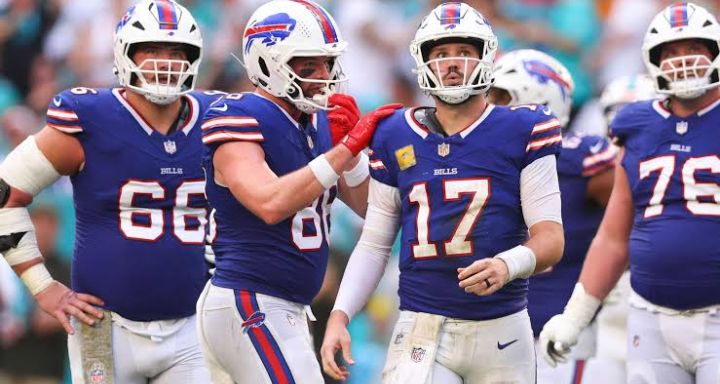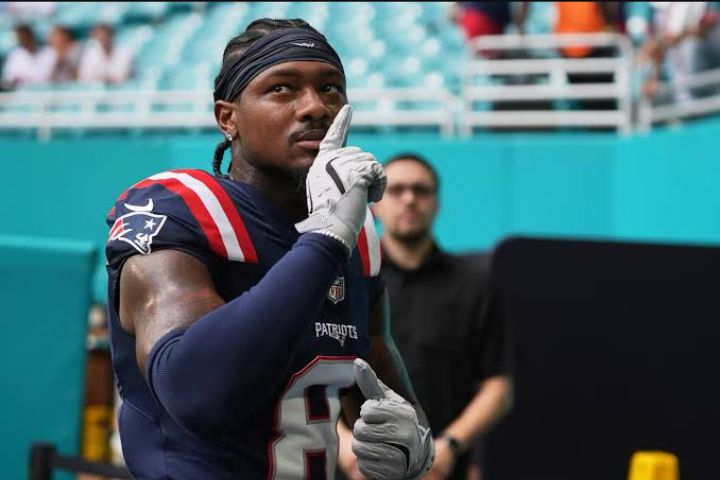
The conclusion of the 2025 NFL season brought a profound sense of relief to Buffalo Bills fans, a collective exhale that could be felt across Western New York and the far-flung reaches of Bills Mafia. The source of their relief was not a victory of their own, but a defeat suffered by their most storied rival. The New England Patriots, having surged past the Bills in the AFC playoff hierarchy, fell emphatically to the Seattle Seahawks in Super Bowl LX. This was not a narrow, heartbreaking loss, but a comprehensive exposure. For the Bills and their faithful, a nightmare scenario—a new Patriots dynasty lifting the Lombardi Trophy while Buffalo’s championship window seemed to inch closer to shut—was averted. The Patriots’ embarrassment on the grandest stage served as a cathartic reset, easing the franchise’s deepest fears and recalibrating the balance of power in the AFC East heading into the 2026 season.
The 2025 postseason had been a source of acute frustration for Buffalo. After years of consistent contention led by superstar quarterback Josh Allen, the team’s latest campaign ended prematurely, failing to meet the lofty expectations that have become standard. Compounding this frustration was the sight of the New England Patriots, their division foe once relegated to the wilderness following the departure of Tom Brady and Bill Belichick, not only reclaiming the AFC East but advancing all the way to the Super Bowl. A Patriots victory would have been a psychological gut-punch, symbolizing a complete and utter reversal of fortunes just as Buffalo’s own quest remained unfulfilled. Therefore, the Bills’ offseason began not with their own final whistle, but with the clock ticking down in Santa Clara. Their fate, in a perverse sense, was tied to the performance of their rival.
What they witnessed was a performance that bordered on therapeutic. The Seahawks, led by a formidable and schematically brilliant defense, rendered the Patriots’ offense inert for the majority of the game. From the opening drives, it was evident that Seattle defensive coordinator Aden Durde had crafted a game plan that New England’s young quarterback, Drake Maye, and his offensive line could not solve. The Patriots were shut out for three full quarters, their drives stalling under relentless pressure and confusing coverages. The specter of a historic Super Bowl shutout loomed, a humiliation of epic proportions. While that specific ignominy was narrowly avoided with late-game scores, the damage was done. The Patriots were not simply beaten; they were outclassed. For Bills fans watching through gritted teeth, this outcome transformed a potential spring of dread into one of manageable schadenfreude. The demon of a new Patriots championship was slain, at least for another year.
Beyond the immediate emotional relief, the Super Bowl result provided a substantive, analytical recalibration of the AFC East hierarchy. The weeks leading up to the game had been filled with a nagging anxiety in Buffalo: had the Patriots, with their promising young core, definitively leapfrogged the Bills? Super Bowl LX offered a resounding, if nuanced, answer. The game revealed that while New England’s resurgence is real, their ascendancy is not absolute, and their path forward is fraught with the same challenges that Buffalo knows all too well.
A closer examination of the Super Bowl performance reveals a Patriots team with a pronounced duality. Their defense, often overshadowed by the narrative of Maye’s development, proved it belongs among the league’s elite. They executed a masterful plan against Seattle’s high-powered attack, neutralizing NFL Offensive Player of the Year Jaxon Smith-Njigba and generating consistent pressure on the experienced Sam Darnold. This was not a unit that folded under the bright lights; it competed fiercely. However, their efforts were ultimately undone by the inability to contain the relentless rushing of Kenneth Walker III, who earned Super Bowl MVP honors. This highlighted a key truth: even an excellent defense can be worn down when its offense provides no respite.
The offensive side of the ball is where New England’s championship readiness was decisively called into question. The offensive line, in particular, was exposed as a critical vulnerability. Seattle’s defensive front dictated the terms of engagement, disrupting timing, collapsing pockets, and stifling the run game. Drake Maye, for all his talent and MVP-caliber regular season, looked every bit the young quarterback facing a defense of historic pedigree. He was harried, frustrated, and unable to muster the magic required to overcome the deficit. This performance laid bare a fundamental truth: reaching the Super Bowl is a monumental achievement, but winning it requires a complete team, particularly one capable of protecting its quarterback against the most sophisticated pass rushes.
This dissection brings the comparison back to Buffalo. Bills fans watching the game were undoubtedly conducting a mental simulation: how would our team have fared? The consensus, while acknowledging Seattle’s obvious superiority on that day, suggests the Bills might have been better equipped for the fight. Buffalo’s offensive identity, built around Josh Allen’s unparalleled combination of arm strength and rushing threat, presents a different and arguably more resilient challenge. While Seattle’s defense would have been a nightmare for any opponent, Allen’s ability to create outside structure and extend plays is a unique countermeasure. Furthermore, the Bills’ own defensive unit, when healthy and playing to its potential, possesses a similar disruptive capability to New England’s. The Super Bowl did not prove the Bills would have won; rather, it suggested the gap between the two AFC East rivals is minimal, and that New England’s offense, not Buffalo’s overall roster, may be the element holding the Patriots back from the very top.
Looking ahead to the 2026 season, the Super Bowl result creates intriguing dynamics for both franchises. For New England, the experience is a double-edged sword. They carry the confidence of a conference championship and a Super Bowl appearance, a tangible sign of progress for their rebuilding project. However, they also carry the scar tissue of a very public dismantling. The entire league now has a blueprint: pressure Maye, attack the offensive line, and force the Patriots into one-dimensional football. Additionally, their success comes with the logistical penalty of a first-place schedule, meaning a tougher road through the regular season. How General Manager Eliot Wolf addresses the offensive line in free agency and the draft will be the defining storyline of their offseason. Their response to this very public humiliation will test the resilience of their new-era culture.
For Buffalo, the landscape looks different than it did in January. The existential dread of being surpassed is alleviated. The Bills can look at the Patriots not as a juggernaut that has left them behind, but as a peer—a talented, dangerous peer, but a peer nonetheless. Both teams reside in the same tier: contenders who have proven they can reach the AFC’s pinnacle, but who must solve the puzzle of the NFC’s best to claim the ultimate prize. The Bills’ offseason focus can now turn inward, to bolstering their own roster, refining Sean McDermott’s schemes, and ensuring that Josh Allen has the support needed for one more sustained push. The challenge of the Patriots remains, but it is no longer shrouded in the fear of an inevitable dynasty.
Ultimately, Super Bowl LX served as a poignant reminder for Bills Mafia. The Patriots team that was dragged through the mud in Santa Clara is not the same monolith they grew up loathing. This is not the inexorable machine of Brady and Belichick, a entity that seemed to feast on Buffalo’s despair for two decades. These are the New England Patriots of Drake Maye and a new regime—talented, ambitious, but demonstrably fallible. Their stumble on the biggest stage provides Buffalo with more than just a summer of rival-bashing material; it provides a reset. It reaffirms that the AFC East race is a battle, not a coronation. The Bills’ worst fears have not been realized. The path to the summit is still open, and while the Patriots are a formidable obstacle on that path, they are no longer a foreboding shadow looming over it. The hope in Buffalo, tempered by years of near-misses but eternally resilient, is that this respite is the prelude to a triumph of their own.