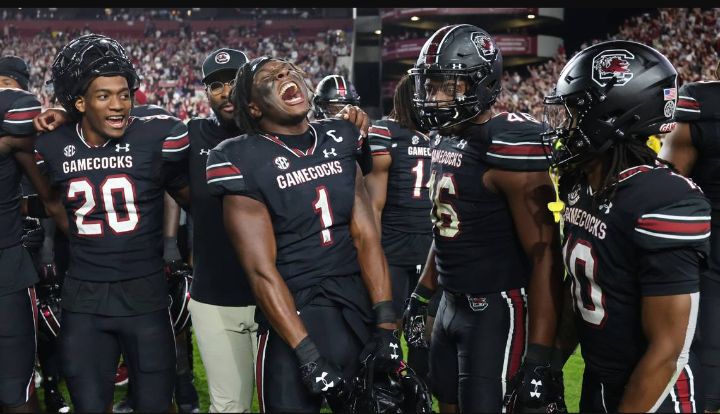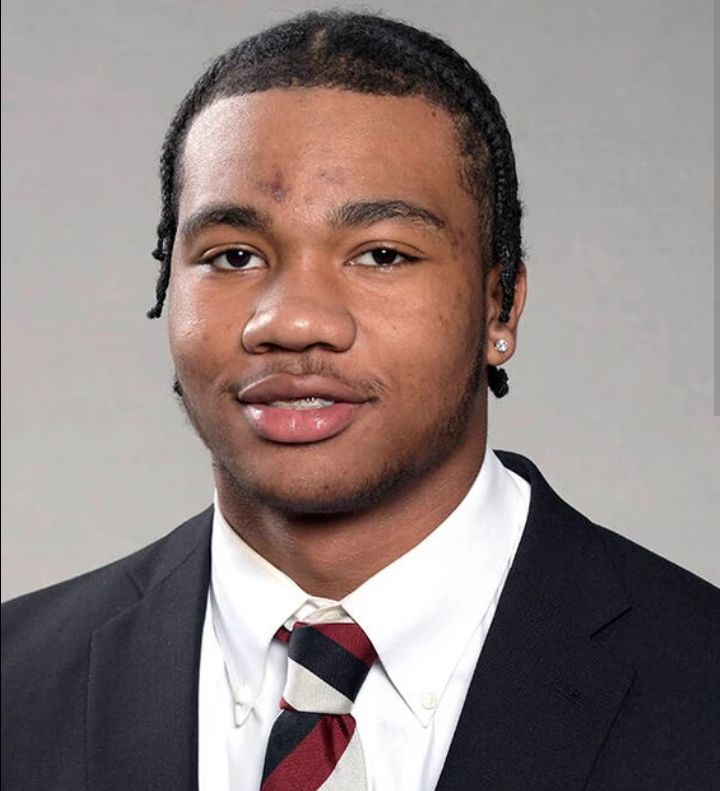
In the modern era of college football, characterized by a swirling, ever-open transfer portal and transient player allegiances, a decision to stay put can be as newsworthy as a decision to leave. In February 2026, South Carolina edge rusher Dylan Stewart delivered such a story. Amidst a landscape where even signed contracts are no longer a guarantee of continuity, Stewart, a projected top-ten NFL draft pick, chose to remain a Gamecock for his junior season. This was not a default choice or an absence of options; it was a deliberate, mature calculation in an environment that often incentivizes the opposite. Stewart’s reasoning—centered on the value of the known, the strength of existing bonds, and the peril of the unknown—offers a compelling counter-narrative to the prevailing transfer portal frenzy.
The catalyst for uncertainty arrived in late December 2025, when South Carolina edge coach Sterling Lucas departed to join the staff at LSU. In the contemporary player-coach dynamic, such a move is a seismic event. Coaches, particularly those who are primary recruiters and position mentors, often form profound bonds with their players. Lucas was that figure for Stewart: the man who recruited him to Columbia, developed him over two seasons, and helped mold him into one of the nation’s most fearsome pass rushers. His exit immediately triggered the predictable speculation: would the star player follow his mentor to Baton Rouge?
The precedent for such a move was everywhere. The transfer portal had turned college football into a quasi-free agency market, where elite talent routinely seeks new destinations for better NIL deals, increased exposure, or familiar coaching. The departure of a key position coach is one of the most common triggers for a transfer. For South Carolina fans, anxiety was a natural reaction. Stewart, with his combination of production and potential, would have been the crown jewel of the 2026 portal cycle, courted by every national championship contender.
Stewart’s initial response was to sign a deal to return to South Carolina. Yet, as the case of Duke quarterback Darian Mensah had recently demonstrated, a signed agreement was not an ironclad pledge. The real test would come when the portal window closed in mid-January. Stewart passed that test, confirming his status as a cornerstone of Shane Beamer’s program. His explanation for staying, however, moved beyond simple loyalty. It revealed a nuanced understanding of his own career trajectory and the pitfalls of chasing perceived greener pastures.
His handling of Lucas’s departure set the tone. “It was tough seeing him leave,” Stewart admitted, acknowledging the personal impact. Yet, he framed the separation not as a betrayal, but as a mutually understood career progression. “He did what I needed him to do. We did what we needed to do for each other. I feel like we put each other in a good spot, and that’s still my guy.” This statement reflects a professional maturity rarely attributed to college athletes. Stewart recognized that Lucas’s move to a program like LSU was a step forward in his coaching career, just as Stewart’s own development under Lucas had been a step forward for him. Their relationship had achieved its core purpose, and its continuation was not a prerequisite for Stewart’s own success.
Stewart confirmed that following Lucas was a “possible chance” he considered. The lure was undeniable: a familiar coach in a new, high-profile setting, likely coupled with significant NIL offers. But in his calculus, the risks outweighed the potential rewards. “I thought about it. It’s [gonna be] my last year. I’ve got a place I can call home. No point in leaving, and I’m still going to do what I always dreamed of.” This rationale is deceptively simple but profoundly logical. His primary dream—to be a high NFL draft pick—was already being realized at South Carolina. His stat line was formidable: 12 sacks, 22.5 tackles for loss, and six forced fumbles in just two seasons. Draft analysts already slotted him as a top-10 pick for 2027, invoking the name of Gamecock legend Jadeveon Clowney. Why jeopardize that trajectory for an unknown?
This is where Stewart’s philosophy becomes most explicit and serves as a powerful critique of portal culture. “There’s great people here,” he stated. “And I know how bad other places can be and the stuff they don’t tell you about, you don’t know. The grass isn’t always greener.” He expanded on this, highlighting the intrinsic value of familiarity: “You don’t know what you’re walking into. I know what I have.”

In these sentences, Stewart articulates a wisdom that contradicts the impulsive nature of the portal. He assigns high value to the known variables: his rapport with head coach Shane Beamer, the trust and camaraderie within the Gamecocks’ locker room, his comfort with the strength and conditioning staff, and his everyday life in Columbia. These are the intangible, foundational elements of an athlete’s performance and well-being. A new program, no matter how glittering its facilities or promises, is a black box. It could feature a less cohesive locker room, a training philosophy that doesn’t suit his body, a defensive scheme that minimizes his strengths, or a living situation that proves disruptive. The promised “greener grass” could easily conceal uneven terrain.
Stewart’s decision is a testament to the health and culture of Shane Beamer’s program at South Carolina. A player only stays when he feels valued, supported, and confident in the path laid out for him. Beamer has cultivated an environment where the relationships extend beyond a single position coach. Stewart’s choice indicates that his connection is with the University of South Carolina as an institution and community, not solely with one employee. This institutional loyalty is becoming increasingly rare, making Stewart’s stance all the more significant.
Furthermore, his choice is a strategic masterstroke for his draft stock. NFL scouts and general managers are not just evaluating athletic talent; they are assessing decision-making, maturity, and stability. In an era of constant movement, a player who demonstrates thoughtful commitment, who values continuity and development within one system, can stand out. Stewart’s narrative is now one of focused development, resilience in the face of coaching turnover, and leadership. He is positioning himself not as a mercenary, but as a program pillar—a quality that resonates deeply at the professional level.
The story of Dylan Stewart in the 2026 offseason is more than a sports brief about a player who didn’t transfer. It is a case study in intentional career management. In a system designed to encourage perpetual movement and immediate gratification, Stewart paused, assessed his position with clear eyes, and recognized that his fastest route to his ultimate goal—NFL stardom—ran directly through the very field he was already standing on. He understood that the most valuable currency is sometimes not the allure of a new opportunity, but the profound advantage of knowing exactly what you have, appreciating it, and maximizing it. In choosing the known over the unknown, Dylan Stewart didn’t just remain a Gamecock; he championed a philosophy of rooted success, offering a compelling blueprint for stability in an age of flux. His story is a reminder that while the portal offers freedom, true power can sometimes be found in the conscious, confident choice to stay.