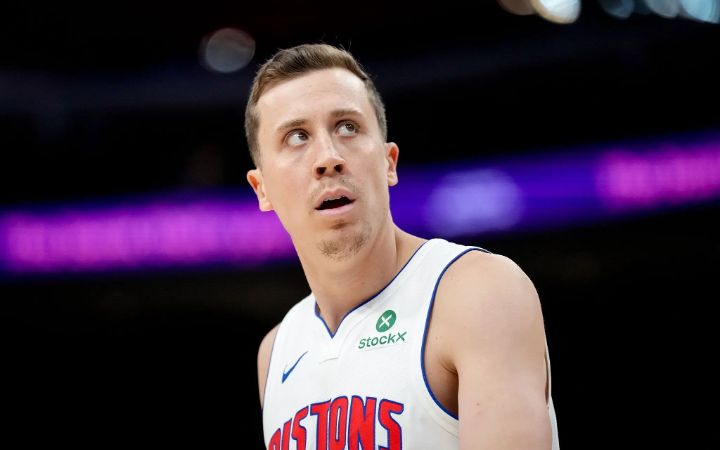
The Detroit Pistons, charting a course of deliberate and confident team-building, have made a significant investment in their emerging talent by converting the two-way contract of guard Daniss Jenkins into a standard NBA deal. The agreement, finalized on Sunday, is a two-year contract worth a reported $8 million, with a team option for the 2026-27 season. This move serves as a powerful testament to Jenkins’ remarkable development and the franchise’s faith in its internal growth, all while the team enjoys its position at the pinnacle of the Eastern Conference standings.
For Jenkins, a 24-year-old guard who went undrafted in 2024 out of St. John’s, this contract represents a story of perseverance and seizing opportunity. His rookie campaign in 2024-25 was largely spent on the periphery, appearing in just seven games for the Pistons on a two-way contract and averaging a mere 1.0 point. He was a prospect with potential, but one whose NBA future was far from guaranteed. The 2025-26 season, however, has been a narrative of explosive breakout. Thrust into a more substantial role due to both injury and performance, Jenkins has responded with career-high averages of 8.2 points, 1.8 rebounds, and 3.3 assists in 42 games, including eight starts. His play has been characterized by steady ball-handling, poised decision-making, and a tenacious defensive effort, proving himself to be a reliable and energetic rotation piece for a contending team.
The Pistons’ decision to secure Jenkins with a standard contract is a direct reward for this productivity and a strategic bet on his continued ascent. By utilizing a portion of the team’s bi-annual exception, as reported by ESPN’s Shams Charania, President of Basketball Operations Trajan Langdon and the front office have locked down a valuable asset at a controllable cost. The team option for the second year provides crucial flexibility, allowing the Pistons to evaluate Jenkins’ long-term fit after another season of development. This type of contract is a hallmark of savvy front-office management: identifying and securing emerging talent before their market value skyrockets.
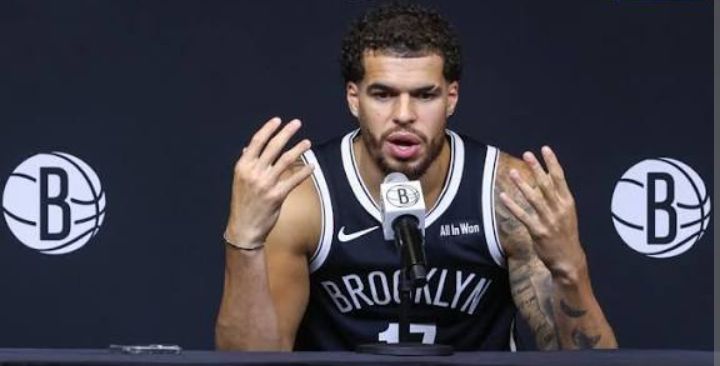
To accommodate Jenkins’ promotion from a two-way slot to the 15-man standard roster, the Pistons made the corresponding move of waiving veteran forward Dario Šarić. Šarić was only recently acquired from the Chicago Bulls just before the trade deadline in a three-team deal that also brought Kevin Huerter to Detroit and sent Jaden Ivey and Mike Conley to Chicago. Šarić’s brief tenure highlights the sometimes transactional nature of roster management at the deadline; he was essentially acquired as a salary-matching piece and expiring contract, making him the logical casualty to create space for a player the organization views as part of its core future.
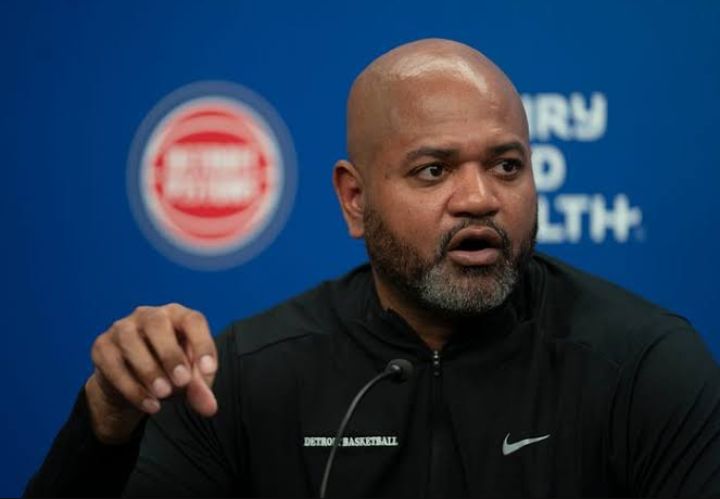
This transaction is not an isolated event but rather a defining piece of the Pistons’ overarching philosophy for the 2025-26 season: continuity over chaos. Despite holding the best record in the East at 38-13, Detroit approached the recent trade deadline with notable restraint. The Huerter-Šarić acquisition was their only significant move, a minor reshuffling of role players rather than a blockbuster gamble. Langdon acknowledged in post-deadline comments that the front office explored more substantial deals but ultimately pulled back. “There were some things, whether it was the other team pulling out or us just saying, now’s not the right time for that,” Langdon stated. “There were some things that I wouldn’t say got close, that we thought about but didn’t execute.”
This restraint signals a profound confidence in the existing roster construction and chemistry. The Pistons, after years of rebuilding, have coalesced into a formidable unit led by their established stars, with Jenkins representing the success of their player development program. Langdon’s vision is clear: let this group, which has excelled through 51 games, face the ultimate test of the postseason. “What are we going to do in the postseason? What’s our rotation, who are the guys that step up in crunch time,” Langdon pondered. “The hope is we give ourselves a chance to play meaningful basketball in the postseason and that’ll allow us to assess what this team is and who we are going forward.”
The Jenkins signing is a microcosm of this patient, evaluation-focused approach. Instead of chasing an expensive veteran on the market, the Pistons doubled down on a known quantity who has already flourished within their system. He understands the schemes, has built chemistry with his teammates, and has earned the trust of the coaching staff under head coach Monty Williams. In a league where roster continuity is a rare and undervalued commodity, securing a player like Jenkins fosters stability and rewards meritocracy, sending a positive message throughout the locker room that hard work and performance will be recognized.
Financially, the $8 million deal over two years is a low-risk, high-reward proposition. For a player contributing starter-level minutes at times and high-quality backup minutes consistently, this represents excellent value, especially considering the ever-increasing salary cap. If Jenkins continues his current trajectory, he could easily outperform the value of this contract, becoming one of the league’s more cost-effective rotation players. If his development plateaus, the financial commitment is not prohibitive, and the team option provides a clean exit after one season. It is a textbook example of a team-friendly deal that also handsomely rewards the player.
Looking ahead, Jenkins’ role is likely to remain as a key backup guard, providing defensive intensity and offensive stability off the bench behind the team’s starting backcourt. His ability to play both on and off the ball makes him a versatile piece in Williams’ rotations. The upcoming playoffs will be his—and the team’s—biggest challenge yet. How Jenkins performs under the heightened pressure and scrutiny of postseason basketball will be the next critical data point for the Pistons’ evaluation.
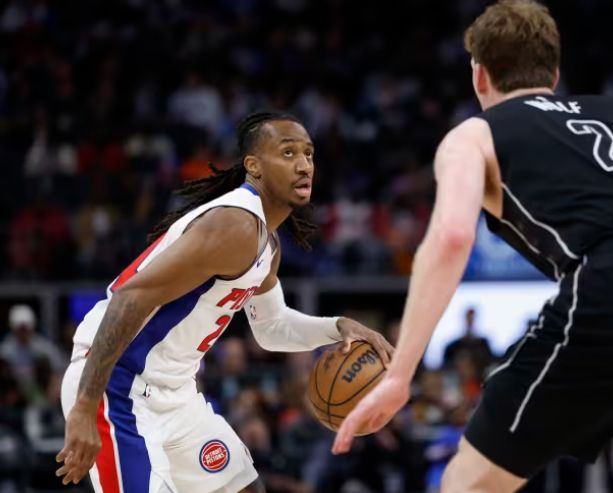
In conclusion, the Detroit Pistons’ signing of Daniss Jenkins is far more than a routine roster transaction. It is a statement of organizational philosophy. It underscores a commitment to internal development, a reward for earned success, and a strategic preference for continuity at a time when many contenders make drastic, chemistry-altering moves. As the Pistons transition from a rebuilding project to a legitimate Eastern Conference powerhouse, investments like these in homegrown talent are foundational. Jenkins’ journey from undrafted afterthought to a multi-million dollar NBA player is a compelling subplot to Detroit’s season, emblematic of a franchise that is building sustainably, trusting its process, and preparing not just for a playoff run, but for sustained success in the years to come. The message from the front office is clear: they believe in this group, and Daniss Jenkins has unequivocally proven he belongs in it.