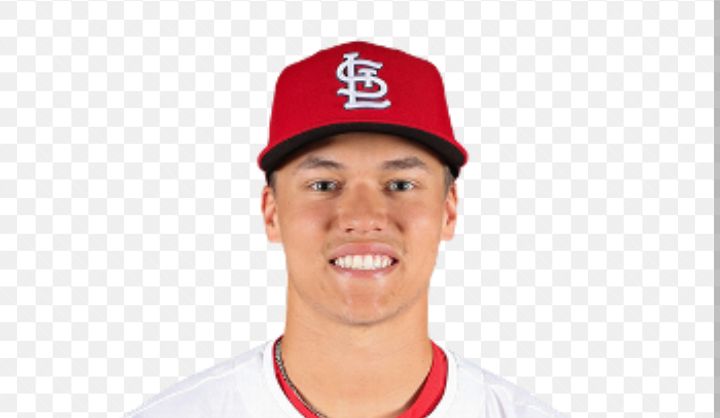
The St. Louis Cardinals’ recent signing of first baseman/outfielder Bligh Madris to a minor league contract is the quintessential low-risk, high-reward organizational move that defines the margins of a major league roster. Devoid of a Spring Training invitation, the deal is a pure depth acquisition, a bet on a player’s underlying track record and recent resurgence rather than an immediate solution to a big-league need. To understand the nuance of this signing, one must examine Madris’s winding career path, the Cardinals’ specific roster construction, and the calculated nature of such minor league pacts.
Madris’s Journey: From Obscure Draft Pick to Quad-A Nomad
Bligh Madris’s professional story is one of perseverance and the harsh realities of baseball’s upper echelons. Drafted in the 9th round by the Pittsburgh Pirates in 2017 out of Colorado Mesa University—not a traditional baseball powerhouse—Madris steadily climbed the minor league ladder by showcasing a balanced offensive approach. His calling card became consistent, if unspectacular, production, culminating in a strong Triple-A track record. Over parts of four seasons at the highest minor league level, primarily with the Indianapolis Indians and Toledo Mud Hens, Madris compiled a .252/.343/.440 slash line with 59 home runs across 1,803 plate appearances. This profile paints a picture of a player with respectable power, a solid eye at the plate (a 10.5% walk rate in Triple-A), and the ability to handle advanced pitching—the classic “Quad-A” hitter.
His major league opportunities, however, have told a different story. Across 72 games with the Pirates, Astros, and Tigers from 2022-2024, Madris hit a meager .204/.273/.286. The sample size of 228 plate appearances is small, but it reveals a player who struggled to translate his minor league patience and pop against big-league caliber pitching, particularly velocity and sharp breaking balls. His defensive versatility, while an asset, is also limited. He is considered a capable but not elite defender in the corner outfield spots, with first base being a more recent adaptation, likely influenced by necessity and the physical toll of outfield play.
The 2025 season was a significant setback. Injury problems restricted him to just 60 games in the Tigers’ system, with his season ending on a rehab assignment in Single-A. His release by Detroit in August could have marked a crossroads in his career. Instead, Madris headed to the Mexican Pacific Winter League (Liga Mexicana del Pacífico), a renowned proving ground for veterans and rebound candidates. There, he found his stroke again, posting “big winter-ball numbers” that, while unspecified in the initial report, clearly demonstrated he was healthy and could still impact the baseball. This renaissance in Mexico is almost certainly the catalyst for the Cardinals’ interest, serving as tangible proof of life in his bat.
The Cardinals’ Rationale: Building a Robust 40-Man Cushion
From the Cardinals’ perspective, this move is not about solving their publicly stated need for a right-handed hitting outfielder. In fact, it underscores that their search for that specific profile continues elsewhere. President of Baseball Operations John Mozeliak has been clear about wanting a complement to their lefty-heavy outfield mix of Lars Nootbaar, Jordan Walker (a righty, but coming off a developmental year), and Dylan Carlson (a switch-hitter). Madris, a left-handed batter, does not fit that bill.
Instead, his signing is about organizational depth and optionality. The modern MLB season is a 162-game marathon that tests a team’s roster to its limits. Injuries, slumps, and tactical needs constantly shuttle players between St. Louis and Triple-A Memphis. The Cardinals are building a “next-man-up” infrastructure, and Madris represents a seasoned, high-minors bat who can step into the Memphis lineup immediately.
His positional flexibility, while not elite, is valuable for a minor league manager. He can slot in at first base, left field, or right field, allowing the organization to move other prospects around or cover for their own injuries. Furthermore, the note that Madris still has a minor league option remaining is a critical, understated piece of this puzzle. Because the Tigers never recalled him in 2025, he retains that option year for 2026. This means if he performs well in Memphis and the Cardinals need to add him to the 40-man roster at any point, they can subsequently shuttle him between the majors and minors without exposing him to waivers. This kind of contractual flexibility is gold for a front office managing a 40-man roster.
The comparison to the Cardinals’ current starters also highlights his likely ceiling. At first base, Alec Burleson, a lefty hitter coming off a breakout 2024, is entrenched. In left field, Lars Nootbaar, another lefty, is the starter. Paul Goldschmidt, a righty, now mans the designated hitter spot. For Madris to find a path to playing time in St. Louis, it would likely require multiple injuries or a dramatic, unforeseen surge in performance that forces the team’s hand. His left-handed bat makes him a less natural platoon partner for Burleson or Nootbaar.
The Road Ahead: Scenarios and Implications
So, what does a successful 2026 look like for Bligh Madris as a Cardinal?
1. The Primary Scenario: Memphis Mentor and Depth Piece. Madris will almost certainly begin the season as a cornerstone of the Triple-A Memphis Redbirds’ lineup. His role will be to provide consistent offense, mentor younger prospects, and stay ready. Success is defined by maintaining his strong Triple-A offensive output and playing serviceable defense at multiple positions. He becomes a reliable insurance policy, the first position player considered for a call-up if the big club needs a warm body due to a short-term injury.
2. The Best-Case Scenario: Forcing the Issue. If Madris dominates the International League from day one—replicating or exceeding his career .343 OBP and .440 SLG in Memphis—and if injuries strike the Cardinals’ left-handed hitters, he could earn a promotion. His option allows the Cardinals to try him out in a bench role without permanent commitment. In this scenario, he would need to prove his winter league and minor league success could finally translate to even a modest level of MLB production, perhaps as a pinch-hitter and spot starter.
3. The Trade Chip Scenario. A strong first half in Memphis could also make Madris an attractive low-cost piece in a minor trade deadline deal. A contending team looking for experienced, optionable depth might part with a low-level prospect to acquire him, giving the Cardinals a small asset in return for their minimal investment.
4. The Release Scenario. If Madris struggles in Memphis or is passed on the depth chart by younger players in the system, the Cardinals can simply release him with no financial penalty, as is the nature of minor league contracts.
Conclusion: A Savvy, No-Loss Transaction
The signing of Bligh Madris will not move the needle for Cardinals fans dreaming of a major offseason splash. It is a transaction buried in the agate type of transaction wires. Yet, it is a perfect example of the nuanced, layered team-building that occurs beneath the surface of the major league roster.
For Madris, it represents another opportunity, perhaps one of his last, to recalibrate his career and prove that his Triple-A prowess and winter league success have finally bridged the gap to consistent major league contribution. For the Cardinals, it is the cost of doing business—a minor league salary and a roster spot in Memphis—in exchange for a versatile, experienced, and optionable player who strengthens their defensive depth chart. In the grueling MLB season, where fortune often favors the deepest and most prepared, these are the moves that provide quiet, essential insurance. The Cardinals aren’t betting on Madris to be a star; they’re betting that his presence makes their entire organization, from top to bottom, just a little bit more resilient and prepared for the long season ahead. It is a pragmatic, intelligent, and virtually risk-free piece of offseason business.