As the Detroit Lions emerge from a period of rebuild into a legitimate championship contender, the architecture of their roster faces new, more nuanced challenges. No longer shopping for foundational cornerstones, General Manager Brad Holmes and Head Coach Dan Campbell must now master the art of strategic augmentation—finding pieces that fit specific, high-leverage roles without destabilizing a carefully constructed salary cap. Nowhere is this challenge more acute than along the defensive line, specifically at the defensive end position opposite All-Pro Aidan Hutchinson. In this context, the potential availability of veteran pass rusher Joey Bosa presents one of the most intriguing and calculated gambles of the impending NFL offseason.
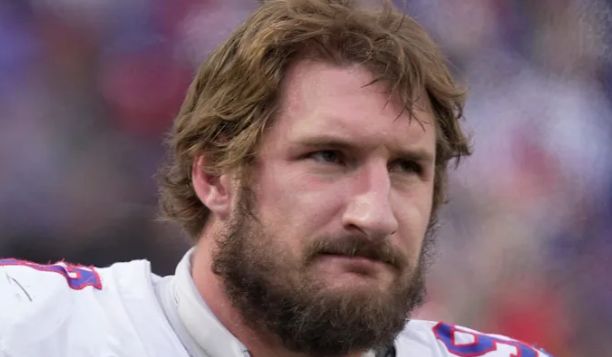
The Lions’ need for an edge complement to Hutchinson is well-documented and multifaceted. While Hutchinson has ascended into the elite tier of NFL defenders, consistently facing double and triple teams, the production from the opposite edge has been inconsistent. The rotation of players like Josh Paschal, John Cominsky, and James Houston has provided flashes but lacks a proven, game-wrecking counterpart that can prevent offenses from scheming exclusively against Hutchinson. This deficiency was starkly evident in critical moments throughout the past season, particularly in games where the pass rush failed to generate pressure without resorting to extensive blitz packages. A dynamic bookend is not a luxury for this Lions defense; it is the final piece required to transform a good unit into a dominant, championship-caliber one.
However, the Lions’ pursuit of this piece is complicated by fiscal reality. After several years of aggressive spending in free agency to accelerate the rebuild and key contract extensions for core players like Amon-Ra St. Brown, Penei Sewell, and Jared Goff, Detroit’s salary cap space is constrained. The era of signing the top-tier, $25-million-per-year free agent pass rusher has likely passed for this cycle. This forces Holmes to operate in what CBS Sports’ Jared Dubin aptly termed the “bargain bin”—not for lack of talent, but for high-upside players whose market value is suppressed by specific circumstances. This is precisely where Joey Bosa’s profile becomes extraordinarily compelling.
Bosa’s career narrative is a tale of two distinct arcs. The first arc is that of a blue-chip superstar. The third overall pick in the 2016 NFL Draft by the Los Angeles Chargers, Bosa immediately lived up to his billing, winning Defensive Rookie of the Year. He became a perennial Pro Bowl and All-Pro talent, a player renowned for his technically masterful hand usage, explosive power, and a relentless motor that produced 67.0 sacks in his first seven seasons. He was the archetype of a franchise defensive end. The second arc, however, is defined by attrition. The past few seasons have been marred by significant injuries, including groin, foot, and shoulder issues, which have caused him to miss 27 games over the last four years. This injury history, coupled with his release from the Chargers and his subsequent “prove-it” deal with Buffalo, has recalibrated his market value from superstar to high-risk, high-reward veteran.
For the Lions, this recalibration is an opportunity. The very factors that make Bosa a gamble—age (30), injury history, and recent production (5.0 sacks in 2024)—are what could make him attainable. Detroit would not be investing in Joey Bosa, the 2019 First-Team All-Pro demanding a long-term, mega-deal. They would be investing in Joey Bosa, the motivated veteran who understands his window is closing and is seeking a defined, rotational role on a Super Bowl contender. This is a critical distinction. Bosa himself articulated this mindset upon joining the Bills: “I know winning is obviously a huge part of it, but I think I have a lot to prove to people, but mostly just myself… I’m running out of time here, it’s going fast… I just don’t have that many moments left.”
From a schematic and culture fit, the alignment is striking. Defensive Coordinator Aaron Glenn employs a multiple-front system that values versatile defensive ends who can set a physical edge against the run and win one-on-one matchups in passing situations. Bosa’s game, even at this stage, is built on power and technique rather than pure, elite athleticism that may diminish with age. He could be deployed strategically, perhaps on a pitch count to preserve his health, maximizing his pass-rush snaps in clear throwing situations where his veteran savvy and repertoire of moves could shine. This rotational role would not only protect Bosa but also elevate the entire line; keeping Hutchinson, Alim McNeill, and others fresher throughout the game.
Furthermore, the Lions’ locker room culture, meticulously built by Dan Campbell, is arguably the ideal environment for a player in Bosa’s position. It is a culture of resilience, accountability, and collective hunger—one that has reinvigorated veterans like C.J. Gardner-Johnson. Bosa would not be brought in as a savior, but as a piece of the puzzle, surrounded by a young, energetic, and fiercely determined core. The “all grit, no quit” ethos could resonate deeply with a player in the twilight of his career seeking one last, meaningful shot at a title.
Of course, the risks are substantial and cannot be ignored. The injury history is not a minor footnote; it is the central concern. Offering any significant guaranteed money to a player with Bosa’s recent availability record is inherently perilous. Any contract would need to be heavily incentivized, laden with playing-time and sack-related bonuses, and structured to protect the team financially should he miss substantial time. There is also the question of whether his body can still hold up to the rigors of an NFL season, even in a reduced role. The Lions must conduct exhaustive medical evaluations and be prepared to walk away if the risk threshold is too high.
The alternative paths for Detroit are the NFL Draft and other, less-heralded free agents. The draft offers younger, cheaper long-term solutions, but even a first-round edge rusher is no guarantee to produce immediately. The free-agent “bargain bin” includes other veterans coming off injuries or down years, but few possess the pedigree and proven ceiling of a healthy Joey Bosa. He represents a unique intersection of available talent, potential fit, and suppressed cost.
In conclusion, Joey Bosa is not the obvious, clean solution for the Detroit Lions’ pass-rush needs. He is a complex, layered proposition that requires a sophisticated front-office approach. He is the embodiment of the next-phase challenge for this Lions regime: identifying value where others see only risk. Signing Bosa would be a bet on his personal motivation, on the Lions’ culture and training staff to maximize his health, and on Aaron Glenn’s ability to deploy him with surgical precision. It is a bet that, if it pays off, could provide the final, catalytic element to a defensive line capable of carrying a team through the gauntlet of the NFC playoffs. For a franchise whose motto is “All Grit,” taking a calculated, gritty gamble on a player with everything still to prove might just be the most fitting move of all. The potential reward—a championship—justifies a deep and serious exploration of bringing Joey Bosa to Detroit.