The Buffalo Bills enter the 2025 offseason at a familiar crossroads: how to best equip franchise quarterback Josh Allen with the weapons necessary to finally secure a Lombardi Trophy. With the NFL’s legal tampering period and free agency looming, one name has surfaced as a compelling, if ambitious, target: Indianapolis Colts wide receiver Alec Pierce. A potential union between Pierce’s unique skill set and Allen’s cannon arm represents a fascinating strategic possibility for General Manager Brandon Beane and the Bills’ front office. This analysis will delve into the rationale behind such a move, examining Pierce’s profile, the Bills’ offensive needs, the financial complexities, and the broader implications for the AFC landscape.
The Player: Alec Pierce’s Ascent
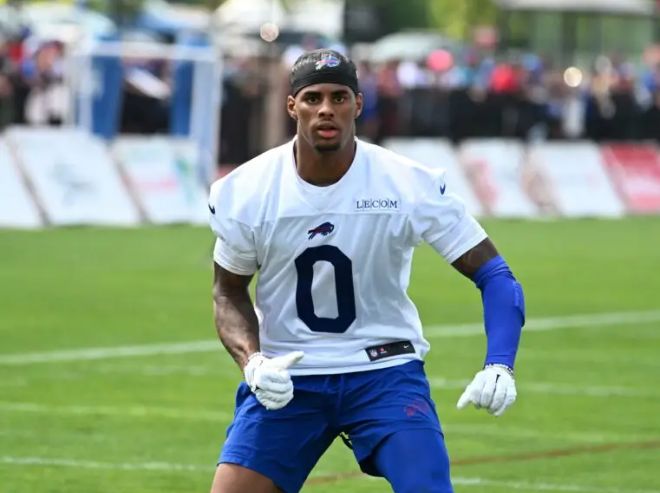
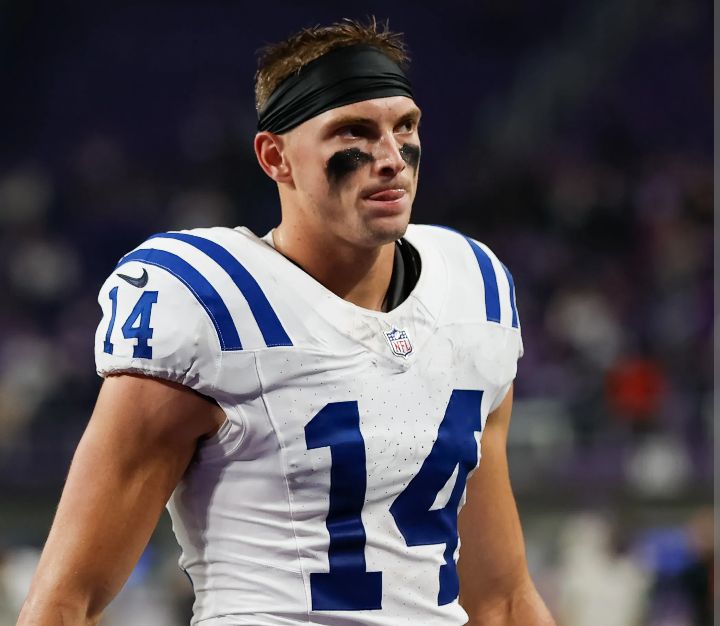
Alec Pierce, a 2022 second-round pick out of Cincinnati, has steadily evolved from a promising prospect into one of the league’s most efficient and feared deep threats. His 2025 campaign was a definitive breakout: 1,000-plus receiving yards, six touchdowns, and a yards-per-reception average that again led the NFL, as it did in 2024. At 6’3” and 211 pounds, Pierce combines prototypical size with exceptional long speed and elite ball-tracking ability. He is not merely a straight-line runner; his body control and ability to win in contested catch situations make him a complete perimeter weapon.
Pierce’s game is built on verticality and explosive plays. He consistently commands the attention of safeties, stretching defenses horizontally and vertically. While his route tree in Indianapolis has emphasized go-routes, posts, and deep comebacks, his athletic profile suggests untapped potential for development in an intermediate scheme. At 25 years old, Pierce is entering his athletic prime and his first major payday, positioning him as one of the most attractive young free agents on the market.
The Bills’ Offensive Conundrum
Buffalo’s offense, once a fearsome and unpredictable juggernaut, has shown signs of schematic stagnation and defensive predictability in recent postseason runs. The departure of Stefon Diggs left a void not just in production, but in defensive deployment. While Khalil Shakir has emerged as a reliable and savvy slot weapon, and Dalton Kincaid is a mismatch-generating tight end, the Bills lack a true, established “X” receiver who can dictate coverage on the outside.
The experiment with Keon Coleman, a 2024 draft pick, has yielded mixed results. While showcasing flashes of brilliance, his rookie season underscored the perils of relying on a developmental project to immediately fill a crucial role in a championship-contending offense. As analyst Jared Dubin noted, “counting on [Coleman] suddenly turning into a guy he hasn’t been during his career is foolish.” This leaves a tangible need for a proven boundary threat.
Josh Allen’s arm talent is perhaps the greatest in the league, a howitzer capable of attacking every blade of grass. Yet, throughout his career, he has never had a consistent, season-long partnership with a true field-stretching receiver. Gabe Davis provided moments of deep-shot brilliance but was plagued by inconsistency. Pierce represents the archetype Allen has never possessed: a large, fast, and reliable target whose primary function is to vertically decompress a defense, creating space for everyone else.
The Strategic Fit: Why Pierce Makes Sense for Buffalo
The potential acquisition of Alec Pierce is not about accumulating receiving stats; it’s about offensive philosophy and forcing defensive compromises.
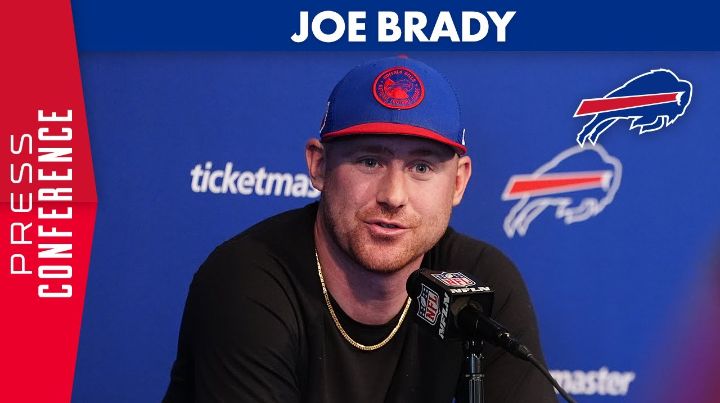
First, it unlocks the playbook for Offensive Coordinator Joe Brady. With Pierce demanding a safety’s attention over the top, the intermediate middle of the field—the area where Shakir and Kincaid thrive—becomes exponentially more accessible. Defenses can no longer comfortably roll coverage or play single-high safety looks without risking a catastrophic explosive play. This constraint would theoretically lead to more favorable boxes for the running game and lighter coverage on underneath routes.
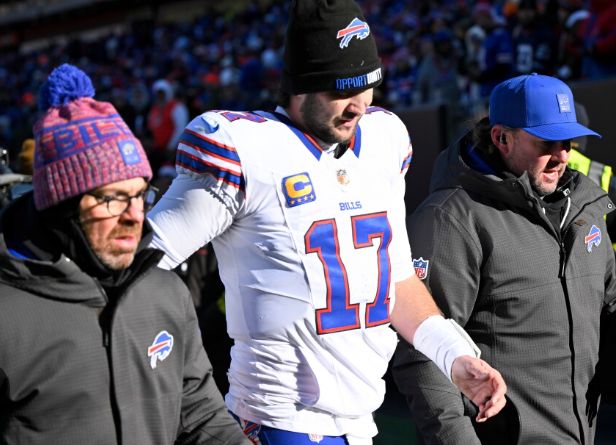
Second, it optimizes Josh Allen’s superpower. Allen’s willingness and ability to push the ball downfield is a hallmark of his game. Pierce gives him a tailor-made outlet for that aggression. Their connection would be symbiotic: Allen’s arm would maximize Pierce’s speed, and Pierce’s catching radius and tracking would maximize Allen’s daring throws. This could reinvigorate the most electrifying aspect of the Bills’ offense, which has felt somewhat muted.
Third, it creates a complementary and diverse receiver room. A trio of Pierce (the vertical specialist), Shakir (the precision route-runner from the slot), and Kincaid (the seam-stretching tight end) presents a nightmare for defensive coordinators. Each player excels in a distinct area of the field, forcing defenses to defend all levels simultaneously. This is a stark contrast to the recent model, which often relied on Allen’s improvisation to overcome schematic limitations.
The Financial Hurdle: Navigating the Cap Maze
The most significant obstacle to this potential marriage is the salary cap. Pierce’s market value, projected by outlets like Spotrac at approximately $80 million over four years ($20 million annually), would place him among the top 15-20 paid receivers in football. As of this writing, the Bills are projected to be modestly over, not under, the cap, necessitating a series of proactive maneuvers by Brandon Beane.
Beane, a certified cap wizard, has several levers to pull. Restructuring the contracts of cornerstone players like Josh Allen, Matt Milano, or Dion Dawkins could create immediate space. Tough decisions on veteran players with significant cap numbers may be required. Potential releases or pay reductions for players like Von Miller (post-June 1 designation) or Mitch Morse could be part of the calculus. The key question is whether Beane believes allocating such a substantial portion of the cap to a wide receiver—a position he has historically valued but not lavished with top-tier external contracts—is the most efficient use of resources for a roster with other needs, particularly along the defensive line and in the secondary.
Investing in Pierce is a bet on offensive transformation. It signals a belief that supercharging the passing game is the final, necessary step to championship contention, even if it means thinner depth elsewhere. The alternative path would be to seek a cheaper, veteran deep threat or double down on the draft, but that carries the risk of replicating the Keon Coleman uncertainty.
The Ripple Effect and Conclusion
If the Buffalo Bills were to successfully sign Alec Pierce, the reverberations would be felt across the AFC. It would instantly re-establish their offense as one of the most dynamic and vertically-oriented units in the conference, applying new pressure on rivals like Kansas City, Cincinnati, and the New York Jets. For the Indianapolis Colts, it would represent a significant loss of homegrown talent, forcing them to re-tool around quarterback Anthony Richardson.
For Pierce, joining the Bills offers the chance to play with an elite quarterback in a system that would feature his best trait, all while competing for championships in a passionate market. The fit is conceptually pristine.
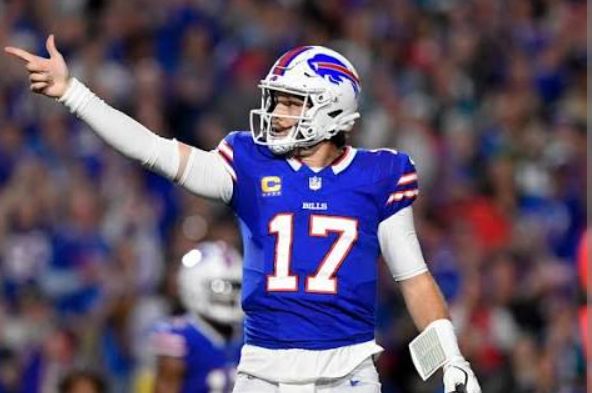
Ultimately, the pursuit of Alec Pierce is a test of philosophy for the Buffalo Bills’ braintrust. It is a choice between incremental improvement and a bold, transformative strike. It balances immediate cap pain against the potential for long-term offensive elevation. While the financial path is narrow and fraught with difficult ancillary decisions, the football logic is powerfully clear: pairing Josh Allen’s generational arm with Alec Pierce’s generational deep-threat ability could be the catalyst that finally propels the Buffalo Bills to the summit of the NFL. The upcoming free agency period will reveal whether Brandon Beane agrees, and is willing to pay the price to make that electrifying possibility a reality.