The NFL offseason is a complex chessboard of financial maneuvering, roster evaluation, and strategic acquisition. While quarterback and edge rusher often dominate headlines, the trench warfare waged on the offensive line remains the bedrock of championship aspirations. As the 2026 free agency period approaches, a compelling narrative is developing around one of the market’s premier interior linemen: Buffalo Bills guard David Edwards. A confluence of need and scarce supply is setting the stage for a competitive bidding war, with the New York Giants, Detroit Lions, Cleveland Browns, and Edwards’ current team, the Buffalo Bills, positioned as the principal contenders. This potential multi-team struggle underscores the relentless league-wide pursuit of offensive line stability and the difficult salary cap calculations every front office must navigate.
The Contenders: A Quartet of Need
Each of the four teams linked to Edwards enters the offseason with a distinct but pressing need at the guard position, born from contractual expirations, aging rosters, or strategic reshuffling.
· Buffalo Bills: For the Bills, this is a classic case of seeking to retain their own. David Edwards has grown into a cornerstone of their offensive line over the past two seasons. Allowing a known, high-performing commodity to walk in free agency would create an immediate hole on a unit that has been key to the team’s success. With quarterback Josh Allen entering the prime of his career, protecting him remains the franchise’s paramount objective. Newly promoted General Manager Brandon Beane faces the unenviable task of balancing this retention priority against a tight salary cap situation. Letting Edwards test the market is a risk, but matching a lucrative external offer may require significant financial gymnastics.
· Cleveland Browns: The Browns face the potential of a complete overhaul at guard. Both Wyatt Teller and Joel Bitonio, long-time stalwarts who have defined Cleveland’s physical identity up front, are pending free agents. While the team may hope to bring back one or both, the reality of the market and the aging curves of veteran players could lead to a new era. Edwards represents a younger, in-prime solution who could step in and immediately fill the void left by either departure. The Browns’ offensive philosophy, heavily reliant on a potent running game, demands excellence at guard, making this a critical offseason priority.
· New York Giants: The Giants’ offensive line has been a work in progress for several seasons. The potential departure of starter Greg Van Roten in free agency would reopen a question mark the team has struggled to answer permanently. For a franchise building around a young quarterback, establishing a reliable and protective interior line is non-negotiable. The Giants’ involvement signals a continued commitment to investing resources into the trenches. With a quarterback on a rookie contract, they have a brief window to allocate capital elsewhere, and securing a proven guard like Edwards could be a transformative move for their offensive consistency.
· Detroit Lions: The Lions’ situation is more nuanced, driven by potential internal movement rather than an outright departure. Speculation suggests the team may consider shifting 2025 draft pick Tate Ratledge from guard to center. Such a move, while potentially strengthening one position, would automatically create a vacancy at guard. The Lions have built one of the league’s most formidable offensive lines, and maintaining that elite standard is crucial for their championship window. Proactively targeting a player of Edwards’ caliber to fill a potential hole would be a sign of a forward-thinking front office determined not to let a position of strength become a weakness.
The Prize: David Edwards’ Market Value
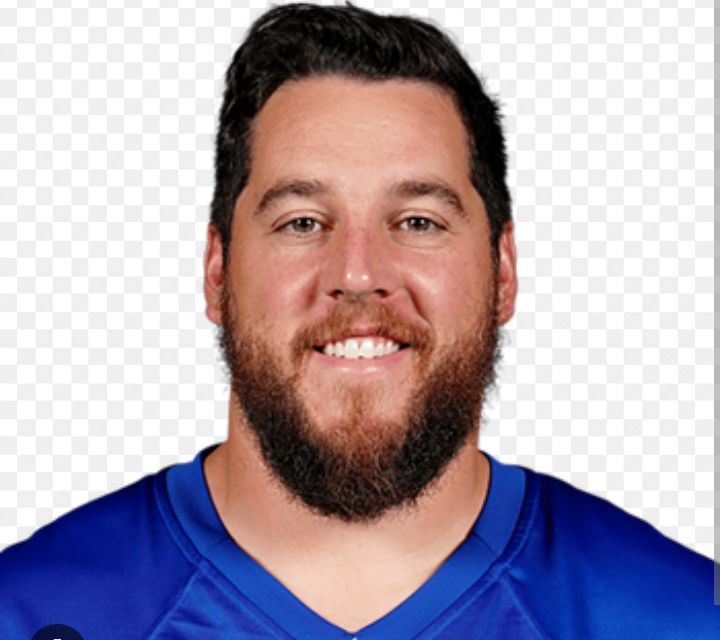
David Edwards has meticulously built his case for a major payday. After solid initial years, his 2025 campaign was a breakout, establishing him as one of the more reliable guards in the NFL. The metrics tell the story: allowing only three sacks and 27 pressures over the season is a mark of high-level pass protection. His performance grades, particularly a 73.0 in pass-blocking from Pro Football Focus, place him firmly in the upper tier at his position. At 28 years old, he is hitting free agency at the perfect intersection of proven performance and remaining prime years.
The financial projection, a three-year deal worth nearly $59.7 million according to Spotrac, reflects the harsh economics of the modern NFL offensive line. As the salary cap rises, the value of players who protect the league’s most valuable assets—quarterbacks—rises in lockstep. The demand for competent, day-one starters vastly outstrips the supply, especially for those under 30. Edwards’ projected average annual value of nearly $20 million would reset the guard market and set a new benchmark for teams in desperate need. This isn’t merely about paying for past performance; it’s an investment in future offensive stability.
The Impediment: The Salary Cap Crunch
The most intriguing layer to this potential free-agent saga is the severe financial constraints binding all four suitors. In a league where cap space is a weapon, none of these teams enter the offseason with significant firepower.
· The Detroit Lions and Buffalo Bills are both currently over the projected salary cap, by $8.5 million and $7.4 million respectively. To even participate in the Edwards sweepstakes, their general managers must first engage in a series of difficult maneuvers: contract restructures, strategic releases of veteran players, or perhaps letting other contributors walk in free agency. Every dollar committed to Edwards would require a sacrifice elsewhere on the roster.
· The New York Giants and Cleveland Browns, while under the cap, have minimal breathing room. The Giants lead this group with approximately $6.9 million in space, and the Browns have roughly $3.2 million. These figures are far below what would be required to simply absorb Edwards’ projected contract. To make a competitive offer, they would need to clear substantial cap space through similar methods of restructuring and cutting, or by designing a contract with a low first-year cap hit through the use of signing bonuses and backend-loaded salaries.

This universal financial pressure creates a high-stakes game of chicken and creativity. Which general manager is most willing to mortgage a bit of future cap flexibility for immediate reinforcement? Which can structure the most cap-friendly offer that still appeals to the player? The negotiation will test the financial acumen of each front office as much as their evaluation of Edwards’ talent.
Strategic Implications and the Broader Landscape
The pursuit of David Edwards is a microcosm of broader NFL trends. First, it highlights the “Protect the Quarterback” axiom as the league’s foremost team-building principle. Whether it’s a veteran like Josh Allen, a rising star on a rookie deal, or an offense built on a powerful run game, everything starts with control at the line of scrimmage. A failure to adequately address the guard position can derail an entire offensive system.
Second, it illustrates the domino effect of roster construction. A potential position change in Detroit (Ratledge to center) triggers a need that ripples into the free agent market. A cluster of expiring contracts in Cleveland creates a rare opportunity for a young veteran to cash in. Teams are no longer evaluating players in a vacuum; they must constantly anticipate how one move creates a need for another.
Finally, the situation underscores the critical importance of draft success and developing depth. The teams most vulnerable in free agency are often those that have missed on mid-round offensive line picks or failed to develop young backups into ready starters. Having a cost-controlled, competent replacement on the roster is the most effective antidote to the cap-straining demands of the veteran free agent market.
In conclusion, the predicted battle for David Edwards is more than just a transaction. It is a case study in modern NFL management, weaving together talent evaluation, financial strategy, roster forecasting, and positional value. Whether he returns to Buffalo, heads to the shores of Lake Erie, joins the rebuild in New York, or fortifies the line in Detroit, his destination will reveal the priorities and pressures facing four franchises with playoff ambitions. In the unglamorous but vital world of interior line play, securing a player like Edwards can be the difference between an offense that functions and one that flourishes, making the coming financial and strategic showdown one of the most telling narratives of the 2026 offseason.