In the high-stakes, cutthroat ecosystem of the National Football League, the line between a career crossroads and a career breakthrough is often drawn by a single, potent emotion: feeling undervalued. For wide receiver Mack Hollins, his solitary season with the Buffalo Bills in 2024 became the crucible in which that feeling was forged, a sentiment he has now openly articulated. His subsequent, immediate journey to the Super Bowl with the AFC East rival New England Patriots is not merely a twist of sporting fate; it is a profound case study in athletic resilience, the psychology of motivation, and the complex calculus of NFL roster management. Hollins’ path from Buffalo to the precipice of a championship reveals the powerful alchemy that occurs when professional slight is transformed into professional fuel.
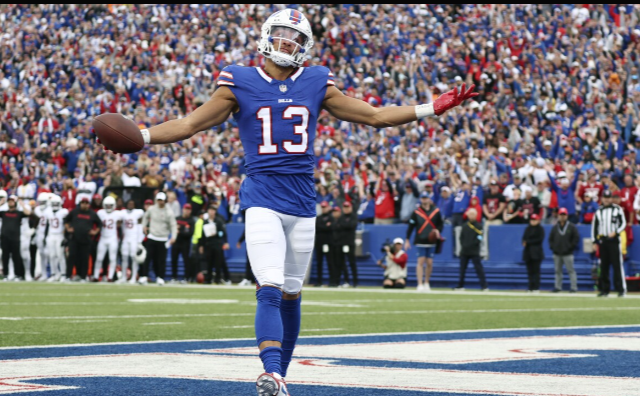
To understand the weight of Hollins’ assertion that the Bills “didn’t value him anymore,” one must first examine the context of his arrival and tenure in Buffalo. Signed in the 2024 offseason, Hollins was brought in as a veteran presence following the departure of Gabriel Davis. His profile was specific: a consummate professional, a formidable blocker—a critical trait in a run-heavy offense—and a receiver known for making tough, situational catches. He was not billed as a primary target, but as a high-character role player who could fortify the receiving corps behind stars like Stefon Diggs and, at the time, an emerging Khalil Shakir.
The 2024 season, however, unfolded with unexpected turbulence for the Bills. The offense, under coordinator Joe Brady, continued its evolution toward a more balanced attack, but inconsistencies plagued the team. Hollins’ statistical output was modest—a handful of receptions, a key block here and there—the typical footprint of a depth receiver. Yet, from the inside, players perceive value beyond the stat sheet: in practice repetitions, in locker room standing, in the subtle assurances from coaches and the front office. As the season wore on and the Bills clinched yet another playoff berth only to fall short of the ultimate goal, the machinery of offseason planning began to whirr. Hollins, a keen observer of the business, likely sensed the shift. The emergence of younger, cheaper options like Justin Shorter or a draft pick to be named, coupled with the ever-pressing salary cap constraints, created a climate of expendability. Being “not valued” in the NFL is rarely a dramatic firing; it is the quiet cessation of conversations about a future, the reallocation of practice snaps, the language of business that supersedes the language of sport.
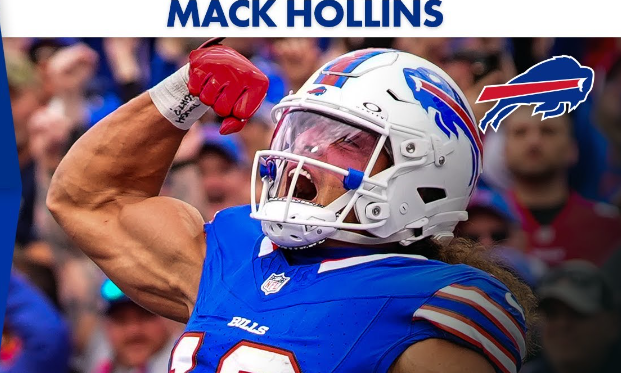
This perceived devaluation, however, did not diminish Hollins; it distilled him. For an athlete of his intelligence and professionalism, the message was clear: his services were no longer part of the long-term vision. This realization, while painful, is also liberating. It strips away any lingering ambiguity and provides a crystalline motive: to prove that valuation wrong. When the Patriots—the Bills’ most storied rival, masters of extracting maximum value from motivated veterans—came calling, the fit was karmic. New England, under its post-Belichick regime, was building a culture of “chip-on-the-shoulder” players. They offered Hollins what Buffalo had seemingly withdrawn: a clear role, a belief in his specific skill set, and the opportunity for meaningful contribution.
The transformation in Hollins upon joining the Patriots was evident. No longer just a blocking auxiliary or a fifth option, he was integrated as a key piece in a diverse, physical offensive scheme. His role expanded. He became a trusted third-down target for quarterback Drake Maye, using his size and sure hands to move the chains. His veteran savvy was utilized in mentoring younger receivers. Most importantly, his trademark physicality and energy, once perhaps taken for granted, became a tonal setter for the Patriots’ offense. He played with a visible edge, a palpable sense of purpose that transcended the typical week-to-week preparation. Every catch, every block, was not just for the Patriots; it was a silent, powerful rebuttal to the narrative of his obsolescence.
Hollins’ journey mirrors a timeless archetype in sports: the spurned veteran finding glory with the enemy. It calls to mind the likes of Wes Welker leaving Miami for New England, or countless players who have used a release or a cold free agency as rocket fuel. This psychology is powerful. It externalizes the struggle, creating a tangible “why” that can sustain an athlete through the grueling marathon of an NFL season. The grind of training camp, the pain of Wednesday practices, the film study—all are endured with the added intensity of having something to prove. For Hollins, the entire Buffalo Bills organization, and by extension the Bills Mafia fanbase, became the symbol of that doubt. Facing his former team twice in the regular season, and potentially outperforming them en route to a division title, provided a narrative satisfaction that few scripts could rival.
The implications of Hollins’ success extend beyond personal vindication. They pose a sharp question to the Bills’ front office and coaching staff about talent evaluation and player development. The NFL salary cap is a brutal, zero-sum game that forces difficult decisions. Letting a role player like Hollins walk is often a defensible, even prudent, financial move. However, the “value” of a player is a multivariate equation. It includes leadership, locker room chemistry, specific schematic fit, and the intangible will to win. The Bills calculated that Hollins’ on-field production could be replaced at a lower cost. The Patriots calculated that his mindset, experience, and specific traits were worth the investment and could be amplified in their system. The Patriots’ presence in the Super Bowl, with Hollins playing a part, suggests their calculus—at least for this season—proved more accurate.
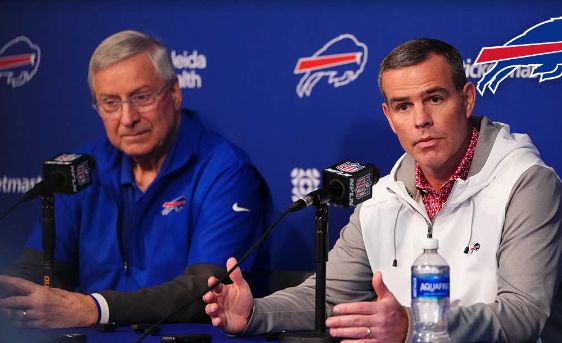
This dynamic touches on a fundamental tension in modern team building: the conflict between analytical valuation and human psychology. Spreadsheets can measure speed, catch radius, and yards after contact. They struggle to quantify heart, resilience, and the motivational power of a slight. Hollins’ case is a reminder that players are not autonomous assets with fixed values; their performance is profoundly influenced by their environment, their sense of belonging, and their emotional drivers. What the Bills may have seen as a declining asset, the Patriots saw as a potential catalyst, precisely because of the circumstances of his departure.
For Mack Hollins, standing on the Super Bowl stage, the journey will have come full circle. The feeling of being undervalued, which could have been a career epilogue, became his prologue to the biggest game in sports. His story is a testament to the enduring power of self-belief in the face of institutional judgment. It underscores that in a league often dominated by metrics and money, the human elements of pride, purpose, and redemption remain potent, unpredictable forces. The Buffalo Bills provided the spark of disillusionment. Mack Hollins, with his bare feet firmly planted on the turf of destiny, turned that spark into a flame that helped illuminate the path to the Super Bowl, proving that sometimes the greatest value is discovered only after someone tells you that you have none.