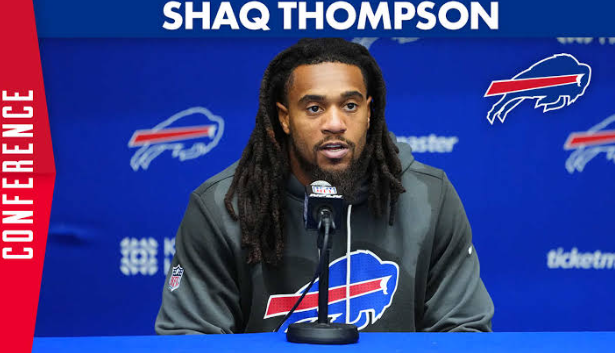
The offseason in the NFL is a time of relentless evaluation, speculation, and often, public debate. For veteran players on expiring contracts, every public comment about their abilities can feel like a referendum on their future. Buffalo Bills linebacker Shaq Thompson found himself at the center of such a discussion recently, prompting the seasoned defender to mount a public and pointed defense of his own versatility.
The catalyst was an episode of the Buffalo Bills’ official in-house podcast, Bills by the Numbers. During a segment analyzing the team’s linebacker needs under new defensive coordinator Jim Leonhard, hosts Chris Brown and Steve Tasker turned their attention to Thompson. While acknowledging he had “a nice season” for the Bills in 2025, they expressed skepticism about his fit moving forward. Their reasoning was rooted in a traditional, physical prototype for an inside linebacker in a 3-4 defensive front—a scheme Leonhard is expected to implement.
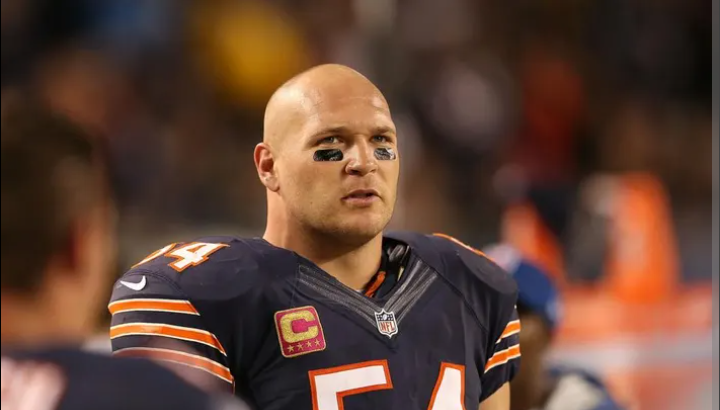
Brown questioned whether the roster had someone who fit the necessary profile, stating, “Shaq Thompson had a nice season, but he’s six-foot, 230 (pounds).” Tasker agreed, outlining the archetype: “You need a Brian Urlacher, Luke Kuechly, six-five guy who can run, who is big. They gotta be able to take a physical pounding and dish it out.” The implication was clear: Thompson, a standout in the Bills’ 4-3 scheme last season, might be a square peg for the round hole of the new defensive vision.
Thompson, an 11-year veteran, did not let the assessment go unchallenged. Taking to social media platform X, he offered a polite but firm correction. “Appreciate the love on the pod, but quick correction—since 2019 I’ve been in a 3-4, not a 4-3. Been productive there too,” he wrote. He concluded with a confident declaration of his football IQ and adaptability: “All good, just do the homework. I can play any scheme.”
This public rebuttal is more than just a player quibbling with media; it is a strategic statement aimed directly at the Bills’ front office and the wider NFL as free agency looms. Thompson’s message is multifaceted: it corrects a factual error about his recent history, showcases his detailed knowledge of defensive systems, and, most importantly, serves as a resume bullet point for any team—starting with Buffalo—considering his services for the 2026 season.
The Substance Behind the Statement: Thompson’s Career Context
Thompson’s correction is factually grounded. While he entered the league with the Carolina Panthers when they ran a 4-3 base defense, the team transitioned to a 3-4 scheme under defensive coordinators like Phil Snow and later Al Holcomb. From the 2019 season onward, Thompson operated primarily as an off-ball linebacker in that three-man front. His production during that period substantiates his claim of being effective in the system.
From 2019 through 2022, Thompson was a model of consistency and high-level play. He recorded four consecutive seasons with 104 or more tackles, establishing himself as the heart of the Panthers’ defense following the retirement of Luke Kuechly. His peak season came in 2022, when he started all 17 games and finished with 135 combined tackles. Advanced metrics from Next Gen Stats highlighted his impact, noting his 76 defensive stops that year were tied for the ninth-most in the entire league. This was not a player merely surviving in a 3-4; he was thriving as one of its central pieces.

His 2025 season with the Bills, though shortened to 12 games, further demonstrated his immediate value. Tasked with stepping into a significant role, he tallied 56 tackles and served as the team’s most reliable run-stopper from the second level. His performance was a bright spot for a defense that struggled with inconsistency, proving he could quickly learn and excel in a different system (Buffalo’s 4-3) and culture.
The intervening years of 2023 and 2024 were marred by injuries, which likely contributed to the podcast hosts’ perception of him as a player tied to a specific, perhaps dated, scheme. But his healthy and productive 2025 campaign in Buffalo served as a powerful reminder of his foundational skills: instincts, tackling reliability, and leadership.
The Financial and Roster Calculus in Buffalo
Thompson’s public case-making occurs against a complex backdrop for the Buffalo Bills. The team is in a period of significant transition, particularly on defense. The departure of long-time stalwarts and the hiring of Jim Leonhard signal a philosophical shift. General Manager Brandon Beane is also navigating severe salary cap constraints, with the team projected to be over $10 million above the 2026 cap limit. This necessitates difficult decisions and value hunting.
In this context, a player like Thompson presents both an opportunity and a question mark. According to contract valuation site Spotrac, his projected market value sits around $2.4 million annually—a reasonable sum for a starting-caliber linebacker with his experience and recent production. For a cap-strapped team, retaining a known commodity who already understands the locker room and has proven he can perform could be a savvy move.
However, the question of “fit” remains, precisely as framed by the podcast. Leonhard’s defensive history, both as a player and a coordinator, suggests a preference for versatile, intelligent players who can execute complex schemes. While Thompson may not fit the classic tall, heavy inside ‘backer mold that Brown and Tasker described, his career suggests his value lies elsewhere. His success has been built on elite football intelligence, sideline-to-sideline range, and sure tackling—attributes that are scheme-transcendent. The modern NFL increasingly values linebackers who can defend the pass and operate in space, areas where Thompson’s athleticism and experience are assets.

The “Brian Urlacher prototype” is indeed one model, but it is not the only one. Successful 3-4 defenses have featured linebackers of various sizes who excel due to processing speed and technique. Thompson’s statement is, at its core, an argument for this more nuanced evaluation.
A Veteran’s Leverage in the Modern Media Landscape
Thompson’s decision to engage publicly is a textbook example of how veteran players use modern media to shape their narrative. In past eras, a player’s discontent might have been whispered to a beat reporter. Today, they can go directly to the public, controlling the message and applying subtle pressure. His tweet was respectful but firm, data-driven, and confident. It served notice to the Bills’ decision-makers that he is aware of the conversations surrounding him, that he disagrees with the limiting assessments, and that he is ready to defend his record—anywhere it may need defending.
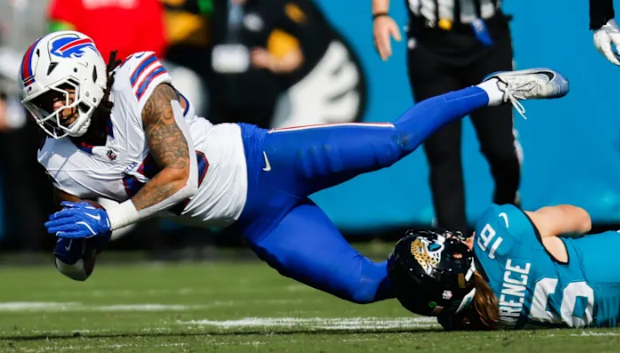
For the Bills, the calculation now includes this public element. They must weigh not only his on-field fit and cost but also the message it sends to a locker room full of veterans watching how the organization treats a respected contributor who just publicly stood up for himself.
As free agency approaches, Shaq Thompson has made the opening argument in his own defense. He has corrected the record on his scheme history, highlighted a sustained period of top-tier production in the very system he’s being questioned about, and asserted his intellectual and physical adaptability. Whether his case resonates enough for the cap-strapped Bills to prioritize his re-signing, or simply boosts his value on the open market, one thing is clear: Shaq Thompson is not waiting for others to define his capabilities. In the high-stakes chess game of the NFL offseason, he has just made a very deliberate move.