The NFL trade deadline, a mid-season pressure cooker of negotiation and speculation, often produces more compelling stories of deals that didn’t happen than those that did. These near-misses reveal the intricate calculus of team building, inter-divisional politics, and front office psychology. A prime example unfolded ahead of the 2025 deadline, centering on Miami Dolphins wide receiver Jaylen Waddle and a relentless pursuit by the division-rival Buffalo Bills. The aftermath, detailed publicly by Bills General Manager Brandon Beane, provides a rare and candid case study into the mechanics, motivations, and miscommunications that define high-stakes NFL negotiations.
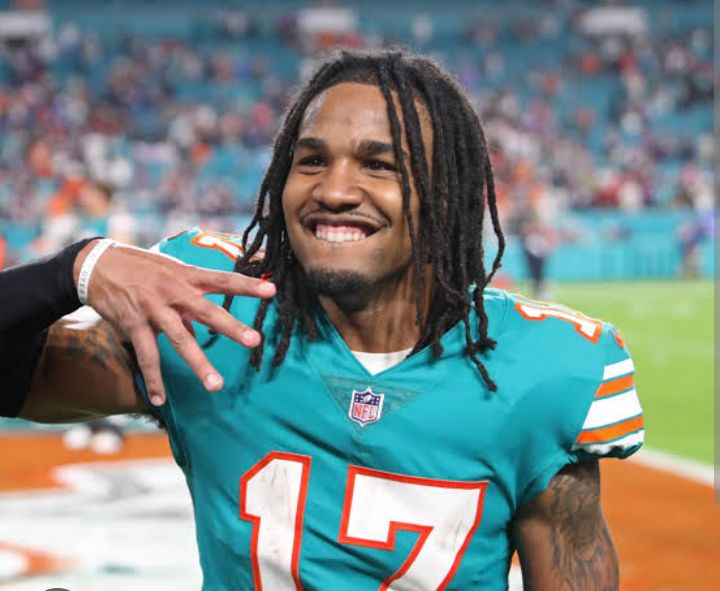
The Context: A Dolphins Franchise in Flux
To understand the gravity of the offer, one must first appreciate the turbulent environment within the Miami Dolphins organization at the time. The 2025 season had quickly spiraled. A disastrous 1-6 start cost longtime General Manager Chris Grier his job, thrusting Champ Kelly into the role of interim GM. Kelly, navigating uncharted waters with an uncertain future, was tasked with steering the franchise through a critical deadline. His mandate was ambiguous: was he to salvage the present or build for a future he might not be part of?
Kelly made one significant move, trading pass rusher Jaelan Phillips to the Philadelphia Eagles for a third-round pick. However, his most consequential decisions were passive. Despite a flurry of incoming calls, he opted to retain his core offensive weapons, running back De’Von Achane and, most notably, wide receiver Jaylen Waddle. This set the stage for a tense, one-sided negotiation with a familiar foe.
The Buffalo Bills’ Motivation: A Quest for the Final Piece
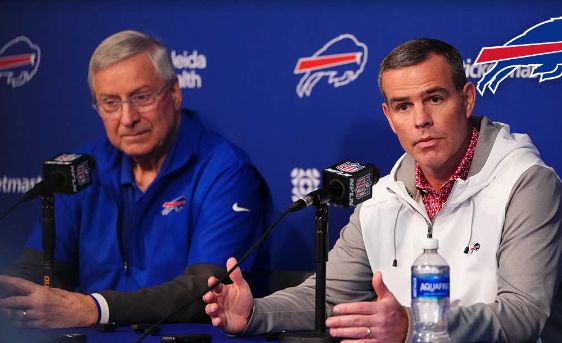
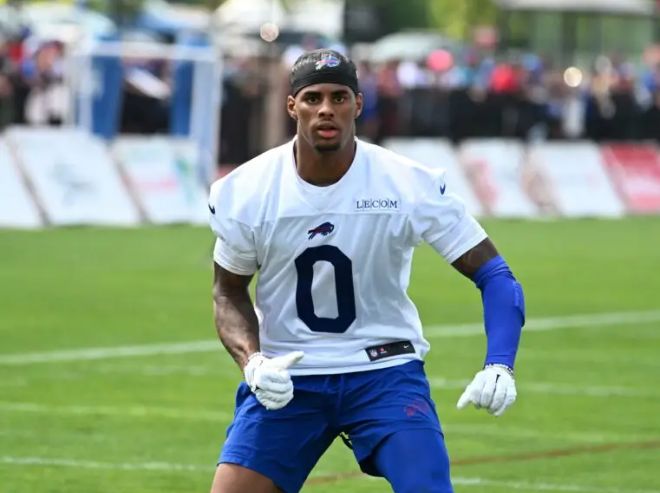
In Buffalo, the context was one of urgent contention. The Bills, perennially in “win-now” mode with quarterback Josh Allen in his prime, were actively seeking a dynamic playmaker to supercharge their offense. Their initial target, New Orleans Saints wide receiver Rashid Shaheed, had slipped away, landing with the Seattle Seahawks. This failure amplified their need and turned their gaze south. Jaylen Waddle represented the ideal solution: a proven, elite-speed weapon who could stretch defenses vertically and complement All-Pro Stefon Diggs, creating a nightmare scenario for opposing secondaries. For a Bills team viewing its championship window as wide open, acquiring Waddle wasn’t just an upgrade; it was a potential game-changer for a Super Bowl run.
The Offer and the Impasse
Reports, notably from NFL Network’s Tom Pelissero, initially suggested the Bills structured an offer around a future first-round draft pick, specifically in 2027. However, the Dolphins’ alleged counter-demand was for Buffalo’s 2026 selection, creating a fundamental disconnect. The value of a draft pick diminishes in the eyes of a seller the further out it is, as its eventual slot is more uncertain. Miami, whether operating from a position of strength or instability, wanted a more immediate, tangible asset.
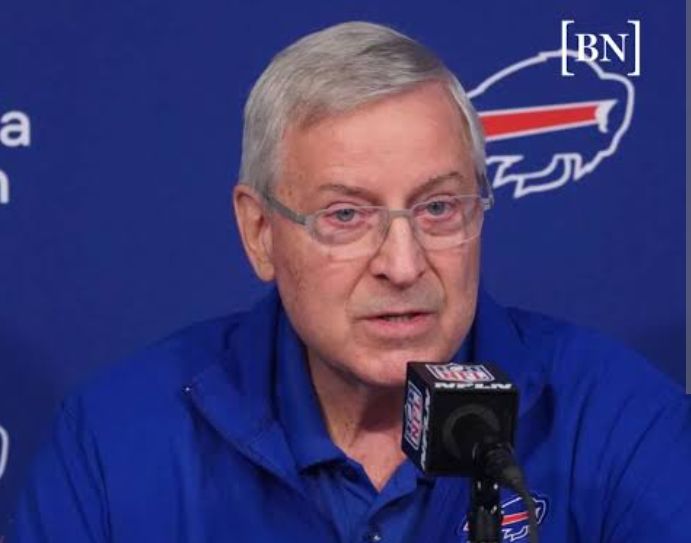
Brandon Beane’s subsequent revelations, however, painted a more nuanced and intriguing picture. He confirmed the Bills’ aggressive pursuit, stating unequivocally, “I know we had the strongest offer on one.” This assertion was a bold claim, meant to signal both the seriousness of Buffalo’s intent and perhaps a slight frustration at Miami’s reticence. The core of Beane’s insight lay in what happened next—or, more accurately, what didn’t. “They never really countered back to us,” he revealed. This lack of a counteroffer is the most telling detail of the entire episode.
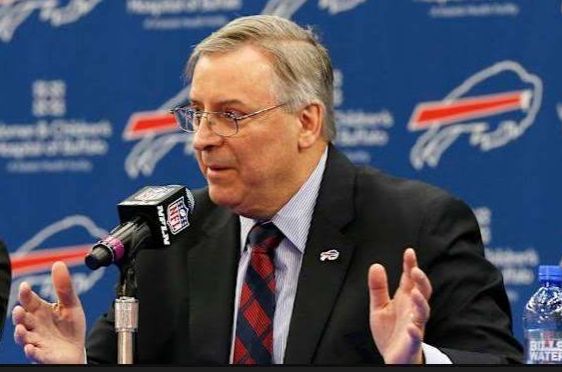
In the dance of NFL negotiations, a counteroffer is a signal of engagement. It says, “We are listening, and we are willing to deal, but at this price.” Its absence is a deafening silence. Beane was left in a fog of uncertainty, forced to parse the Dolphins’ intentions. “So you never really know, was he really available? Was he not? Or were you just going to have to go to a deal that they just, you know, was so unbelievable that there’s no way they could turn it down.” This statement perfectly encapsulates the GM’s dilemma. Without a counter, he couldn’t gauge if the gap was bridgeable or if Miami’s “for sale” sign was merely a mirage.
The Division Rivalry Factor
The AFC East rivalry between the Bills and Dolphins added a thick layer of complication. Trading a star player within the division is a cardinal sin in NFL front-office philosophy, fraught with immediate and long-term peril. The player would face his former team twice a year, providing intimate strategic knowledge and extra motivation. For Miami, the prospect of watching Waddle torch their secondary for the next several seasons in a Bills uniform was likely a terrifying thought. Beane acknowledged this unspoken barrier: “maybe they just decided they didn’t want to send them in division.” This factor, perhaps more than any perceived shortfall in draft capital, may have been the ultimate deal-breaker. The “division tax”—the premium required to make a team even consider an intra-division trade—might have been a price even a motivated Beane was unwilling or unable to pay.
Waddle’s Situation and the Dolphins’ Calculus
From Miami’s perspective, the decision to hold required its own complex rationale. Jaylen Waddle was coming off a statistically down year in 2025, failing to reach 1,000 receiving yards as the Dolphins’ offense sputtered, particularly after Tyreek Hill’s injury. Trading him at a potential low point could be seen as selling low. More importantly, Waddle was under a long-term contract through the 2028 season. He wasn’t a rental; he was a foundational piece. Despite the coaching and front-office turmoil, the Dolphins’ marketing department had already begun promoting Waddle as a face of the franchise’s “new era.”
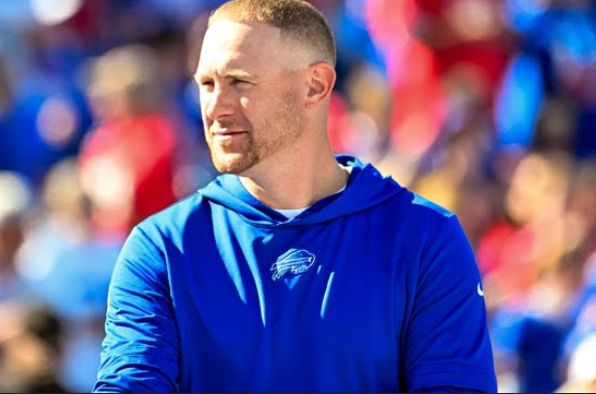
For interim GM Champ Kelly, trading a young, cost-controlled star could have been perceived as a surrender, a move too aggressively oriented toward a future he might not oversee. Holding onto Waddle was the safer, less controversial play—a decision to maintain the roster’s core talent and let the next permanent GM, who would later be hired in Jon-Eric Sullivan, make the definitive calls on the team’s cornerstone players.
The Aftermath and Lasting Implications
The non-trade had immediate ripple effects. The Bills entered the playoff stretch without the explosive addition they coveted, forced to rely on their existing roster. The Dolphins retained their offensive core, a decision that would shape Sullivan’s inheritance. For Jaylen Waddle, it meant continued stability in Miami, albeit within an offense searching for a new identity post-Tyreek Hill.
Beane’s public commentary was itself a strategic act. By openly stating he had the best offer, he accomplished several things: he signaled to his own fans and ownership the front office’s aggression, he potentially sent a message to other players or agents about Buffalo’s willingness to deal for top talent, and he may have subtly applied future pressure on the Dolphins or other teams in similar situations.
Conclusion: A Window into NFL Realpolitik
The Bills’ failed pursuit of Jaylen Waddle is more than a simple footnote. It is a microcosm of NFL front-office operations. It highlights the tension between immediate contention and long-term rebuilding, the profound impact of interim leadership, and the massive shadow cast by divisional politics. It demonstrates that the value of a player is not merely a function of draft picks but of timing, relationship, and fear of consequence.
Brandon Beane’s frustration was born from being left in the dark, a participant in a negotiation that may have only existed on one side of the phone. Meanwhile, Champ Kelly’s silence—his refusal to counter—spoke volumes about the precarious nature of his role and the immense, often unquantifiable, cost of doing business with a rival. In the end, the story is not about a trade, but about the vast and often unbridgeable gulf that can exist between what is offered, what is wanted, and what is ultimately deemed acceptable in the high-stakes, paranoid, and fiercely competitive world of the National Football League. The best offer, it turns out, is only the best if the other party is truly willing to hear it.